
Understanding Elective and Early Cesarean Section Timing in Dogs
By Dr. Geoff Carullo, DVM, FPCCP, DPCVSCA
One of the most misunderstood decisions in small animal reproduction is the timing of cesarean section.
To some pet owners, and even to some veterinarians, performing a C-section before visible labor signs can look “too early,” unnecessary, or even dangerous.
But in reality, waiting too long can sometimes be the bigger mistake.
In canine obstetrics, the absence of obvious labor does not always mean the pregnancy is safe to continue. There are cases where experienced veterinarians choose to intervene early because the risk of fetal death, uterine exhaustion, dystocia, or emergency compromise becomes higher than the risk of surgery itself.
The key question is not:
“May labor signs na ba?”
The real question is:
“Are the fetuses mature enough, and is waiting still safer than intervening?”
That is where proper reproductive assessment becomes critical.
The Problem With Relying on “Signs of Labor” Alone
Many breeders and owners wait for classic labor signs:
- Nesting
- Panting
- Milk production
- Temperature drop
- Restlessness
- Active contractions
Unfortunately, these signs are not always reliable.
Some brachycephalic breeds may fail to progress normally into labor. Some bitches may quietly enter dystocia without dramatic signs. Others may carry oversized litters, singleton pregnancies, or malformed fetuses that make natural delivery unlikely from the start.
By the time obvious labor problems appear, fetal compromise may already be happening.
This is why veterinarians rely more heavily on objective parameters rather than emotion or observation alone.
Reverse Progesterone Timing
One of the most important tools in determining cesarean timing is progesterone monitoring.
In dogs, progesterone levels rise during ovulation and remain elevated throughout pregnancy. Near parturition, progesterone rapidly drops.
This decline helps veterinarians estimate when delivery is approaching.
Some clinicians perform serial progesterone testing backward from the expected due date, often called “reverse progesterone timing,” especially when exact breeding dates are unclear.
A sudden progesterone drop below approximately 2 ng/mL strongly suggests parturition is near.
If progesterone has already crashed but labor is not progressing appropriately, delaying intervention may increase fetal risk.
This becomes especially important in:
- Bulldogs
- French Bulldogs
- Boston Terriers
- Singleton pregnancies
- Previous dystocia cases
- Prior C-section history
Progesterone interpretation should never be used alone. It must be correlated with fetal maturity and imaging findings.
Gestational Age Matters More Than Calendar Guessing
One of the biggest causes of neonatal death is inaccurate gestational timing.
Owners often estimate breeding dates incorrectly. Some matings occur multiple times across several days. Ovulation timing may not match mating dates.
This is why experienced theriogenology-focused veterinarians calculate gestational age based on:
- Ovulation timing
- LH surge timing
- Progesterone trends
- Ultrasound fetal development
- Radiographic mineralization
Counting from the day of mating alone can be dangerously inaccurate.
A bitch may appear “63 days pregnant” from breeding date while fetuses are actually immature.
Conversely, another patient may already be overdue despite “normal” calendar estimates.
The Role of Ultrasound
Ultrasound is not just for confirming pregnancy.
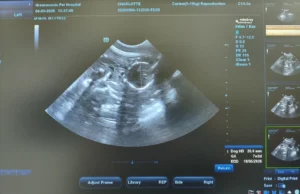
Near term, ultrasound becomes an essential tool for assessing fetal viability and stress.
Veterinarians evaluate:
- Fetal heart rate
- Intestinal motility
- Fetal movement
- Placental appearance
- Fetal maturity indicators
Fetal heart rate is especially important.
Normal fetal heart rates are generally above 180–220 bpm.
Heart rates dropping below:
- 180 bpm may indicate mild distress
- 160 bpm suggests significant compromise
- Below 150 bpm becomes extremely concerning
In these situations, waiting for spontaneous labor may cost puppies.
Sometimes the patient still “looks normal” externally while fetuses are already deteriorating internally.
That is why ultrasound findings often outweigh outward appearance.
The Importance of Radiographs
X-rays become extremely valuable in late gestation.
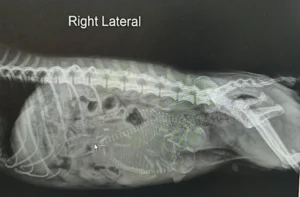
Radiographs help assess:
- Fetal count
- Fetal size
- Pelvic compatibility
- Singleton pregnancies
- Obstructive risk
- Degree of skeletal mineralization
Advanced mineralization of teeth and bones suggests fetal maturity.
Radiographs also help veterinarians identify situations where natural delivery may realistically fail.
Examples include:
- Large singleton puppies
- Narrow maternal pelvis
- Hydrocephalus
- Oversized brachycephalic fetuses
- Previous pelvic trauma
In these cases, waiting for full dystocia before intervening may unnecessarily increase mortality risk.
Why Some Veterinarians Choose Elective C-Section Early
Elective cesarean sections are not always performed because a veterinarian is impatient.
Sometimes they are performed because experience predicts impending disaster.
Common reasons include:
- Previous dystocia history
- Prior emergency C-section
- Brachycephalic breeds
- Singleton pregnancy
- Fetal distress on ultrasound
- Declining progesterone without labor progression
- Oversized fetuses on radiographs
- Maternal exhaustion risk
- Poor uterine contractility history
The goal is not merely “to deliver puppies.”
The goal is to deliver them alive.
Emergency cesareans performed too late generally carry:
- Higher neonatal mortality
- Higher anesthetic risk
- Greater maternal compromise
- Increased surgical stress
- Worse recovery
Well-timed elective procedures often produce better neonatal survival than delayed emergency interventions.
The Dangerous Side of “Hintayin Na Lang”
There is a common misconception that natural delivery should always be attempted first at all costs.
But prolonged waiting can lead to:
- Fetal hypoxia
- Uterine inertia
- Placental separation
- Fetal death
- Septic complications
- Maternal collapse
In reproductive medicine, timing is everything.
There are cases where a veterinarian intervenes before obvious labor specifically because they are trying to prevent an emergency rather than react to one.
Final Thoughts
Cesarean section timing is not based solely on visible labor signs.
It is a medical decision guided by:
- Progesterone trends
- Gestational calculations
- Ultrasound assessment
- Radiographic findings
- Breed risk
- Maternal history
- Fetal viability
Sometimes waiting is appropriate.
Sometimes waiting becomes dangerous.
The challenge in veterinary obstetrics is knowing the difference.
A well-timed elective cesarean is not necessarily “too early.”
Sometimes, it is exactly what saves the litter.
Sources
- American College of Theriogenologists
- Merck Veterinary Manual – Pregnancy and Parturition in Dogs and Cats
- VIN (Veterinary Information Network) – Canine Cesarean Section Timing Discussions
- BSAVA Manual of Canine and Feline Reproduction and Neonatology
- Theriogenology Journal
Dr. Geoff Carullo is a Fellow and the current President of the Philippine College of Canine Practitioners.
Sharing this helps others understand what it really means to be a vet. Like and follow if you’re with us.