One of the very first things we evaluate during a physical exam is mentation. Before blood tests, radiographs, or ultrasound, a patient’s level of awareness and responsiveness already tells us a great deal about the severity of disease.
Mentation is simple, but it’s powerful. A dog or cat’s mental status often reflects systemic illness, neurologic involvement, shock, pain, or metabolic imbalance. Used consistently, the Practical Mentation Scale becomes one of the most valuable bedside tools in everyday practice.
The Scale: From Normal to Critical
BAR – Bright, Alert, Responsive
The ideal state. A BAR patient is aware, reacts normally, and behaves appropriately. They may still be sick, but their brain function and circulation are stable.
Examples: mild dermatitis, early gastroenteritis, routine vaccination visits.
QAR – Quiet, Alert, Responsive
Subdued but responsive. Common in practice, especially with fever, mild dehydration, pain, or stress from hospitalization.
Examples: febrile patients, mild dehydration, post-op recovery.
Depressed
Reduced interest in surroundings, slower responses. Indicates systemic illness is already affecting the patient.
Examples: parvovirus, pyometra, severe infection, organ disease.
Lethargic
Markedly reduced activity and responsiveness. Often lying down, slow to react. Signals moderate to severe illness.
Examples: severe dehydration, anemia, sepsis, kidney failure.
Obtunded
Mentally dull, poorly aware, delayed responses. Often linked to neurologic or severe metabolic disease.
Examples: hepatic encephalopathy, hypoglycemia, severe uremia, brain disease.
Stuporous
Responds only to strong or painful stimuli. No reaction to voice or light touch. A medical emergency.
Examples: head trauma, severe hypoxia, advanced shock, brain swelling.
Comatose
Completely unconscious, non-responsive even to pain. Life-threatening, requiring immediate intensive care.
Examples: severe brain injury, profound hypoglycemia, toxin exposure, end-stage organ failure.
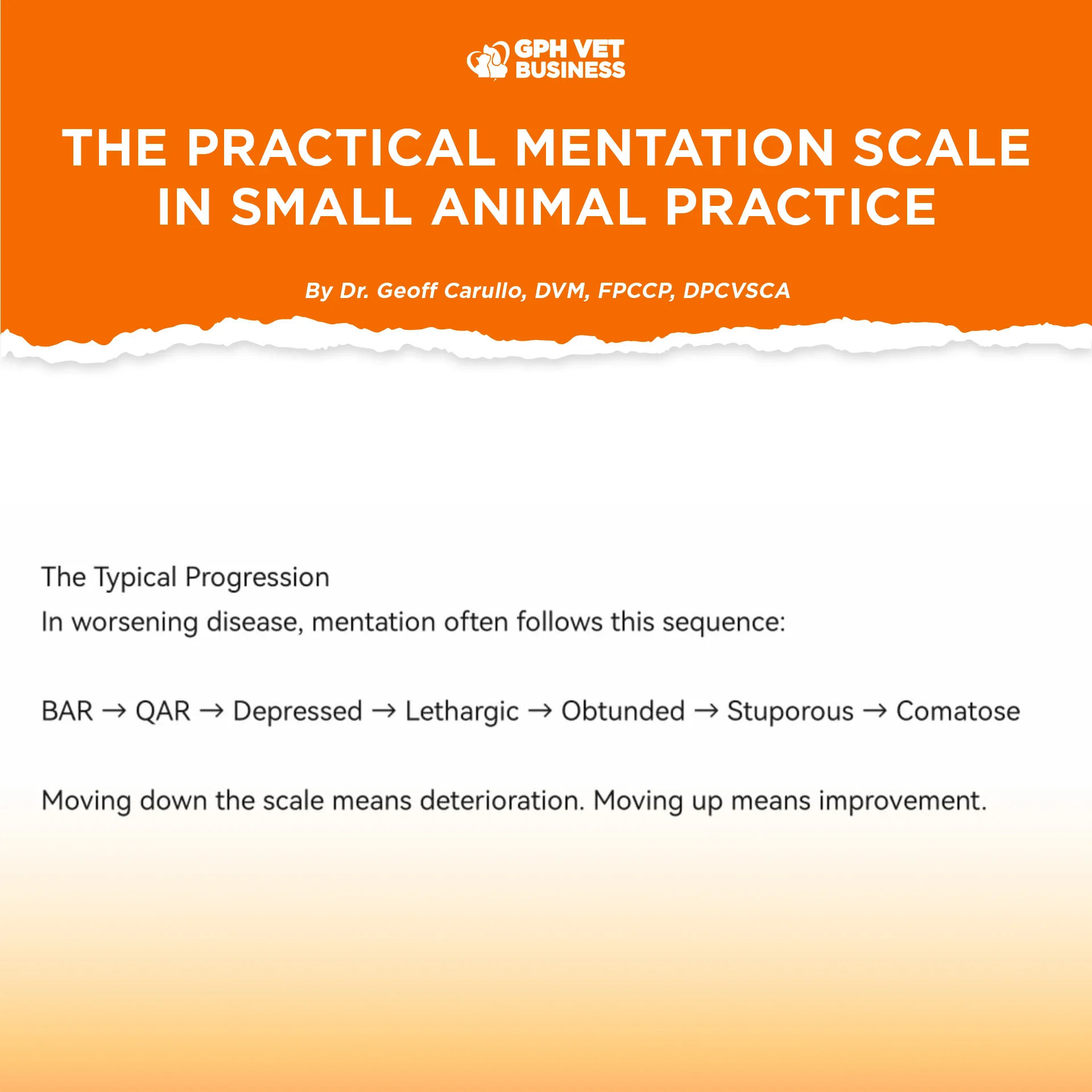
The Typical Progression
In worsening disease, mentation often follows this sequence:
- BAR → QAR → Depressed → Lethargic → Obtunded → Stuporous → Comatose
Moving down the scale means deterioration. Moving up means improvement.
Why Mentation Matters
Mentation isn’t just a descriptive note — it’s a clinical monitoring tool.
- A change from BAR to QAR may be the first warning sign of disease progression.
- A shift from Depressed to Lethargic may indicate shock or organ failure.
- A patient moving from Obtunded to Stuporous is approaching a critical stage.
Often, mentation changes before laboratory values do. Experienced clinicians watch it closely because it provides real-time insight into patient status.
A Shared Language
The Practical Mentation Scale gives veterinarians a common language.
- When a patient is described as BAR, everyone understands stability.
- When a patient is Obtunded or Stuporous, everyone recognizes urgency.
This shared shorthand strengthens communication between clinicians, technicians, and emergency teams.
Mentation may seem simple, but it remains one of the most powerful tools we have at the bedside.
Dr. Geoff Carullo is a Fellow and the current President of the Philippine College of Canine Practitioners.
Sharing this helps others understand what it really means to be a vet. If you found this valuable, like and follow for more insights.