Feline Infectious Peritonitis (FIP) was once considered a death sentence in cats. For decades, treatment was limited to palliative care, steroids, and hope. That narrative has changed dramatically with the emergence of antiviral therapy, particularly GS-441524–based treatments, one of which is commonly known in Asia as Basmi FIP.
This article explains what Basmi treatment is, how it works, where it fits in modern FIP management, and the realities veterinarians and owners must understand before starting therapy.
Understanding FIP First
FIP is caused by a mutation of feline coronavirus (FCoV) inside the cat’s body. Most cats exposed to FCoV never develop disease, but in a small percentage, the virus mutates, leading to a fatal immune-mediated condition.
FIP commonly presents as:
- Wet (effusive) FIP – abdominal or thoracic fluid accumulation
- Dry (non-effusive) FIP – granulomatous lesions in organs
- Ocular FIP – uveitis, retinal changes
- Neurologic FIP – seizures, ataxia, behavioral changes
Neurologic and ocular forms are the most difficult to treat and require higher antiviral doses.
What Is Basmi FIP Treatment?
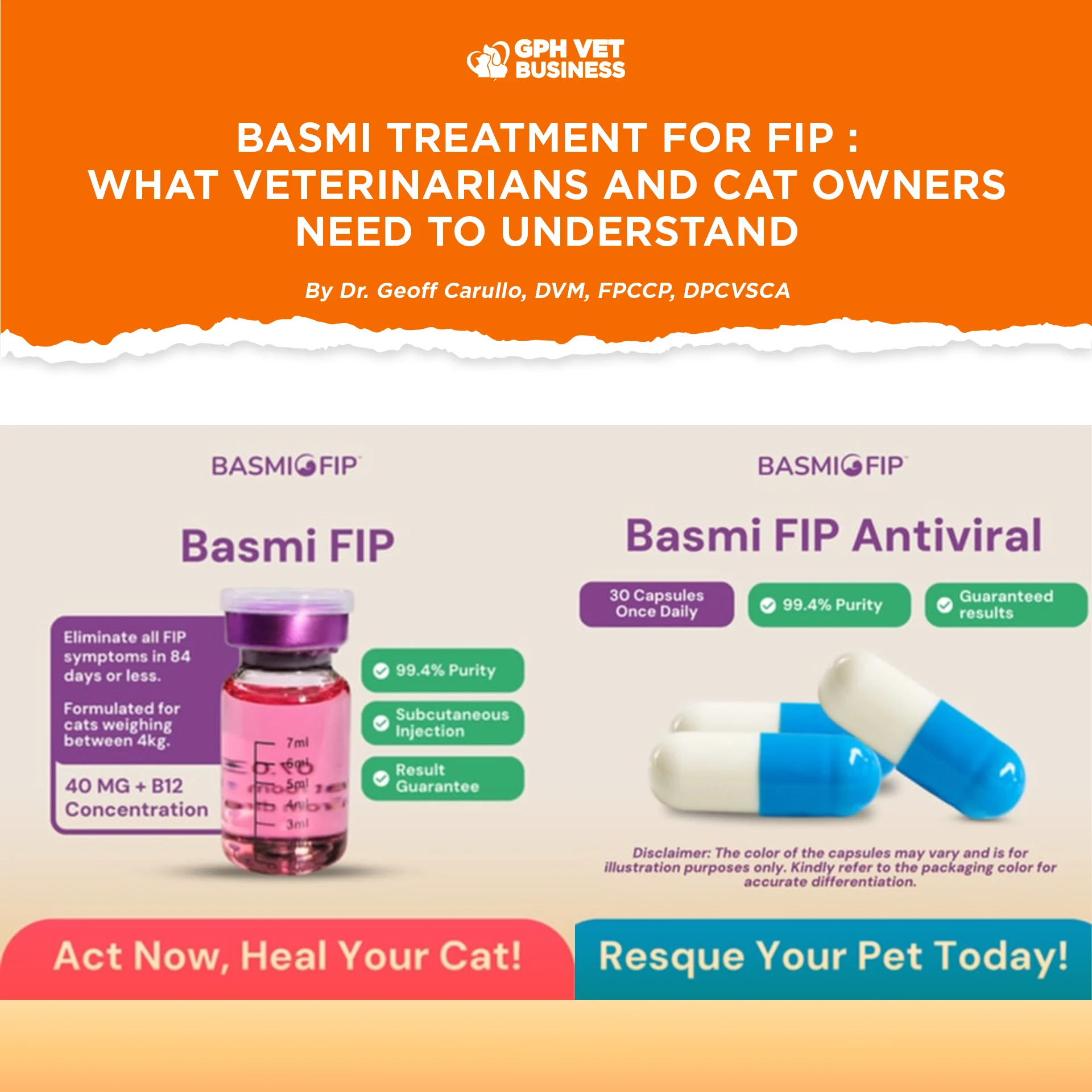
Basmi FIP is a commercially distributed antiviral treatment program whose active ingredient is GS-441524, a nucleoside analog that inhibits viral RNA replication.
GS-441524 works by:
- Blocking replication of the mutated coronavirus
- Reducing viral load
- Allowing the cat’s immune system to regain control
Although not formally licensed in many countries, GS-441524 has been supported by peer-reviewed studies and extensive real-world clinical experience worldwide.
Forms of Basmi Treatment
Injectable GS-441524
- Given subcutaneously once daily
Preferred in:
- Severe cases
- Wet FIP
- Neurologic or ocular FIP
Advantages:
- Reliable absorption
- Rapid clinical response
Disadvantages:
- Injection site pain or inflammation
Oral GS-441524
- Capsules or tablets
Used when:
- The cat is stable
- Eating well
- No neurologic involvement
Advantages:
- Easier long-term administration
Limitations:
- Absorption variability
- Not ideal for advanced disease
Many treatment plans begin with injections, then transition to oral medication once the patient stabilizes.
Treatment Duration and Protocol
Standard treatment length: 84 days (12 weeks)
Daily dosing without interruption is critical
Dose depends on:
- Body weight
- FIP form
- Presence of neurologic or ocular signs
Under-dosing or early discontinuation significantly increases relapse risk.
Expected Clinical Response
Most cats show improvement within 3 to 7 days, including:
- Improved appetite
- Reduced fever
- Increased activity
- Gradual weight gain
Clinical improvement does not equal cure. Completion of the full protocol is essential.
Supportive Care Still Matters
Antiviral therapy should be supported by:
- Fluid therapy
- Nutritional support
- Liver and renal protectants
- Management of anemia and effusions
- Judicious steroid tapering when indicated
FIP treatment is medical, not purely pharmaceutical.
Safety and Limitations
Injection site reactions are common but manageable
Relapse may occur if:
- Dosage is insufficient
- Treatment duration is shortened
- Disease is advanced at diagnosis
Neurologic FIP remains challenging, but no longer hopeless.
Final Thoughts
Basmi FIP treatment represents a turning point in feline medicine. A disease once uniformly fatal now carries a realistic chance of survival when treated correctly.
It is not a miracle drug.
It is a protocol that demands accuracy, discipline, and medical responsibility.
Sharing this helps others understand what it really means to be a vet. Like and follow if you’re with us.