An Ethical and Practical Guide for Veterinarians in the Philippines
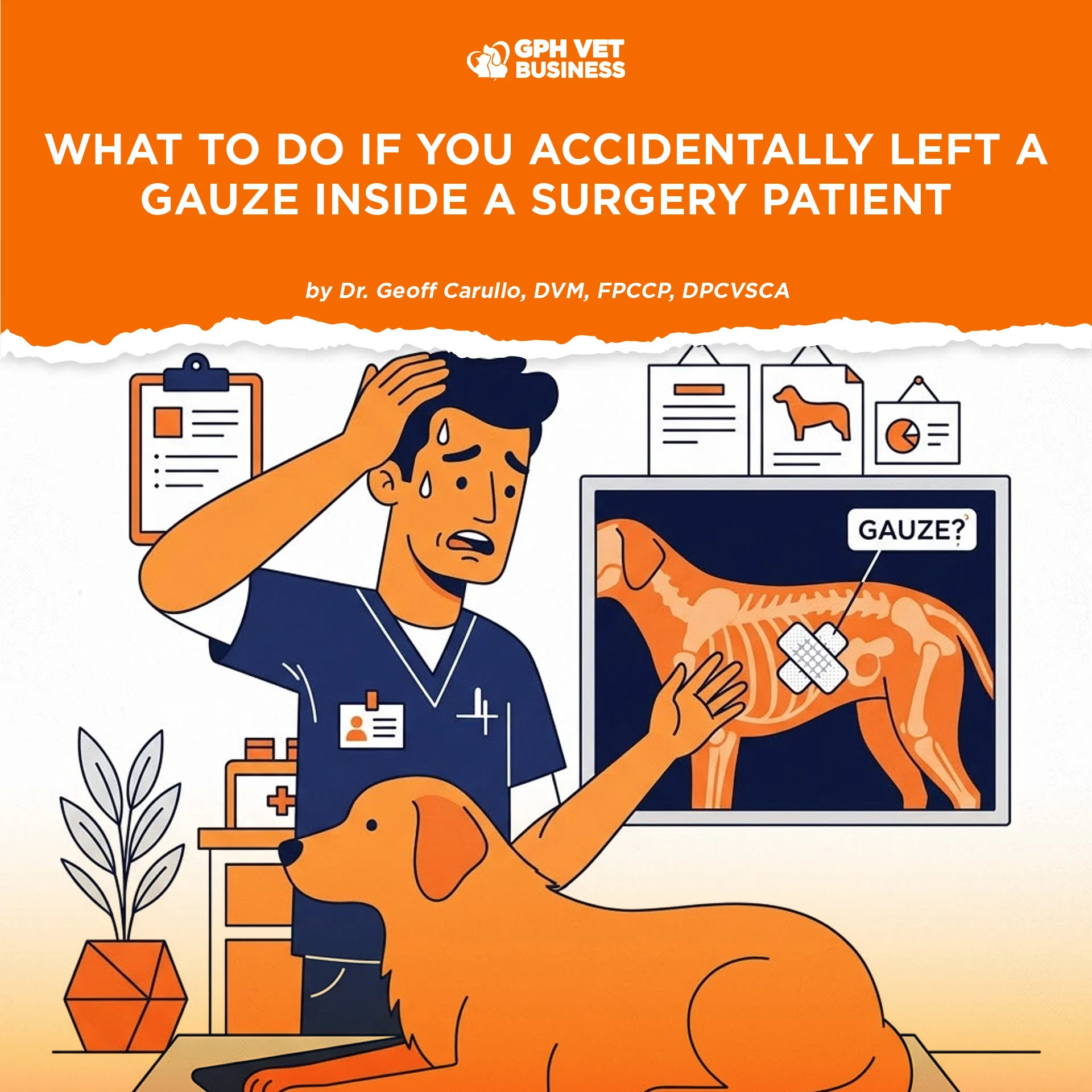
Mistakes in veterinary surgery—though rare and never intentional—can happen even to the most seasoned practitioners. One of the most serious surgical oversights is a retained foreign object, such as a gauze pad. Known medically as gossypiboma, this incident can lead to infection, pain, or severe complications for the patient.
While it’s a deeply distressing situation, how you respond is what defines your integrity as a veterinarian.


1. Acknowledge the Error Immediately
The moment you suspect or confirm that a gauze was left inside the patient, pause and assess. Do not delay. Time matters in preventing complications.
If caught during surgery:
- Retrieve the gauze immediately.
- Flush the surgical site thoroughly.
- Extend appropriate prophylactic care.
If caught after surgery:
- Notify your veterinary team immediately.
- Stabilize the patient.
- Prepare for corrective surgery if indicated.
2. Inform the Pet Owner Promptly and Honestly
Transparency is critical. While the conversation may be uncomfortable, attempting to conceal or minimize the error can significantly damage professional trust.
You may say:
“Ma’am/Sir, I want to be fully honest with you. We discovered that a piece of gauze may have been unintentionally retained during surgery. We are taking immediate steps to correct this and ensure your pet’s safety.”
Be sure to provide:
- A sincere apology.
- A clear explanation of the situation.
- A proposed treatment plan.
- Reassurance that the patient’s welfare is your priority.
3. Provide Corrective Surgery at No Additional Cost
This is part of professional accountability.
Ethical practice generally requires that the veterinarian assume responsibility for the corrective surgery, hospitalization, and treatment directly related to the retained gauze.
If the owner chooses to seek treatment elsewhere, cooperate fully by providing complete medical records and facilitating an appropriate referral.

4. Report Internally and Learn From the Error
Document the incident within your clinic.
Discuss the event with your supervising veterinarian, medical director, or practice owner when applicable.
Conduct a team review to determine:
- Whether surgical counts were performed.
- Whether existing protocols were followed.
- Whether additional staff training is necessary.
- How similar incidents can be prevented.
5. Strengthen Surgical Safety Protocols
Following any retained surgical item incident, review and reinforce surgical protocols.
Recommended practices include:
- Counting all gauze and surgical instruments before and after every procedure.
- Using radiopaque gauze whenever available.
- Assigning a dedicated team member to verify surgical counts.
- Documenting surgical materials in the patient’s medical record.
6. Document Everything
Record all relevant details, including:
- The discovery of the retained gauze.
- Clinical findings.
- Corrective measures taken.
- Discussions with the owner.
- Patient progress and follow-up.
Complete documentation protects both the patient and the veterinarian should questions arise later.
7. Be Prepared for Professional or Legal Review
If a complaint is filed before the Professional Regulation Commission (PRC) or through civil legal channels, remain professional throughout the process.
Prepare:
- Complete medical records.
- Surgical notes.
- Consent forms.
- Diagnostic results.
- Documentation of all communications with the client.
Seek appropriate legal advice when necessary.
While a retained gauze may be considered evidence of negligence depending on the circumstances, honesty, prompt corrective action, transparency, and cooperation may demonstrate professionalism and responsible conduct.


Final Thought
Every veterinarian hopes never to encounter this situation. However, when an error occurs, integrity is measured not by the absence of mistakes but by how responsibly they are addressed.
Honesty, accountability, compassion, and a commitment to patient welfare remain the cornerstones of ethical veterinary practice.
Veterinary medicine is not about being perfect. It is about continuously striving to provide the safest care possible while taking responsibility when things do not go as planned.
Dr. Geoff Carullo is a Fellow and the current President of the Philippine College of Canine Practitioners.
If you found this article helpful, please share it with fellow veterinarians, veterinary students, and pet owners to promote ethical, evidence-based veterinary practice.