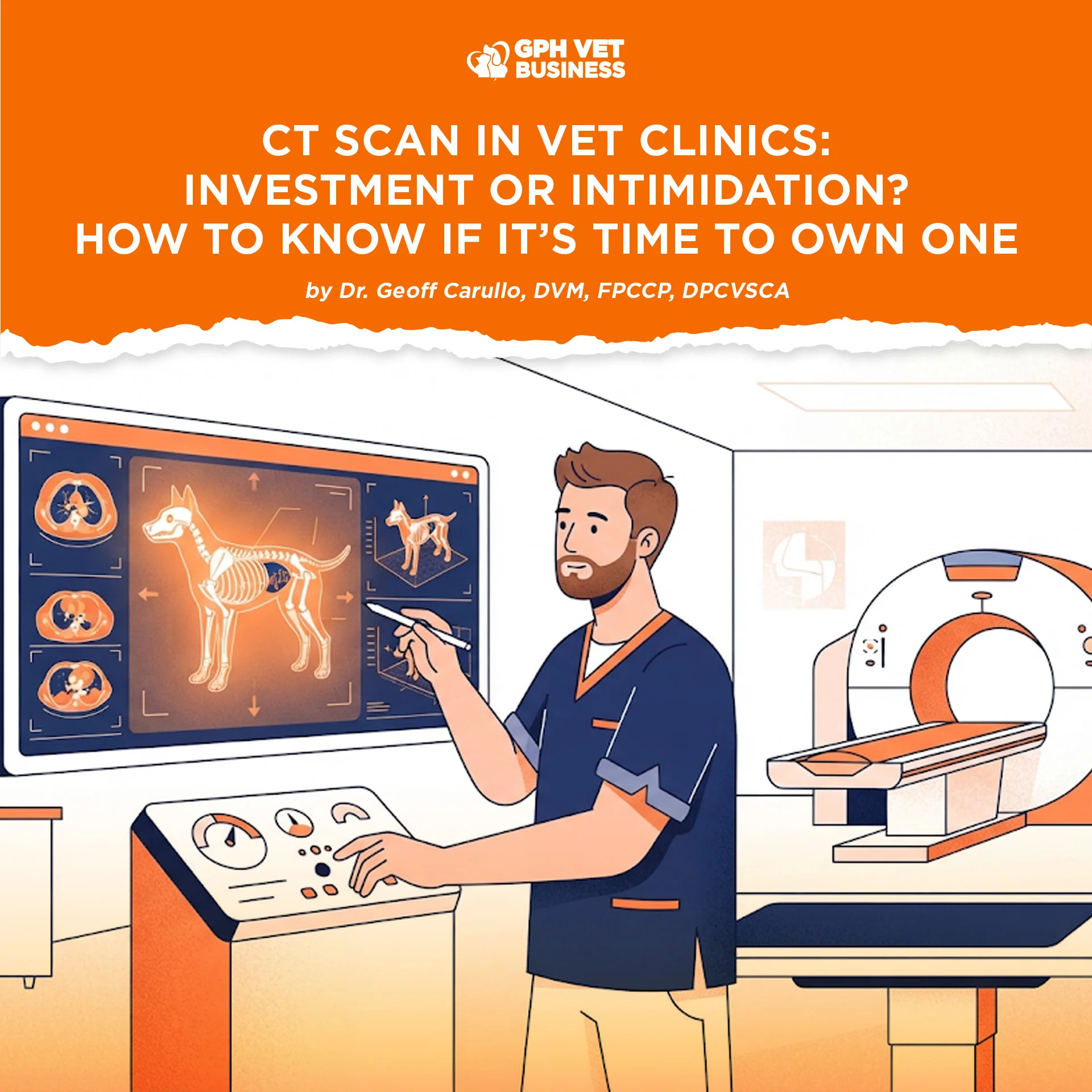
In the age of Instagram-ready clinics and high-tech upgrades, the buzz around owning a veterinary CT scanner is louder than ever. Some clinics are getting one. Some are dreaming of one. And many are asking: Do I need one—or do I just want to look more advanced than the vet next door?
It’s a fair question. In the Philippines, where the balance between klinika at kita (clinical excellence and financial sense) must be carefully struck, a CT scan machine is not a small investment—it’s a multi-million peso leap.
So let’s unpack it.
1. The Clinical Signs: When You Actually Need a CT Scan Machine
Owning a CT scanner starts to make sense if your clinic consistently sees:
- Advanced neurology cases
– Suspected brain tumors, spinal compressions, IVDD (intervertebral disc disease), seizures with unknown origin - Complex orthopedic or oncologic cases
– Joint replacements, surgical planning for complex fractures, cancer staging for metastasis - Head and neck diagnostics
– Nasal tumors, chronic sinusitis, retrobulbar masses, dental-root abscesses, middle ear disease - Soft tissue surgeries requiring surgical precision
– Adrenal masses, thoracic abnormalities, liver or spleen lesions
If you’re frequently referring these cases or losing them to referral centers, then a CT scan may not just be a want—it’s a next step in clinical evolution.


2. The Business Case: ROI or Pipe Dream?
Here’s the truth: A CT scanner is not profitable if you treat it like a trophy.
But it can generate ROI if you treat it like a system. Consider:
Break-even Analysis
Let’s say your CT machine costs ₱10–15 million, all-in (machine + renovations + software + training).
If you charge ₱12,000 to ₱20,000 per scan, and you perform 50–70 scans a month, that’s around ₱600,000 to ₱1.4M in monthly revenue.
You break even in 12–24 months if and only if you build a referral network or have an in-house caseload to support it.
But if you only see 10 cases per month?
You’re burning cash for a machine that’s aging faster than it’s earning.
3. Red Flags That You’re Not Ready
- You don’t have a dedicated radiologist (in-house or teleradiology)
- You’re not maximizing your current X-ray and ultrasound setup
- You haven’t built a surgical or specialty program
- You plan to use it mainly for “status”—not actual case utility
CT should serve patients, not just feed pride.


4. Why Some Clinics Still Get One—and Thrive
It’s not just about having it. It’s about how you integrate it.
- Some clinics in the Philippines positioned their CT services as referral centers, welcoming cases from smaller vet clinics in their city or region.
- Others combined CT with advanced ortho/neuro surgery, chemotherapy, or oncology consults.
- Some use it to increase diagnostic accuracy, build client trust, and train their team into specialists.
Those who win are those who build a strategy around the machine—not those who post it for flex.

5. So… Should YOU Get One?
Ask yourself these 5 questions:
- Do I have enough caseload to use it weekly—if not daily?
- Do I have the surgical or diagnostic capabilities to act on what I find?
- Can I charge enough to sustain it—or partner with others to refer to me?
- Do I want to be known not just as a vet with a machine, but a vet with solutions?
- Am I growing my clinic for the future—or reacting to the trend today?
If your answer to all 5 is a confident yes—then go ahead.
Lead the future. Be the first in your area. Offer something life-saving.
But if the answer is shaky, pause and refocus your resources where it makes impact now—like better staff, stronger marketing, or updated surgical tools.
Final Thoughts
CT scanning isn’t the finish line of success. It’s a tool—just like your stethoscope, your scalpel, and your vision.
Use it when you’re ready. Not when you’re pressured.
Dr. Geoff Carullo is a Fellow and the current President of the Philippine College of Canine Practitioners.
Sharing this helps others understand what it really means to be a vet. Like and follow if you’re with us.