This reported case in Cavite is the kind of situation many veterinarians have seen before.
A cat was reportedly rushed to a veterinary clinic after accidentally being fed ivermectin powder.
The owner was not initially present. A household helper brought the patient for emergency care. The condition, charges, laboratory work and confinement were reportedly explained, and treatment was started.
The following day, the owner arrived and became upset about the expenses.
The veterinarian reportedly explained the situation and recommended continued management.
The owner declined the recommendations and decided to take the cat home.
And as could unfortunately be predicted in a seriously ill patient whose recommended treatment was discontinued, the cat later died.


Then came the complaint:
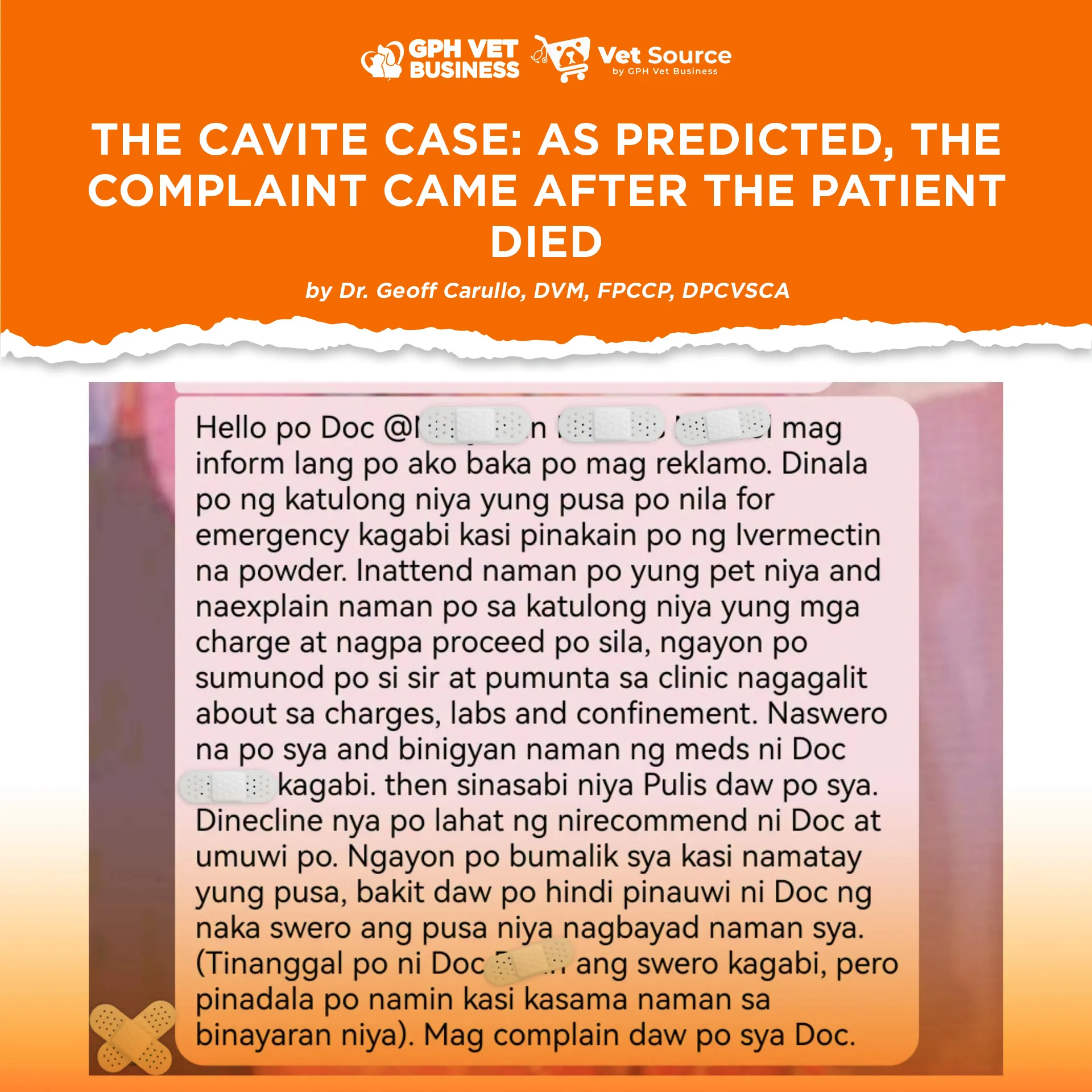
“Nagbayad naman ako. Bakit hindi pinauwi na naka-swero ang pusa?”
And this is where an important misunderstanding about emergency veterinary medicine needs to be discussed.
“SWERO” IS NOT AN ANTIDOTE
“Swero” is not an antidote.
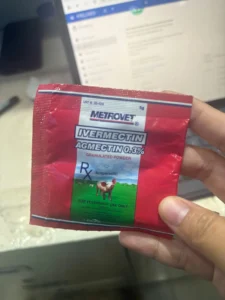
The product shown is 0.3% ivermectin powder. That concentration is equivalent to approximately 3 mg of ivermectin per gram of powder. A 5-gram sachet therefore contains around 15 mg of ivermectin, although we do not know how much the cat actually consumed.
Ivermectin toxicity can cause severe neurologic signs, including ataxia, tremors, blindness, seizures, depression, coma and potentially death.
Treatment is largely supportive.
IV fluids may be part of that treatment, but a bag of fluid does not neutralize ivermectin.
A poisoned patient may require continuous monitoring, neurologic support, medications, temperature management, nutritional support and observation for deterioration.


AN IV BAG IS NOT THE SAME AS HOSPITAL CARE
And an IV catheter is not simply something you send home.
“Pinauwi sana na naka-swero” sounds easy.
It is not.
IV therapy requires monitoring of the catheter, fluid rate, patient hydration, circulation and overall condition. The catheter can dislodge, infiltrate, become contaminated or be removed by the patient.
Taking home an IV bag is not the same as receiving hospital care.
More importantly, if the veterinarian recommends continued confinement and treatment but the owner refuses, the veterinarian cannot simply force the patient to remain hospitalized.
DOCUMENTATION MATTERS
That is why veterinary records should document:
- what treatment was recommended,
- what risks were explained,
- what the owner declined, and
- the condition of the animal when it was taken home.
Because once treatment is refused, responsibility for that decision also becomes part of the case.

WHAT PET OWNERS HAVE THE RIGHT TO DO
This Cavite case should be a warning to both veterinarians and pet owners.
Pet owners have every right to ask about costs.
They can ask why a laboratory test is needed.
They can ask for alternatives.
They can even decline treatment.
But there is a very important difference between declining the veterinarian’s recommendation and later claiming that the veterinarian should somehow have guaranteed the outcome anyway.
A DEATH AFTER DISCHARGE IS NOT AUTOMATICALLY NEGLIGENCE
A patient dying after discharge does not automatically prove veterinary negligence.
At the same time, a signed refusal does not automatically excuse genuine malpractice. The entire medical record and circumstances must still be reviewed fairly.
But when the recommendation was to continue treatment, the treatment was declined, the patient was taken home, and deterioration followed, that sequence cannot simply disappear from the story because the outcome was tragic.
YOU CANNOT DEMAND THE BENEFIT OF TREATMENT YOU REFUSED
And perhaps this is the lesson from the Cavite case:
You may refuse the treatment. But you cannot reasonably demand the benefit of the treatment you refused.
Veterinary medicine can recommend.
Veterinary medicine can explain.
Veterinary medicine can treat when permitted.
But it cannot guarantee survival, especially after the recommended care has been discontinued.
Dr. Geoff Carullo is a Fellow and the current President of the Philippine College of Canine Practitioners.
Sharing this helps others understand what it really means to be a vet. Like and follow if you’re with us.