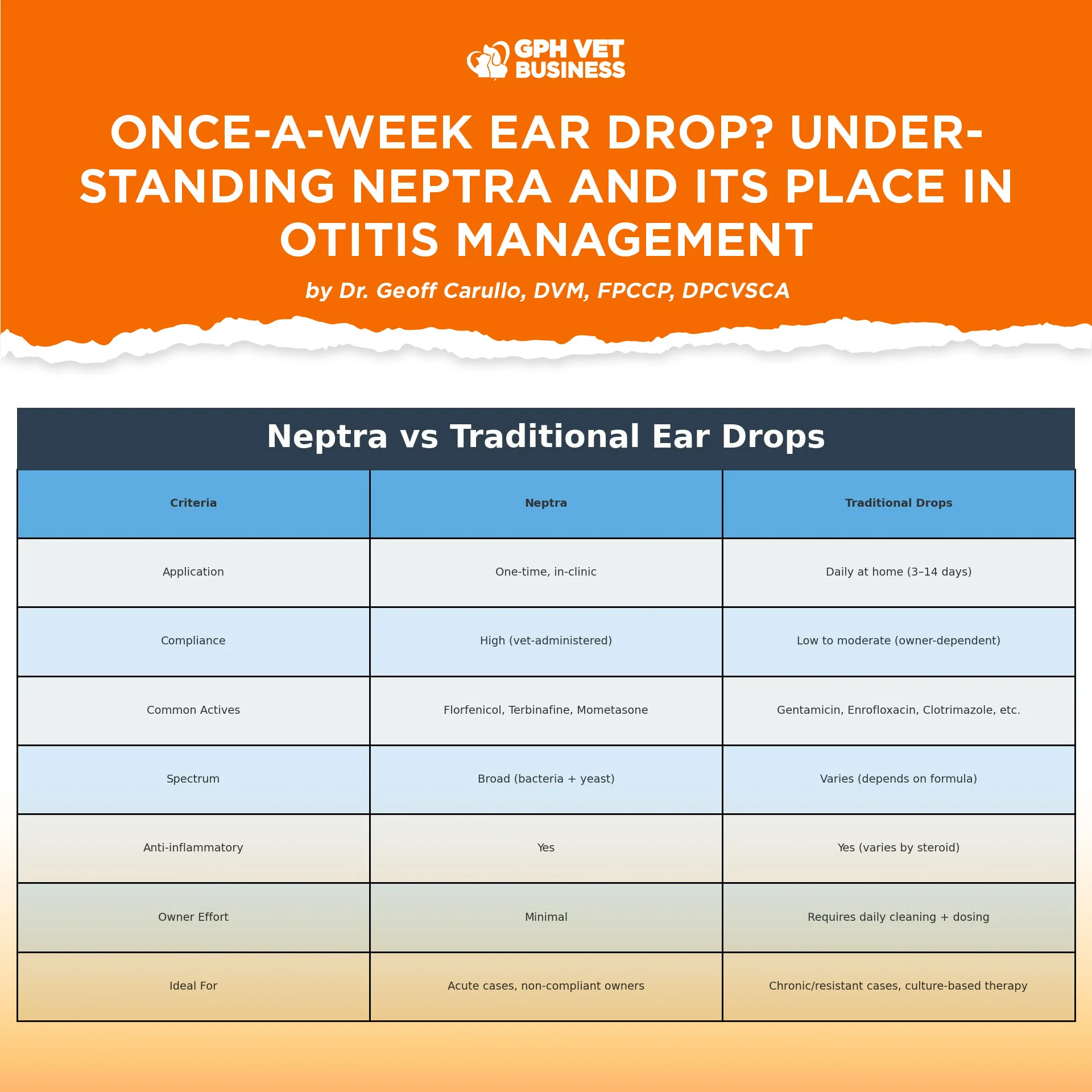
Ear infections in dogs can be frustrating—for both pet owners and veterinarians.
The challenge of daily ear cleaning and medication can lead to poor compliance, treatment failure, and recurring infections.
Enter Neptra, a game-changing otic treatment that promises efficacy in just one application.
But is it truly as effective as it claims? And how does it compare to traditional ear drops?
Let’s break it down.
What Is Neptra?
Neptra is a single-dose, prescription-only ear drop used to treat acute canine otitis externa. It contains a unique combination of three active ingredients:
- Florfenicol – a broad-spectrum antibiotic
- Terbinafine – an antifungal agent
- Mometasone furoate – a potent anti-inflammatory corticosteroid
This combination targets the three major components of ear infections: bacteria, yeast, and inflammation—making it a triple-action formula.


How Does It Work?
A single dose of Neptra is instilled into the ear canal on Day 1, and no further dosing is required for seven days.
Its gel-based formulation allows for sustained release, delivering consistent therapeutic levels over the treatment period.
This is particularly helpful for:
- Busy pet owners
- Dogs that are difficult to medicate
- Clinics that want to ensure treatment compliance from Day 1
Do We Still Need to Clean the Ears?
Only if necessary.
Neptra should be applied after ear cleaning, if debris or discharge is present. Routine daily cleaning after application is not required unless clinically indicated.
For dogs with minimal exudate, the ear can simply be wiped before instillation. However, for moderate to severe cases, it’s advisable to perform a thorough cleaning prior to treatment for maximum absorption.


What About Culture and Sensitivity?
While empirical use of Neptra is common for first-time or mild infections, chronic, resistant, or recurrent otitis should still undergo cytology and culture and sensitivity (C&S) testing. Especially when:
- Otitis has failed prior treatment
- Otitis media is suspected
- There’s a risk of multi-drug resistant organisms (MDROs)
Neptra has good activity against Staphylococcus pseudintermedius, Malassezia pachydermatis, and other common pathogens—but superbugs or non-responsive strains need tailored protocols.
Is It Worth It?
Cost-wise, Neptra may seem higher than typical otic medications, but factoring in no daily labor, less owner frustration, and potentially fewer veterinary rechecks, the total value can be competitive.
Plus, it improves:
- Compliance
- Clinical outcomes
- Client satisfaction

When Should We NOT Use Neptra?
- Perforated tympanic membrane (avoid any otic drops unless cleared)
- Known hypersensitivity to any component
- Chronic or advanced otitis media without proper diagnostics
Always perform an otoscopic examination before use. In cases of heavy discharge or chronic disease, cleaning and diagnostics remain essential.
Final Thoughts
Neptra represents a shift in how we approach otitis externa management—offering efficacy, convenience, and compliance in a single drop. While not a one-size-fits-all solution, it can be a valuable tool in your practice, especially when used thoughtfully.
Like all treatments, case selection and proper diagnostics remain the key to success.
Dr. Geoff Carullo is a Fellow and the current President of the Philippine College of Canine Practitioners.
Sharing this helps others understand what it really means to be a vet. Like and follow if you’re with us.