A cat that has not defecated for several days may appear to have a straightforward case of constipation. But when constipation becomes persistent, the colon becomes severely dilated, and normal motility begins to fail, veterinarians must consider something more serious:
Megacolon.
A 2022 study published in Frontiers in Veterinary Science provides an important reminder that in feline idiopathic megacolon, time matters. The longer the condition persists, the greater the likelihood of structural and potentially irreversible changes within the colon.



What Is Feline Megacolon?
Megacolon is characterized by persistent dilation of the colon associated with impaired motility. It is often the end result of prolonged constipation or obstipation.
Not every constipated cat has megacolon.
Constipation refers to difficult or infrequent passage of feces. Obstipation is a more severe form in which the animal becomes unable to effectively evacuate impacted fecal material. Megacolon goes further: the colon becomes markedly dilated and loses its ability to propel feces normally.
Idiopathic megacolon is particularly important in cats because, in many cases, no specific underlying mechanical cause can be identified.
The L5 Rule: Measuring the Colon Objectively
One of the most useful findings on abdominal radiographs is the relationship between the maximum colonic diameter (MCD) and the length of the fifth lumbar vertebral body (L5).
The calculation is straightforward:
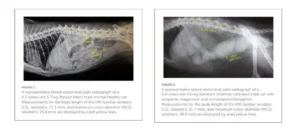
MCD Ratio = Maximum Colonic Diameter ÷ L5 Vertebral Body Length
Earlier radiographic research by Trevail and colleagues found that the MCD ratio was the most repeatable and accurate of the measurements evaluated for differentiating normal cats, constipated cats, and cats with megacolon.
Their findings provide two useful numbers:
- MCD < 1.28 is a strong indicator of a normal colon.
- MCD > 1.48 is a good indicator of megacolon.
- The >1.48 cutoff had a reported sensitivity of 77% and specificity of 85%.
This gives veterinarians something more objective than simply describing the colon as “large” or “full of feces.”


What the 2022 Study Found
Abdelbaset-Ismail and colleagues examined 30 cats with idiopathic megacolon and 30 control cats. The cats with megacolon were further divided according to whether clinical signs had been present for less than six months or for six months or longer.
The radiographic difference was substantial.
According to the study, control cats had an average MCD ratio of approximately 0.98, while cats with idiopathic megacolon averaged approximately 1.86.
Even more interesting was what happened as the disease persisted.
- Cats with clinical signs for less than six months had an average MCD ratio of approximately 1.67.
- Cats affected for six months or longer averaged approximately 1.98.
In other words, longer-standing disease was associated with greater colonic dilation.
But the Most Important Changes Were Microscopic
The study did not stop at radiographs.
Researchers also examined full-thickness colonic tissue from affected cats. This revealed an important part of the megacolon story that cannot be seen on an X-ray.
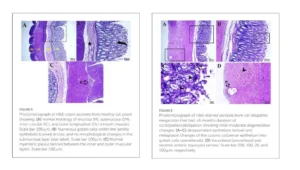
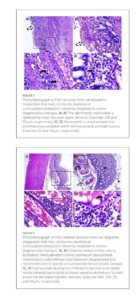
Cats with long-standing idiopathic megacolon showed changes that included:
- Thickening of colonic smooth muscle layers
- Increased numbers of necrotized enteric myocytes
- Decreased numbers of ganglion cells
- Structural changes consistent with altered colonic innervation and motility
These findings help explain why advanced megacolon can become so difficult to manage.
The problem is no longer simply that the colon contains too much feces.
The colon itself may have changed.
Why Six Months May Matter
One of the most clinically relevant observations in the study involved treatment response.
Among cats with clinical signs lasting less than six months, medical treatment was satisfactory in 8 of 12 cats.
Among cats with signs lasting six months or longer, favorable medical response was reported in only 1 of 18 cats.
Most cats in the longer-duration group ultimately required subtotal colectomy.
The authors associated prolonged disease with histologic changes that may become functionally irreversible.
This does not mean that six months is an absolute deadline for every cat. Individual patients differ, and treatment decisions should never be made from duration alone.
But it emphasizes an important principle:
Chronic constipation should not simply be allowed to continue indefinitely.

Why Medical Management Eventually Fails in Some Cats
Early or less advanced cases may respond to combinations of rehydration, dietary modification, stool softeners or laxatives, enemas, manual de-obstipation, and prokinetic therapy.
But there comes a point in some patients when repeatedly removing feces does not address the fundamental problem.
If the colon has become severely dilated and its neuromuscular function has deteriorated, conservative treatment may provide only temporary relief.
The cat improves after de-obstipation, goes home, becomes constipated again, and returns with another severely distended colon.
At that stage, the question changes from:
“How do we remove the feces?”
to:
“Can this colon still function adequately?”
For medically refractory megacolon, subtotal colectomy may become the definitive treatment.
Radiographs Tell More Than Just “There Is a Lot of Stool”
This is why abdominal radiographs in chronically constipated cats deserve careful measurement.
Instead of simply reporting a feces-filled colon, measure the maximum colonic diameter and compare it with L5.
A practical radiographic guide is:
- MCD < 1.28 → strongly supports a normal colon
- MCD > 1.48 → supports megacolon
Values between these thresholds require interpretation alongside the history, examination, degree of fecal retention, and other diagnostic findings. The original study establishing these thresholds specifically showed that the L5 ratio performed better than relying on subjective assessment alone.
The Take-Home Message
Feline megacolon is not simply “severe constipation.”
With prolonged disease, the colon can become progressively dilated while structural changes develop within its smooth muscle and enteric nervous system. Eventually, medical treatment may become increasingly unsuccessful.
That makes early recognition important.
When evaluating a chronically constipated cat:
- Measure the colon.
- Compare it with L5.
- Consider how long the problem has been occurring.
- Most importantly, determine whether you are still treating constipation or already dealing with a dysfunctional colon.
Because in feline megacolon, the longer the colon remains severely dilated, the more difficult it may become to restore normal function.
Sources
Abdelbaset-Ismail A, Ibrahim N, Sobh MS, et al. Use of radiographic and histologic scores to evaluate cats with idiopathic megacolon
Sharing this helps others understand what it really means to be a vet. Like and follow if you’re with us.
Dr. Geoff Carullo is a Fellow and the current President of the Philippine College of Canine Practitioners.