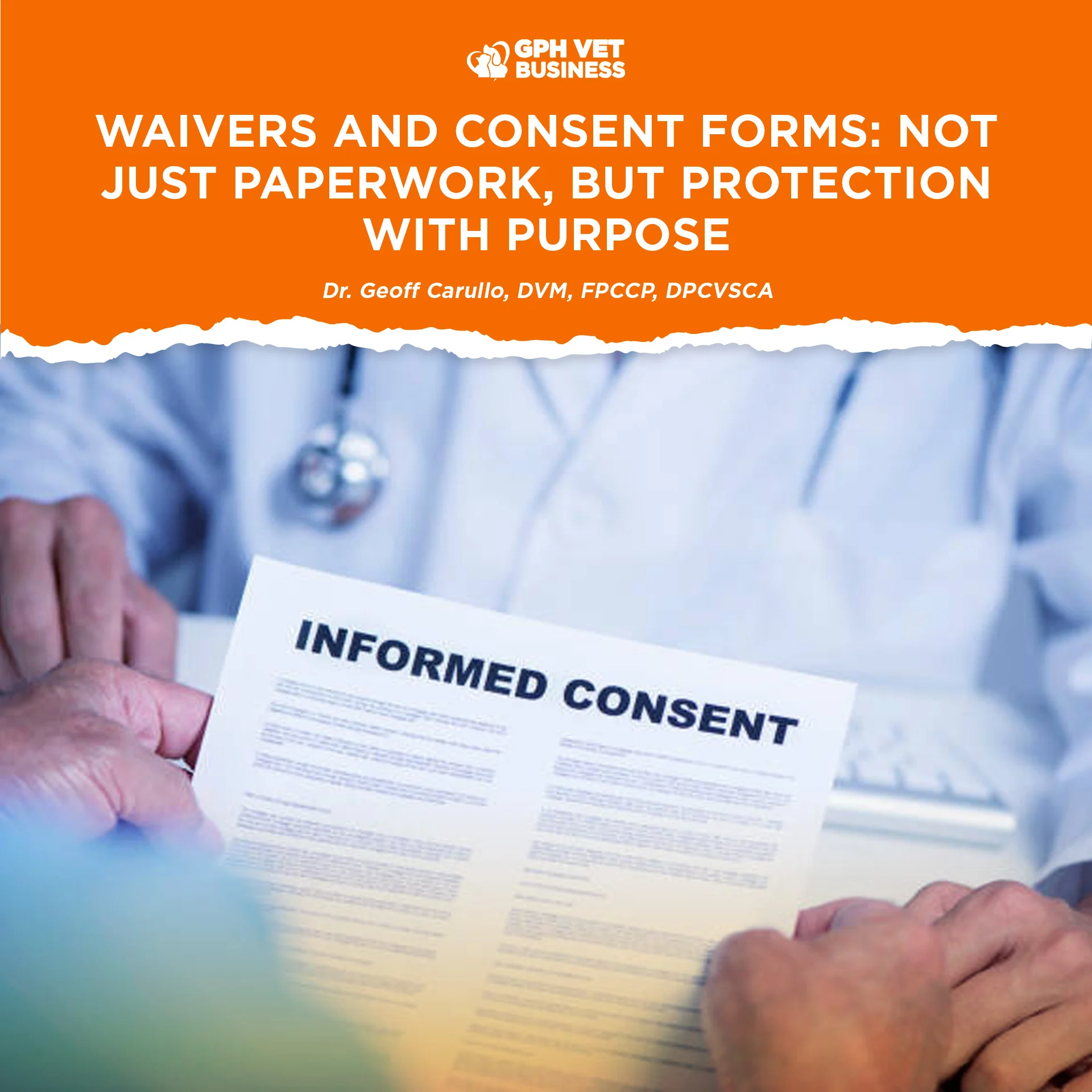
In every risky procedure, difficult case, or even routine anesthesia, your best shield is a well-worded, well-explained consent form—signed after a real conversation.
Here’s how to make them work for you—not just sit in a drawer.
1. Must-Haves in Every Consent Form
- Client’s full name and contact information
- Patient’s full name, species, breed, age
- Procedure to be performed, clearly spelled out
- Diagnosis (or tentative diagnosis)
- Risks and complications (specific to the procedure and condition)
- Alternatives discussed (including doing nothing)
- Prognosis
- Costs/financial estimate
- Acknowledgment of understanding and consent
- Date, time, and signature (client AND attending vet)


2. Additional Forms to Consider Keeping on File
General Admission Consent
For day procedures, minor diagnostics, etc. Include a line about authorizing diagnostics or treatment within a cost range.
Anesthesia & Surgical Consent
Should explain: fasting instructions, anesthetic risks (esp. for brachycephalics, geriatrics, kidney/liver patients), and CPR/DNR options.
Hospitalization Consent
Covers risks of IV fluids, catheterization, infection, and patient handling.
Euthanasia Consent
Crucial for emotional clarity and legal protection. Include clear options for cremation/burial and body release.
Refusal of Treatment Form
When clients decline a strongly advised procedure or diagnostic, have them sign. It shows you’ve discussed the risks—and protects your license.


3. Tips for Clear, Client-Friendly Language
- Avoid medical jargon. Instead of “coagulopathy,” say “risk of excessive bleeding.”
- Use bullet points, not dense paragraphs.
- Include bolded “I understand that…” statements to make key points stand out.
- Translate into Filipino if needed for local clarity.
4. Verbal Consent Is Not Enough (But It Still Matters)
Always follow up verbal consent with a written one—but do document the discussion in the SOAP or digital record:
“Explained anesthetic risks due to patient’s age. Owner understood and consents to proceed with surgery.”

Final Reminder
A signed form doesn’t replace your words.
But your words, when backed by a signed form, can save your license, your clinic, and your peace of mind.
Sharing this helps others understand what it really means to be a vet. Like and follow if you’re with us.
Dr. Geoff Carullo is a Fellow and the current President of the Philippine College of Canine Practitioners.