Social media is powerful.
A single emotional post can gather thousands of reactions, hundreds of shares, and permanently affect the reputation of a veterinary clinic within hours.
As veterinarians, we sympathize with every pet owner who loses a beloved companion. The grief is real. The pain is real.
But grief alone should never become the sole basis for judging whether veterinary care was appropriate.
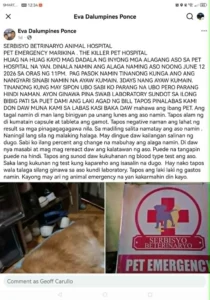
Recently, a case circulated online where a pet owner described a heartbreaking experience, alleging that the hospital “did nothing” except perform laboratory tests and charge large fees. Predictably, many readers immediately concluded that the clinic was negligent.
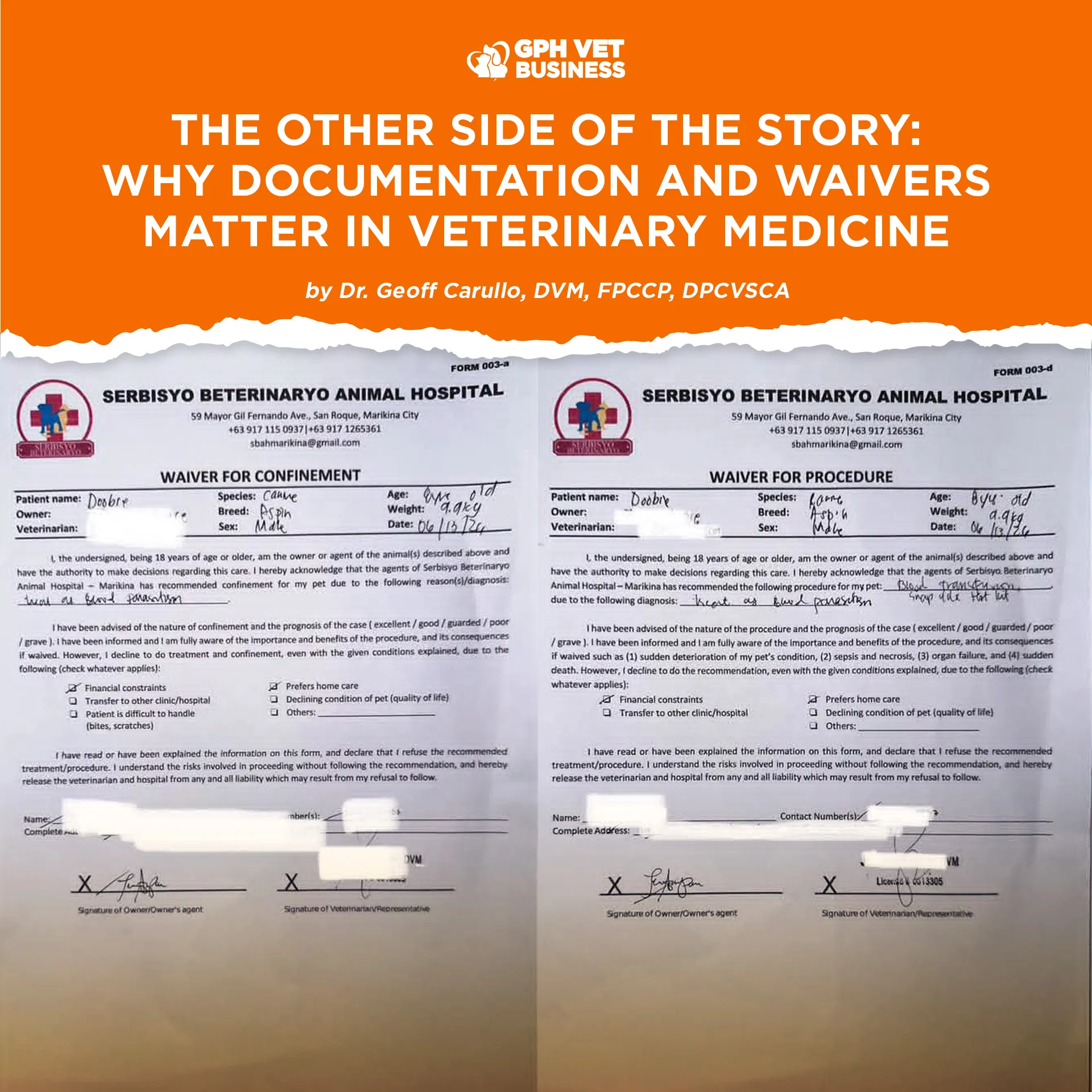
Then the clinic released its documentation.
Suddenly, the public saw information that had not appeared in the original social media post.
According to the clinic’s statement, the patient arrived after three days of inappetence and coughing. Initial diagnostics reportedly revealed life-threatening hematologic abnormalities, prompting recommendations for immediate hospitalization, blood transfusion, additional diagnostics, and intensive care.

The clinic also presented signed documents indicating that the owners declined several recommended interventions, including confinement and blood transfusion, after informed discussion of the risks.


Why Documentation Matters
Whether every clinical decision was perfect is something only a complete review of the medical record and the appropriate regulatory bodies can determine.
However, one lesson stands out clearly.
Documentation protects everyone.
- It protects the patient by ensuring proper communication.
- It protects the owner by documenting what was recommended and what decisions were made.
- It protects the veterinarian by preserving an accurate record of the consultation should questions arise later.
Many people mistakenly believe waivers exist simply to shield veterinarians from liability.
That is not their primary purpose.
A properly executed informed refusal form documents that:
- The veterinarian explained the diagnosis and treatment options.
- The owner understood the potential consequences of declining recommendations.
- The owner voluntarily made the decision after receiving sufficient information.
Without proper documentation, disagreements often become one person’s memory versus another’s.
With documentation, there is an objective record of what actually occurred.


Communication Is Part of Treatment
Veterinary medicine is not simply about giving medications.
Sometimes our most important job is communicating prognosis, explaining risks, offering available treatment options, and respecting an owner’s informed decision—even when that decision differs from what we medically recommend.
A Reality Every Pet Owner Should Understand
Cases like these also remind pet owners of another important reality.
A pet that has not eaten for several days is already a critically ill patient. Even with appropriate diagnostics, hospitalization, transfusion, intensive care, and aggressive treatment, survival can never be guaranteed.
Emergency medicine is often a race against time, and unfortunately, not every patient can be saved.
Final Thoughts
As veterinarians, we should continue improving our communication skills.
As pet owners, we should ask questions until we fully understand the recommendations.
And as members of the public, we should remember that a viral Facebook post rarely contains the complete medical story.
In veterinary medicine, documentation is not just paperwork.
Sometimes, it becomes the only voice left when emotions have taken over the conversation.

Sharing this helps others understand what it really means to be a vet. Like and follow if you’re with us.
Dr. Geoff Carullo is a Fellow and the current President of the Philippine College of Canine Practitioners.