The Hidden Risks of “LOW-COST MASS” Spay and Neuter
By Dr. Erwinia Exciomo, DVM, DPCCP, DPCVSCA
Disclaimer: This article is not meant to discredit or speak negatively about low-cost mass spay and neuter programs. These programs have helped many animals and communities. The purpose of this article is simply to raise awareness about the possible risks pet owners should understand before deciding to join such activities.
Everybody loves a bargain.
A low-cost spay or neuter can seem like the perfect solution. It is affordable, accessible, and allows more pets to undergo a procedure that is undeniably important for population control and the prevention of certain reproductive diseases.
But there is one thing every pet owner must remember:
Low-cost does not mean risk-free.
Spaying and neutering are surgical procedures. They are not vaccinations. They are not simple injections. They involve anesthesia, surgical incisions, tissue handling, pain management, and post-operative recovery.
Every surgery, regardless of cost, carries risks.
Proper patient care begins long before the first incision. It starts with a thorough physical examination, appropriate screening tests when necessary, proper anesthesia planning, sterile surgical instruments, diligent monitoring, and careful recovery observation.
These are not luxuries.
They are part of safe veterinary medicine.


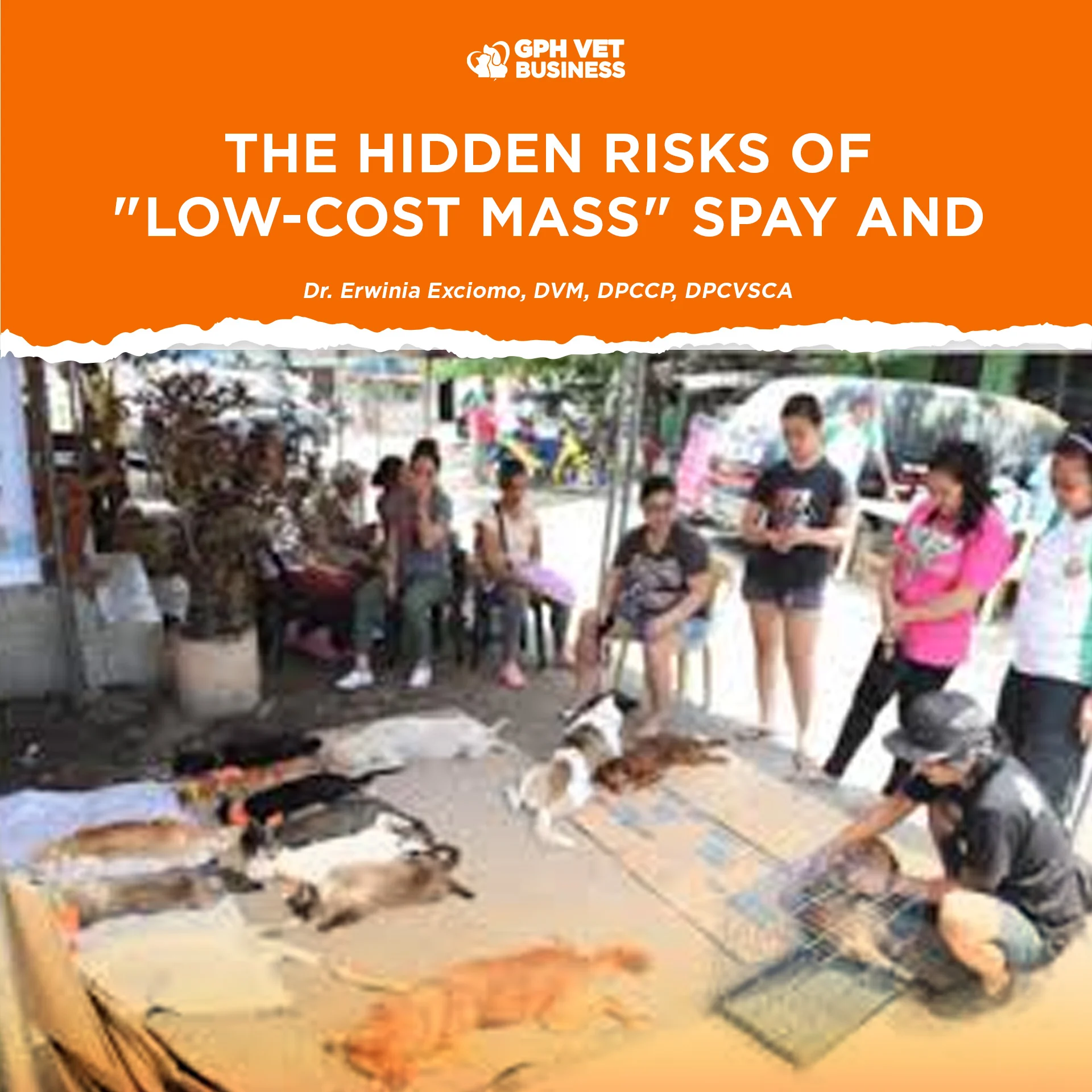
In mass spay and neuter activities, a large number of animals may be processed within a limited period of time. While many programs work hard to maintain standards, the reality is that higher patient volumes can place pressure on time, staffing, and resources.
When more patients are handled in less time, there may be fewer opportunities for individualized assessment, continuous monitoring, and extended post-operative observation. This can potentially increase the risk of complications that may not be immediately apparent.
Another Important Concern Is Infection Control
A clean surgical environment is critical. Instruments must be properly sterilized. Surgical areas must be maintained meticulously. Recovery areas must be managed carefully.
Without strict sanitation protocols, animals may face increased risks of wound infections, delayed healing, and post-operative complications.
For cats, there is another hidden danger that many owners do not consider.
Infectious disease exposure.
In the Philippines, many cats still have incomplete, uncertain, or undocumented vaccination histories. Some may appear completely healthy while silently carrying infectious agents.
These may include:
- Feline Panleukopenia Virus (FPV)
- Feline Calicivirus (FCV)
- Feline Herpesvirus (FHV)
- Upper Respiratory Tract Infections
- Ear Mites
- Ringworm
- Fleas and other external parasites
A cat does not need to look sick to be contagious.

Some infections have incubation periods that allow a cat to appear normal during admission and develop clinical signs days later, long after the surgical wound has healed.
When cats from multiple households are gathered together in a common environment, opportunities for disease transmission increase.
One exposed cat can potentially bring an infection home.
And once that happens, the consequences can become far more expensive than the surgery itself.
Treatment for feline panleukopenia, respiratory infections, severe dermatophytosis, and other contagious diseases can cost thousands of pesos. In some cases, despite aggressive treatment, survival is not guaranteed.
This is one reason why some veterinary clinics choose not to participate heavily in low-cost mass programs.
It is not because they oppose population control.
It is because they prioritize individualized patient assessment, controlled sanitation protocols, strict infection prevention measures, and comprehensive perioperative care.
These clinics believe that preventing complications is often better than treating them later.
Pet ownership is not simply about finding the lowest price.
It is about making informed decisions that balance affordability with safety.


The true cost of a procedure is not only what you pay on the day of surgery.
It is also the potential cost of complications, infections, prolonged treatment, emotional stress, and preventable loss.
At the end of the day, the goal is not merely to have the surgery completed.
The goal is to bring your pet home safe, healthy, and protected from unnecessary risks.
Because successful surgery is not measured by the size of the discount.
It is measured by the well-being of the patient who walks out the door afterward.
Sharing this helps others understand what it really means to be a vet. Like and follow if you’re with us.