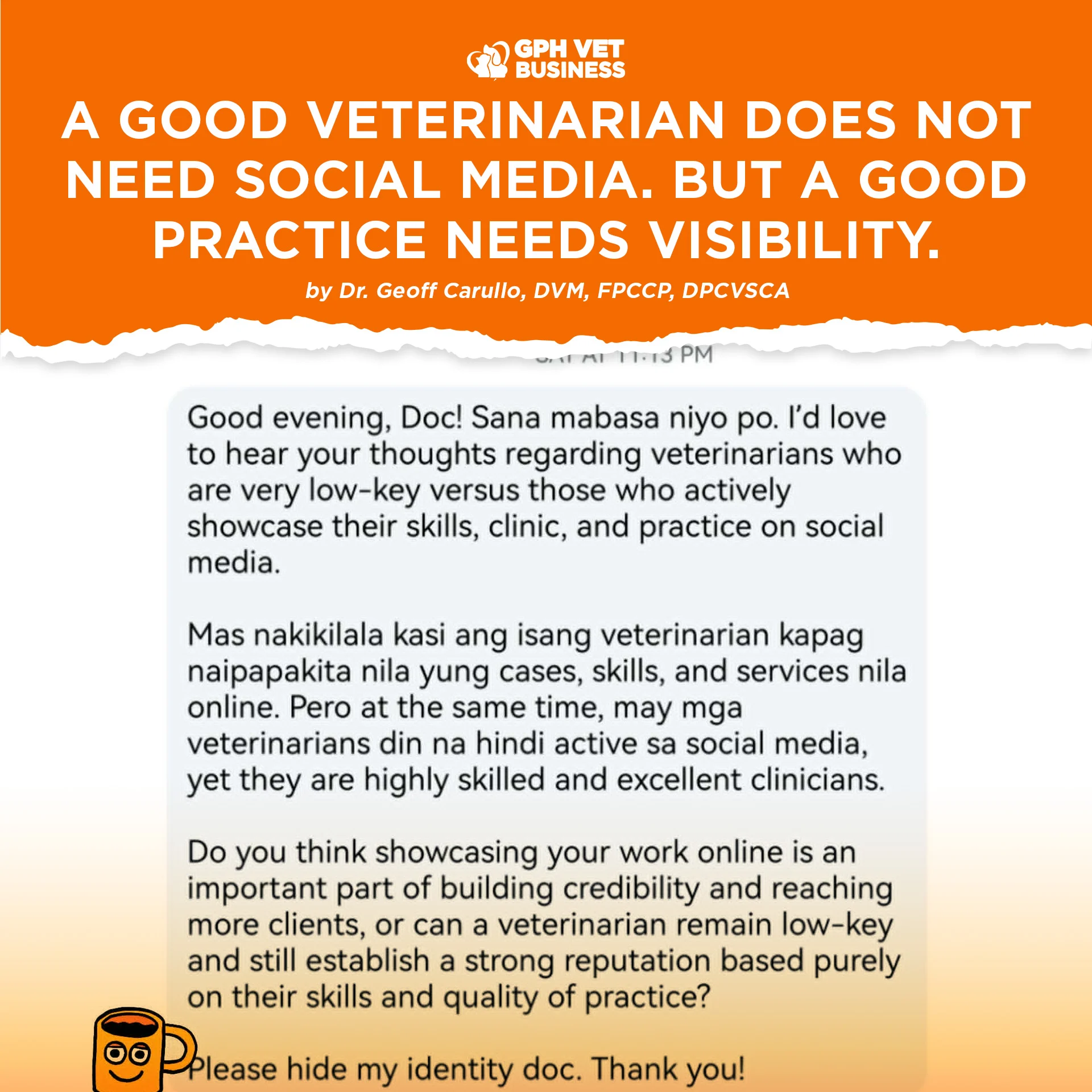
A reader recently asked me an interesting question:
Can a veterinarian remain low-key and still build a strong reputation purely through clinical skill, or has showcasing your work online become an important part of building credibility and attracting clients?
My answer is simple:
Social media does not make you a good veterinarian. But being invisible can limit how many people ever discover that you are one.
There are excellent veterinarians who rarely post anything online. They have built their practices through years of good outcomes, referrals, word of mouth, professional relationships, and loyal clients. Their reputation speaks for them.
And there are veterinarians with impressive social media pages who may be excellent clinicians as well.
These are not mutually exclusive.
The mistake is assuming that visibility equals competence.
It does not.
A thousand likes cannot replace sound clinical judgment. A beautifully edited surgical video cannot prove the quality of postoperative care. Expensive equipment shown on Facebook does not automatically mean better medicine.
But we should also recognize another reality:
Being good at veterinary medicine and being known for being good at veterinary medicine are two different things.


Skill Builds Reputation. Communication Builds Reach.
If you are already established, have a steady referral network, and are satisfied with the size of your practice, you may never need to become highly active on social media.
But for a young veterinarian, a new clinic, or a practice trying to establish a particular field of expertise, an online presence can accelerate what previously took many years to build.
The key is not to post simply to look impressive.
Post because you have something useful to communicate.
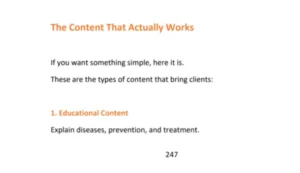
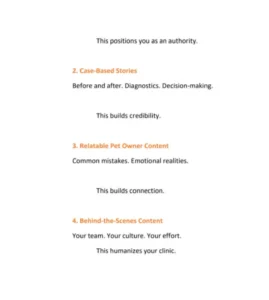
In pages 247 to 250 of my book, I discussed the type of content that actually works for a professional practice.
Educational content builds authority.
Explain diseases, prevention, diagnostics, and treatment. When people consistently learn something useful from you, they begin to understand how you think as a clinician.
Case-based stories build credibility.
Show the diagnostic process, the reasoning behind decisions, and the progress of a case, while of course respecting client confidentiality and professional ethics.
The objective should not be, “Look how good I am.”
It should be, “This is how veterinary medicine works.”
Relatable pet-owner content builds connection.
Discuss common mistakes, misconceptions, difficult decisions, and the realities owners face when caring for animals.
And behind-the-scenes content humanizes the practice.
Your staff, your culture, your continuing education, your preparation, and even the ordinary work that clients rarely see all help people understand what goes into running a veterinary practice.


The 70-20-10 Rule
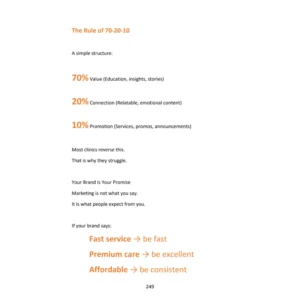
I also suggested a simple structure:
- 70% Value
Education, insights, clinical discussions, and useful stories. - 20% Connection
Relatable experiences and content that allows people to know the humans behind the clinic. - 10% Promotion
Services, announcements, products, and promotions.
Many businesses reverse this.
Almost everything they post is:
Buy this.
Avail of this promo.
Book now.
Visit our clinic.
Eventually people stop listening.
Your social media page should not behave like a billboard. It should behave like a resource.
Your Online Image Must Match Your Actual Practice
This is where social media becomes dangerous when used incorrectly.
Marketing creates expectations.
If you advertise fast service, you should be fast.
If you position yourself as providing premium care, the client experience and medical service should reflect it.
If you promise affordability, your pricing and policies should be consistent with that positioning.
Because once your actual delivery no longer matches the image you created online, trust disappears.
And once trust disappears, no amount of marketing can repair the problem overnight.

So, Low-Key or Visible?
Either can work.
A veterinarian does not have to become an influencer.
You do not need to photograph every surgery, post every certificate, or turn every patient into content.
If you prefer to remain private and your practice is thriving through referrals and reputation, there is absolutely nothing wrong with that.
But being active online is also not automatically bragging.
When done properly, it is simply modern professional communication.
It allows people to understand what you do, what you believe in, what type of medicine you practice, and what they can expect when they walk through your door.
The Real Question
The real question is not:
“Should veterinarians post on social media?”
The better question is:
“Why should a client choose your practice over everyone else?”
If you cannot answer that clearly, posting every day will not save the business.
And if you can answer it clearly, social media becomes one of many tools available to communicate that difference.
That is why my conclusion in the book remains the same:
Good marketing is not necessarily loud.
It is clear.
It is consistent.
It is credible.
And most importantly, it does not chase every possible client.
It helps the right clients find you.
Clinical skill will always be the foundation of a veterinarian’s reputation.
Social media simply determines how far that reputation can travel.
Sharing this helps others understand what it really means to be a vet. Like and follow if you’re with us.
Dr. Geoff Carullo is a Fellow and the current President of the Philippine College of Canine Practitioners.