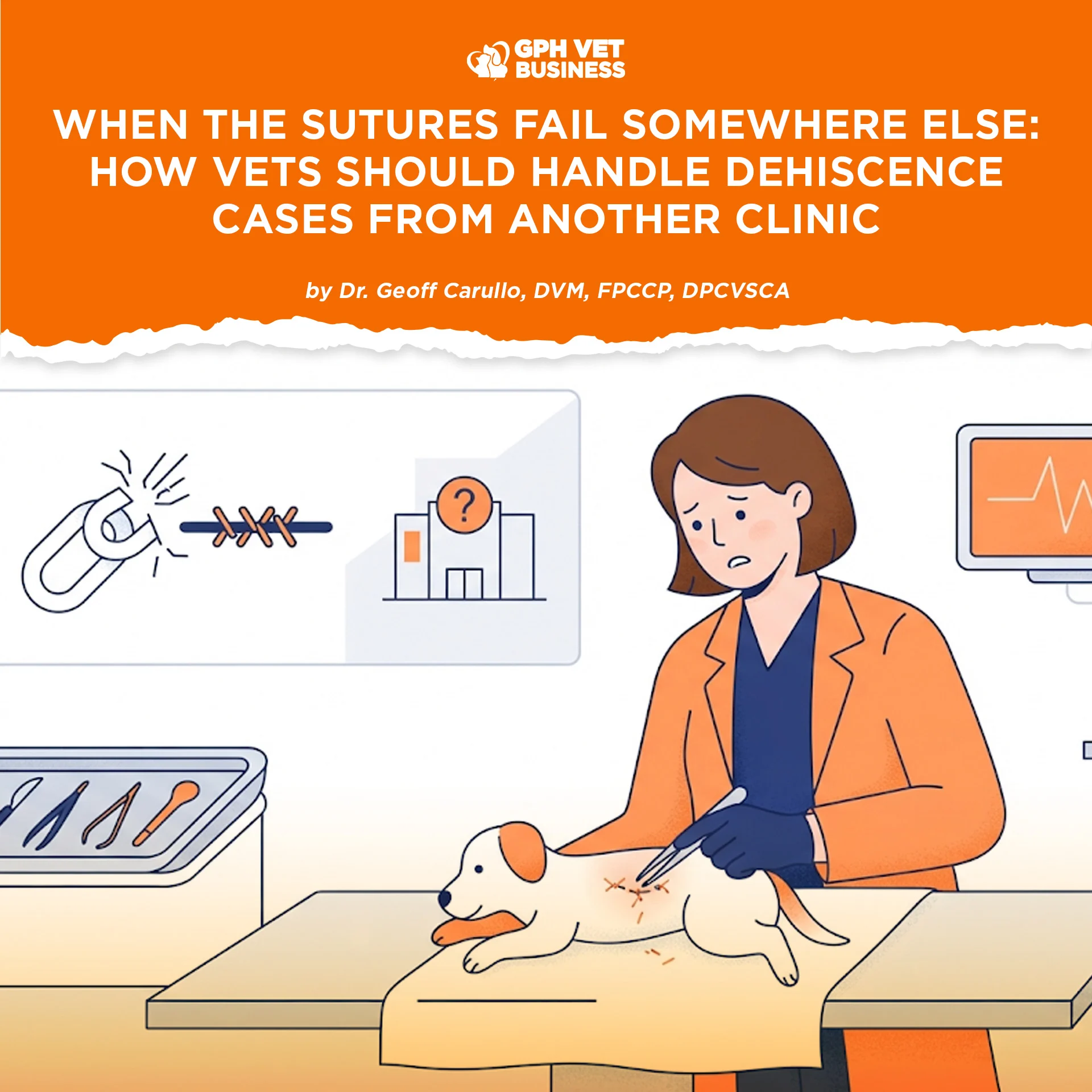
In our line of work, wounds don’t just open on the patient. Sometimes, they open questions—hard, delicate ones.
One of the most ethically complex and legally sensitive situations we encounter in veterinary practice is when a client walks into our clinic with a dehiscence case—a failed surgical site done elsewhere, now inflamed, exposed, infected, or worse.
We pause. We ask ourselves:
Do I accept this case?
Do I refer them back to the original vet?
What’s right? What’s legal? What’s fair?
Let’s unpack it—clinically, ethically, and from a legal standpoint.


First: The Medical Imperative
As veterinarians, our foremost responsibility is the animal’s welfare. When a patient is actively dehiscing—with exposed tissues, infection, or severe pain—delaying care to send them back to the original vet may violate our oath and risk worsening the animal’s condition.
This is especially true in emergencies. If the patient is septic, bleeding, or at risk of systemic decline, the case is no longer a matter of etiquette or protocol—it becomes a duty to treat.
Second: The Client’s Autonomy
Clients have the right to seek second opinions or transfer care, especially if they’ve lost trust in the original provider. While it may feel uncomfortable to “pick up the pieces” of someone else’s work, the decision ultimately lies with the owner, not the original vet.
Politely insisting they “go back to the previous clinic” may be seen as avoiding responsibility or as putting loyalty over patient welfare.
But here’s the caveat:
Accepting the case doesn’t mean judging the previous vet. It means respecting the owner’s decision and focusing on what the patient needs now.


Third: The Legal Perspective (PH Context)
Under Philippine veterinary law and professional conduct:
You CAN accept a dehiscence case from another clinic IF:
- The client voluntarily brought the pet to you.
- There is no ongoing malpractice complaint involving the case (if there is, proceed with caution and documentation).
- You do not publicly criticize the previous vet’s work (doing so may constitute professional misconduct).
What You MUST Do:
1. Document everything. Before doing anything, take clinical photos, get signed consent, and write detailed records.
2. Avoid verbal or written blame. Focus on facts: “The surgical site is dehisced with evidence of infection,” not “The previous vet stitched it wrong.”
3. Be transparent with the owner. Inform them of the risks, options, and that complications like dehiscence can happen even in well-performed surgeries.
4. If asked to testify or comment against another vet, decline unless formally summoned by a board or court.
PRC Code of Ethics for Veterinarians (Sec. 11):
“A veterinarian shall not belittle the professional competence of a fellow veterinarian, or offer any unnecessary comment which tends to damage the reputation of a colleague.”
Best Practice: Professional Courtesy
While not mandatory, it’s good etiquette (and good politics) to inform the original vet when possible—especially if the case is being fully transferred to you. A courteous call, message, or update can help preserve collegiality and prevent miscommunication.
Something like:
“Hi Doc, I just wanted to inform you that one of your previous cases came to us with a wound dehiscence. We’ve managed the case and will keep you in the loop unless you’d like to take it back. Just letting you know for transparency.”

Final Thought: Stitching Back the Trust
Yes, dehiscence cases are messy. Clinically, legally, emotionally. But how we respond says everything about our professionalism.
Accepting a patient is not an act of disloyalty—it’s an act of care. And choosing respectful silence over finger-pointing, even when you’re cleaning up someone else’s work, is the mark of a true professional.
So the next time a client walks in with a half-healed wound and a loaded question, remember:
You’re not just repairing a surgical site.
You’re rebuilding trust in the profession—one suture at a time.
Sharing this helps others understand what it really means to be a vet. Like and follow if you’re with us.
Dr. Geoff Carullo is a Fellow and the current President of the Philippine College of Canine Practitioners.