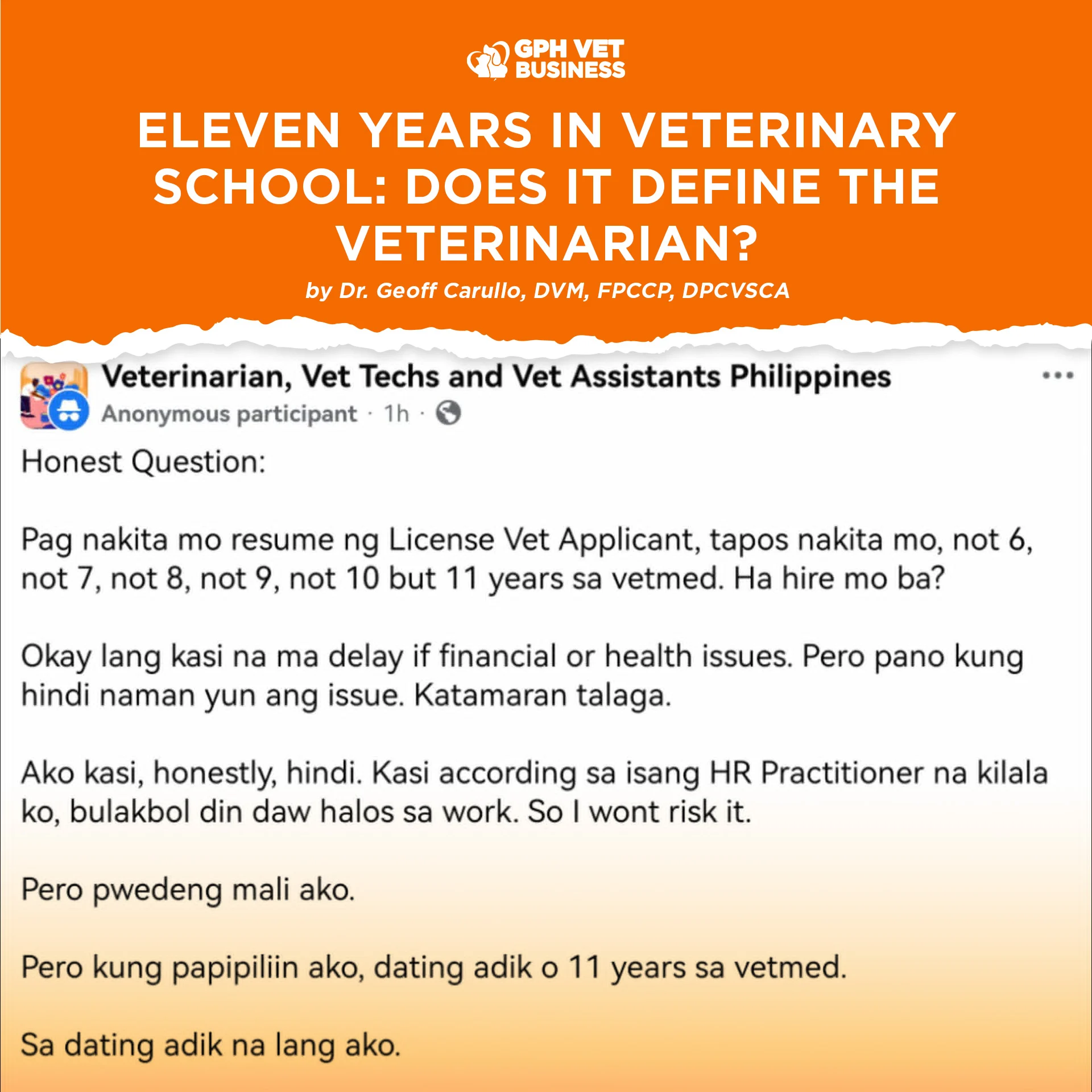
A recent discussion in a veterinary Facebook group asked an uncomfortable question:
“If you receive the résumé of a licensed veterinarian who spent 11 years in veterinary school, would you hire them?”
Some immediately answered no, arguing that such a long stay in veterinary school reflects poor work ethic or lack of discipline. Others believed everyone deserves a chance because life circumstances differ.
The discussion raises an important point.
Can the number of years spent in veterinary school predict how someone will perform as a veterinarian?
The answer is: not necessarily.
Veterinary medicine is one of the most demanding professional programs. Students may experience academic difficulties, financial hardship, family responsibilities, physical illness, mental health challenges, or simply need more time to master the curriculum. Some students also work while studying to support themselves.
What ultimately matters is that the individual completed the program, passed the licensure examination, and continues to learn throughout their career.


On the other hand, employers are also entitled to assess risk. Hiring is an investment. A clinic owner may reasonably ask why an applicant took longer than expected to finish school—not to discriminate, but to better understand the applicant’s journey, resilience, and readiness for the job.
An interview should go beyond the transcript.
Questions worth asking include:
- What caused the delay?
- What lessons were learned?
- How has the applicant grown since then?
- What skills have they developed after graduation?
Sometimes the answers reveal maturity, perseverance, and determination that cannot be measured by grades alone.
The veterinary profession is filled with stories of colleagues who struggled academically but later became outstanding clinicians, surgeons, educators, researchers, or business owners. Conversely, graduating on time does not automatically guarantee professional excellence.


The diploma and license open the door.
Character, competence, humility, continuous learning, and professionalism determine how far a veterinarian will go.
As employers, we should evaluate applicants fairly and individually.
As applicants, we should be prepared to explain our journey honestly and demonstrate that our past does not define our future.
A résumé tells us when someone finished.
An interview often tells us who they have become.

References
- World Organisation for Animal Health (WOAH). Veterinary Education Core Curriculum (Day 1 Competencies).
- American Veterinary Medical Association. Guidance on professional competencies, lifelong learning, and career development for veterinarians.
- Philippine Professional Regulation Commission. Veterinary Licensure Examination framework and professional licensure requirements.
Dr. Geoff Carullo is a Fellow and the current President of the Philippine College of Canine Practitioners.
Sharing this helps others understand what it really means to be a vet. Like and follow if you’re with us.