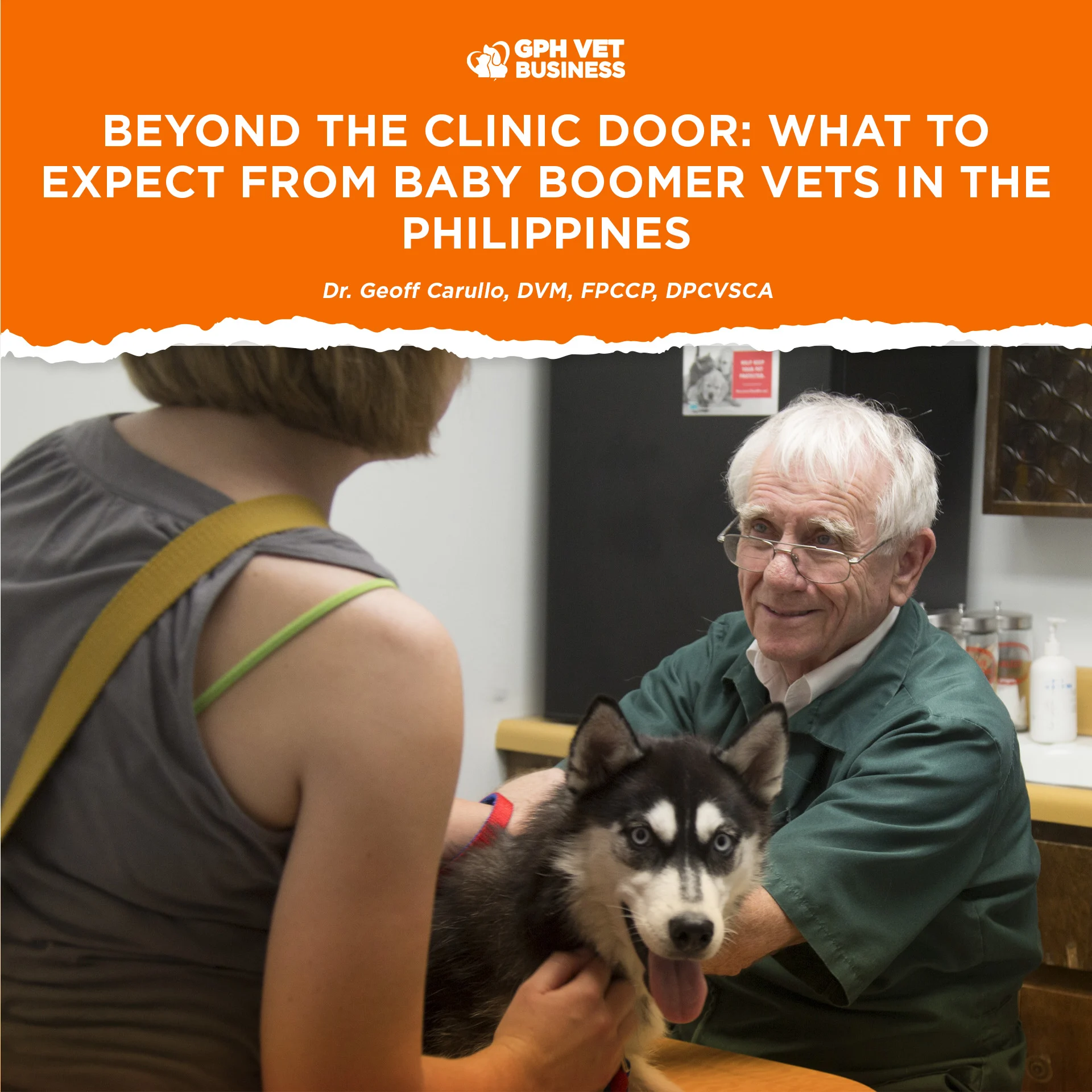
They’ve been around longer than most diagnostic machines.
They practiced during the era of handwritten records, physical index cards, and pre-Google diagnostics.
They are our professors, pioneers, founders—and yes, sometimes, our toughest critics.
We’re talking about Baby Boomer veterinarians—born between 1946 and 1964—many of whom still occupy key positions in veterinary practice, academia, and policy in the Philippines.
But in an age of AI diagnostics, cloud-based vet software, and Gen Z associates… where do they stand?
And what should we expect from them?


1. Not All Are Retired—Some Just Shifted Roles
Contrary to common assumptions, many Baby Boomer vets are not fully retired.
Instead, they’ve transitioned:
- From surgery to consulting
- From daily practice to administrative roles
- From hands-on vetting to mentoring the next generation
You may not see them scrubbing in for a C-section anymore, but behind every young successful clinic, there’s often a boomer in the shadows—giving advice, reviewing reports, or settling disputes quietly.
2. They Are Living Repositories of Experience
Before ECG machines and digital X-rays, they diagnosed with a stethoscope, fingers, and instinct.
Their clinical wisdom is based on years of hands-on, analog practice—and it shows in how they assess a case with just a glance.
They remember the first parvo outbreak without using classical parvo test kits.
They built some of the earliest private clinics in the country.
They are living case libraries—and when consulted with respect, they often still deliver diagnostic gold.

3. Yes, Some Have Stepped Back—But They’re Not “Standees”
It’s easy to think of the older vet standing by the clinic door as ceremonial.
But even in that stillness lies influence:
- A glance that tells a junior vet to slow down
- A short question that changes the course of a case
- A handshake that closes a deal with a long-time client
They are not inactive.
They are watchful pillars, ensuring that the clinic’s values and standards survive past trends.
4. Some Are Semi-Retired—By Choice or By Necessity
Not all Baby Boomer vets had structured retirement plans. Some slowed down due to:
- Health conditions
- Generational transitions in family-owned clinics
- Changing client expectations and technology they’re no longer comfortable with
Yet many still attend conferences, teach part-time, serve as consultants, or work on projects quietly behind the scenes.
They are not gone—they’re just less loud but still present.


5. Their Legacy Still Shapes the Profession
From founding vet colleges to setting up associations like the PVMA, VPAP, PCCP, or PAHA—our current systems were built on their backs.
While some may resist change, others are proud to see how far the industry has come—even if it looks wildly different from the one they entered 40 years ago.
They know what it took to get us here—and their quiet pride, even when unspoken, deserves acknowledgment.
Final Thoughts: Not Retired—Repositioned
Baby Boomer vets are not relics.
They’re foundations.
Yes, they may no longer sprint across clinics, or know how to use TikTok—but many of them are still deeply woven into the profession’s core.
The best clinics know this:
When experience and innovation co-exist, greatness happens.
Let’s not reduce them to statues by the clinic door.
Let’s recognize them as keepers of wisdom, stability, and stories that still matter.
Sharing this helps others understand what it really means to be a vet. Like and follow if you’re with us.
Dr. Geoff Carullo is a Fellow and the current President of the Philippine College of Canine Practitioners.