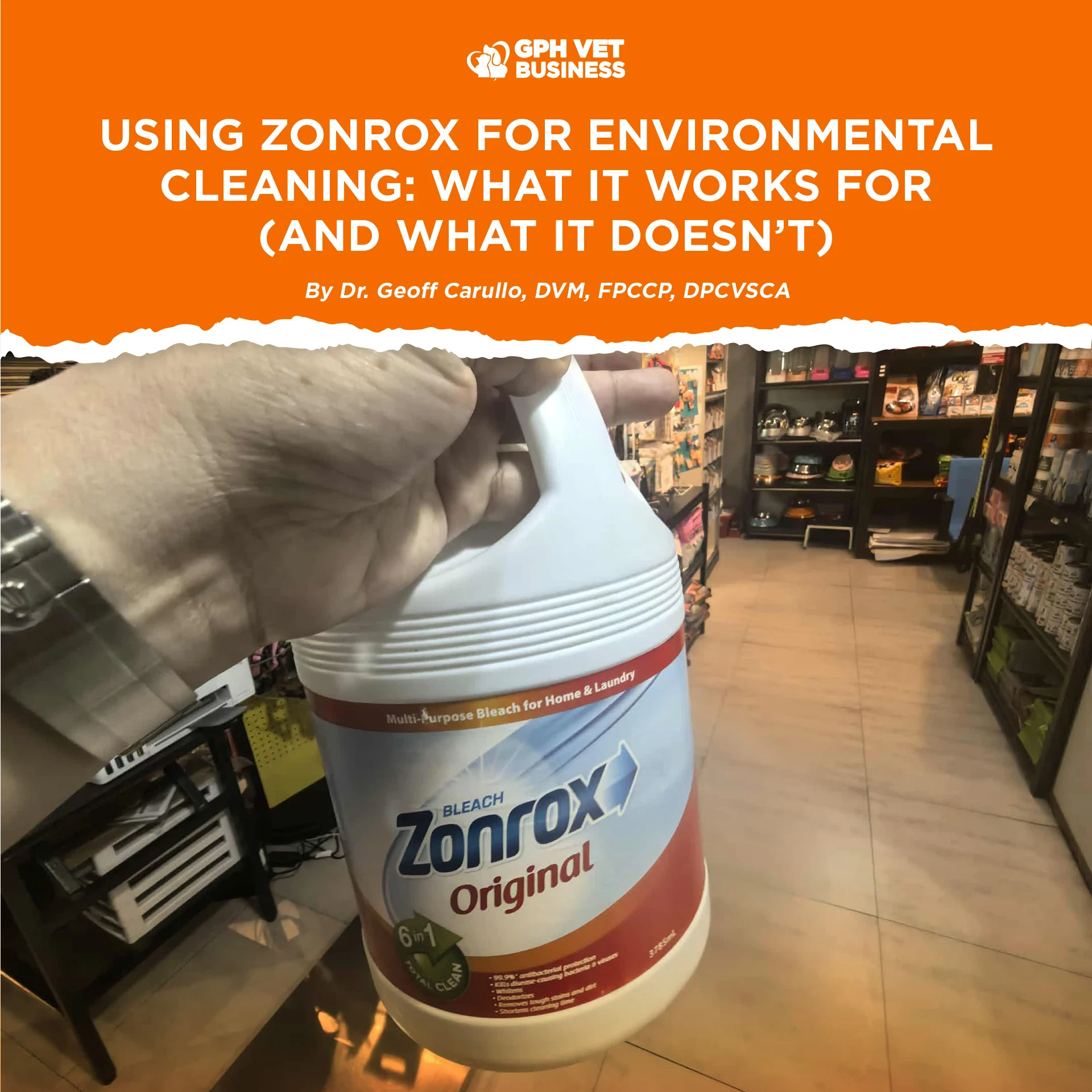
Using Zonrox for Environmental Cleaning: What It Works For (and What It Doesn’t)
By Dr. Geoff Carullo, DVM, FPCCP, DPCVSCA
Zonrox is commonly used in homes with pets, especially during disease outbreaks or heavy parasite infestations. When used strictly for environmental cleaning, it can be a powerful and effective disinfectant — but only for specific purposes.
This article discusses Zonrox for surroundings only: floors, cages, kennels, and contaminated areas — never for direct animal use.
What Is Zonrox Used For in Pet Environments?
Zonrox is a chlorine bleach with sodium hypochlorite as its active component. Its role is surface disinfection, not medical treatment.
Tick and Flea Infestation (Environment Only)
YES — helpful for environmental control
Zonrox can kill:
- Adult ticks
- Fleas
- Larvae present on floors, cracks, cages, and walls
It is useful for:
- Kennels
- Sleeping areas
- Tile floors
- Concrete surfaces
Limitations:
- No residual protection
- Does not prevent reinfestation
- Must be paired with proper pet treatment and environmental management
Proper cleaning sequence:
- Remove dirt and debris
- Wash surfaces
- Disinfect with diluted bleach
- Allow to dry completely before pet access
Canine Parvovirus (Environment Only)
YES — highly effective
Parvovirus is extremely resistant in the environment. Bleach is one of the few proven disinfectants that can inactivate it on surfaces.
Recommended use:
- Floors, cages, bowls, shoes, equipment
- Areas contaminated with feces or vomitus
Key points:
- Organic matter must be removed first
- Bleach works only on clean surfaces
- Proper dilution is critical
This is why bleach remains the gold standard environmental disinfectant during parvo outbreaks.
Canine Distemper Virus (Environment Only)
YES — effective
Distemper virus is easier to inactivate than parvovirus. Bleach readily destroys it on:
- Kennels
- Rooms
- Shared surfaces
- Equipment
Environmental disinfection helps reduce viral spread, especially in multi-dog households or shelters.
Gastrointestinal Parasites (Environment Only)
LIMITED role
Zonrox:
- Can help disinfect surfaces contaminated with feces
- May reduce environmental contamination load
But:
- It does NOT reliably destroy all worm eggs
- It does NOT replace proper sanitation and deworming protocols
Bleach is an adjunct for cleanliness, not a complete parasite control solution.
Which Zonrox Is Appropriate for Cleaning?
For pet-related environmental disinfection:
Zonrox Original / Regular (Unscented)
Avoid:
- Scented variants
- Colored bleach
- Gel or specialty blends
Additives may:
- Leave harmful residues
- Increase respiratory irritation
- Reduce disinfectant consistency
Safety Reminders for Environmental Use
- Always dilute properly
- Ensure good ventilation
- Never mix with acids or ammonia
- Keep pets away during cleaning
- Allow surfaces to dry fully before re-entry
Bottom Line
When used strictly for surroundings:
Zonrox is:
- ✔ Effective for parvovirus and distemper disinfection
- ✔ Useful for environmental tick and flea control
- ✔ Helpful for general sanitation
- ✖ Not a treatment
- ✖ Not for direct animal use
- ✖ Not a substitute for parasite control programs
Used correctly, it protects the environment around the pet — which protects the pet itself.
Dr. Geoff Carullo is a Fellow and the current President of the Philippine College of Canine Practitioners.
Sharing this helps others understand what it really means to be a vet. Like and follow if you’re with us.