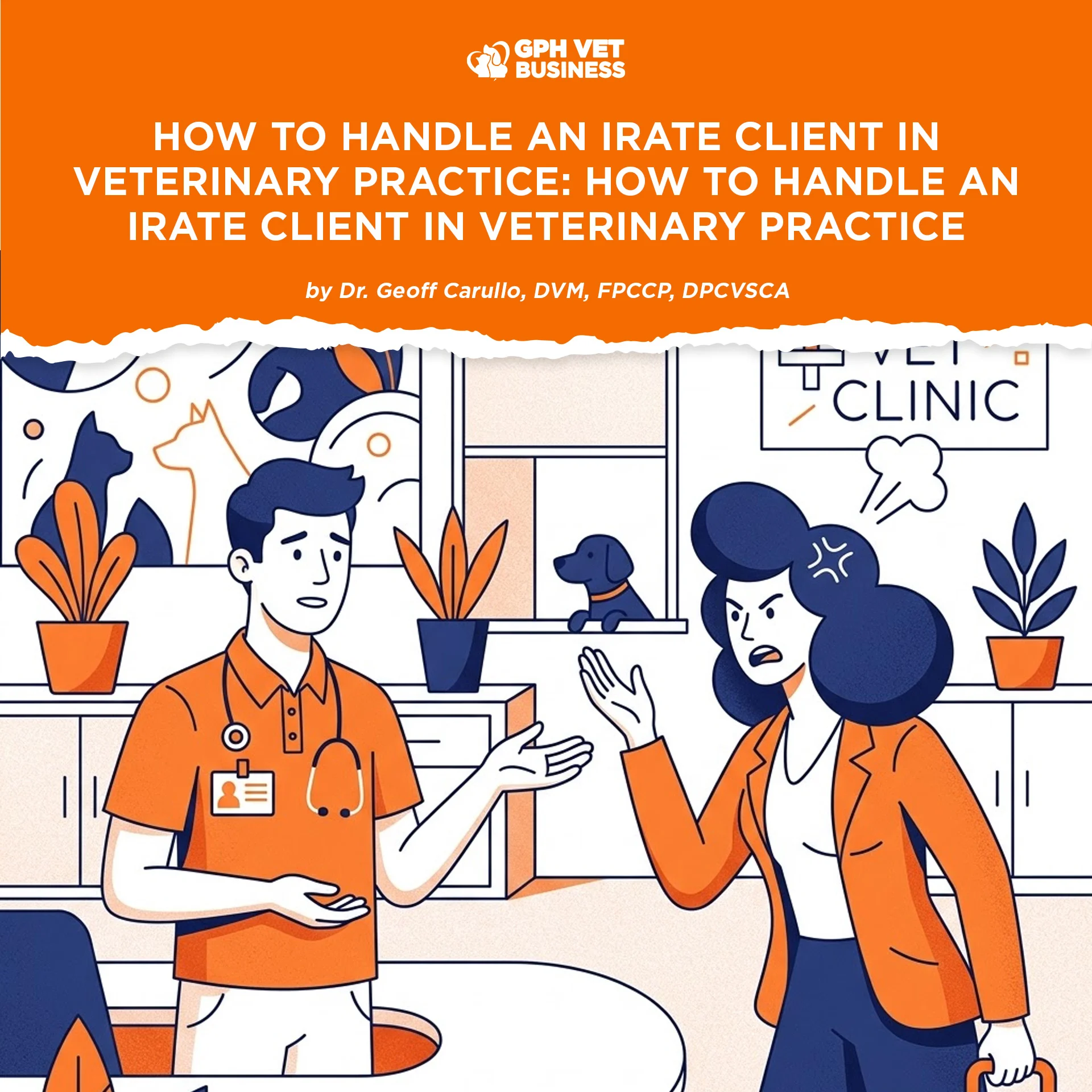
In the world of veterinary medicine, dealing with animals is often the easy part—it’s the human side that can be more complex. Irate clients are an inevitable part of practice, whether due to high expectations, emotional stress, financial concerns, or grief. But how you handle these situations can define not just your reputation—but also your clinic’s culture.
Here’s a practical guide for veterinarians on managing upset clients with professionalism and empathy:


1. Stay Calm—Even if They’re Not
Anger breeds anger. If a client is raising their voice or becoming aggressive, your first line of defense is emotional regulation. Take a deep breath. Speak slowly and gently. A calm presence can help de-escalate even the most tense situations.
Pro tip: Lower your voice instead of matching their tone. This subtly encourages them to do the same.
2. Listen Actively Without Interrupting
Let them speak. Don’t cut them off mid-rant—even if you already know the issue. Sometimes, clients just want to be heard. Nod, maintain eye contact, and acknowledge their emotions.
Say this: “I understand this has been very upsetting for you. Let’s talk about it.”
3. Don’t Take It Personally
Many irate clients are reacting from a place of fear or grief—not malice. They may be mourning a loss, feeling helpless, or overwhelmed with medical expenses. Remember: it’s not about you, it’s about how they feel in the moment.
4. Clarify the Real Issue
Once emotions settle, calmly ask questions to identify the root of the complaint. Is it about billing? Miscommunication? Delayed service? Getting clarity helps you address the concern effectively.

5. Apologize Appropriately
You don’t need to admit fault if there isn’t any—but acknowledging their frustration shows empathy.
Example: “I’m sorry this experience has caused you stress. That’s never our intention.”
6. Offer a Solution, Not Excuses
Propose what can be done now, instead of dwelling on what went wrong.
Say this: “Let’s see how we can make this right. Would you be open to [suggested resolution]?”
7. Know When to Step Away
If the client becomes verbally abusive or threatening, it’s okay to set boundaries.
Say this professionally: “I want to help resolve this, but we need to keep the conversation respectful. If we can continue calmly, I’m happy to work this out with you.”
8. Document Everything
Always make a record of difficult interactions, especially if there’s a risk of escalation or legal action. Include dates, names, exact statements made, and any steps taken.
9. Debrief with Your Team
After the situation, talk with your team. Support each other. Use the incident as a learning opportunity—what went well, what could be improved?
10. Reflect, Not Ruminate
Hard client interactions are emotionally taxing. Don’t let one encounter define your day—or your worth as a vet. Talk to a peer, take a short break, or decompress after your shift. Your mental health matters too.


Final Thought
An irate client can either ruin your day—or remind you of your power to lead with patience, clarity, and compassion. As a veterinarian, you are not just treating pets—you’re also guiding their humans through fear, love, and loss.
Dr. Geoff Carullo is a Fellow and the current President of the Philippine College of Canine Practitioners.
If you found this article helpful, please share it with fellow veterinarians, veterinary students, and pet owners to promote ethical, evidence-based veterinary practice.