The Global Shift We Can’t Ignore
In the past decade, we’ve seen something once unimaginable: a candy company owning veterinary hospitals.
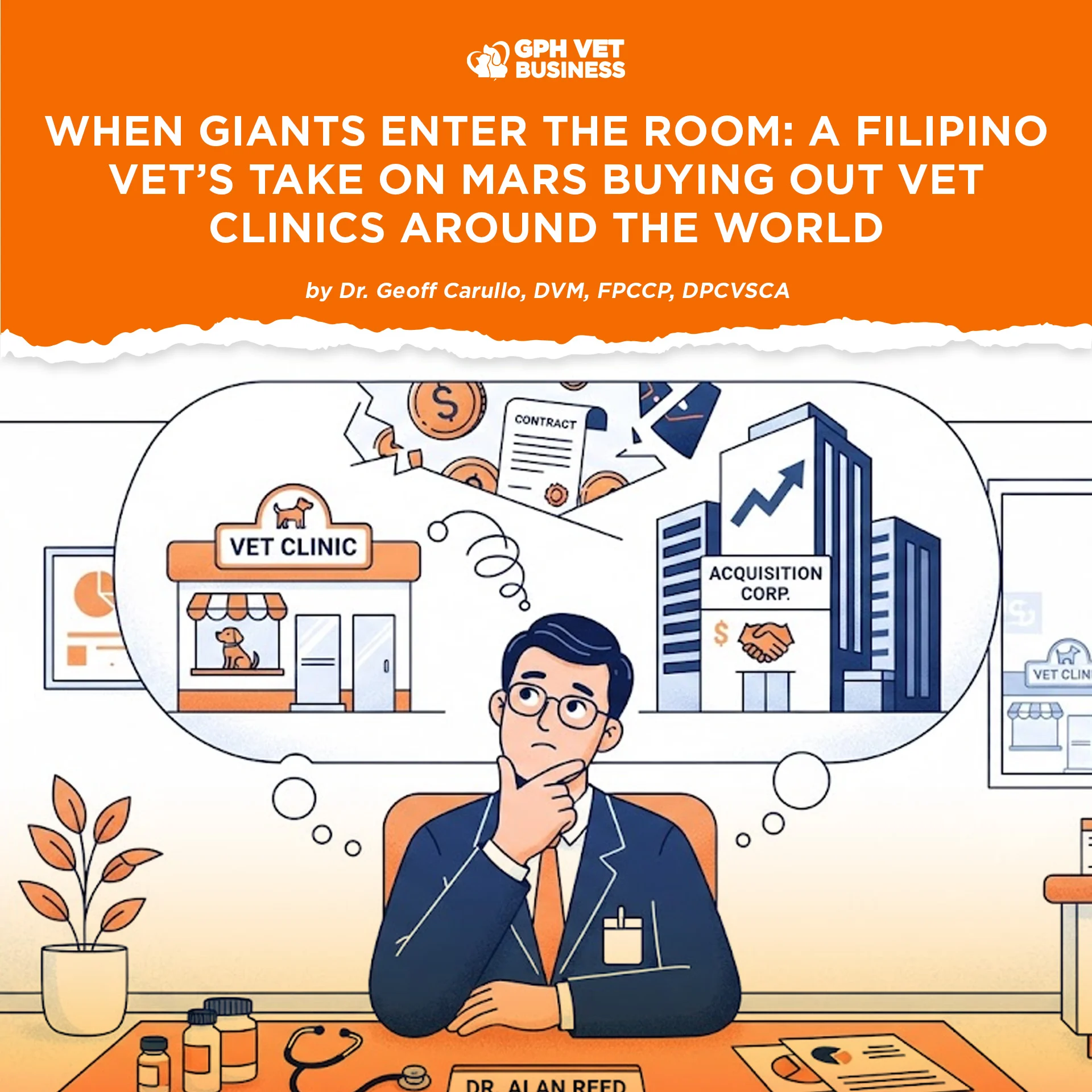
Mars, best known for chocolates like M&M’s and Snickers, has been steadily acquiring veterinary clinics across the United States, Canada, parts of Europe, and now, Asia—including Singapore. And with their track record, it wouldn’t be a surprise if the Philippines is next.
They now own Banfield, VCA, BluePearl, Antech Diagnostics, and even veterinary education platforms. In short: Mars isn’t just in the pet food business anymore—they are building a global veterinary empire.


My Honest Take as a Vet and Practice Owner
I won’t sugarcoat it: I have mixed feelings.
On one hand, corporate consolidation offers undeniable benefits:
- Access to advanced technology and equipment
- Standardized training and protocols
- Streamlined supply chains and logistics
- Stronger bargaining power for medications and products
- Career stability for associate vets (with structured roles and benefits)
But on the other hand, it comes with serious concerns—especially from the perspective of independent clinic owners like us in the Philippines.
What We Risk Losing
Clinical Independence
Veterinary medicine isn’t factory work. What works in a corporate protocol might not be what a dog in Cavite or a cat in Quezon City needs. The art of veterinary medicine is in the personal, local, and adaptive approach we take with each case.
Owner-Pet-Vet Relationships
In corporate settings, continuity often suffers. Vets transfer. Turnover is high. Patients become “case numbers” and the vet-client bond weakens. In locally owned practices, we know our patients by name, not by invoice.
Financial Pressure on Compassion
There is a real fear that profit may come before patient. That corporate KPIs may dictate treatment plans. That sales targets could influence medical decisions. This threatens the ethical core of why most of us became vets in the first place.
Local Identity and Ownership
If foreign corporations dominate our industry, what happens to Filipino veterinary entrepreneurship? What happens to the young vet who dreams of opening their own clinic? Or the local supplier trying to innovate in diagnostics or pharma?


What This Means for the Philippines
The Philippines is ripe for consolidation:
- Thousands of growing small animal practices
- Increasing number of young vets
- Expanding pet ownership and spending
- Fragmented supply chains and service levels
Sooner or later, corporate groups—whether Mars or others—will knock on our doors. Some will sell. Others will resist. And many will be caught in the middle.
So, What Should We Do?
This isn’t a call to demonize Mars or corporations.
It’s a call to be prepared, be intentional, and be united.
- If you plan to sell your clinic someday—build equity now
- If you want to remain independent—invest in your systems, people, and branding
- If you dream of owning a clinic—start planting the seeds today
- If you’re a supplier or distributor—strengthen your local partnerships
- And if you’re a young vet—learn both medicine and business
We must remember: we don’t have to beat the giants. But we must learn to stand tall beside them.

Final Words
Corporations like Mars will always have capital.
But we have something they don’t:
- Cultural connection
- Community loyalty
- Agility
- Passion born from personal stories, not profit margins
The future of Philippine veterinary medicine doesn’t need to be sold—it needs to be built.
By us.
For us.
And most importantly—with the animals and people we serve in mind.
Dr. Geoff Carullo is a Fellow and the current President of the Philippine College of Canine Practitioners.
Sharing this helps others understand what it really means to be a vet. Like and follow if you’re with us.