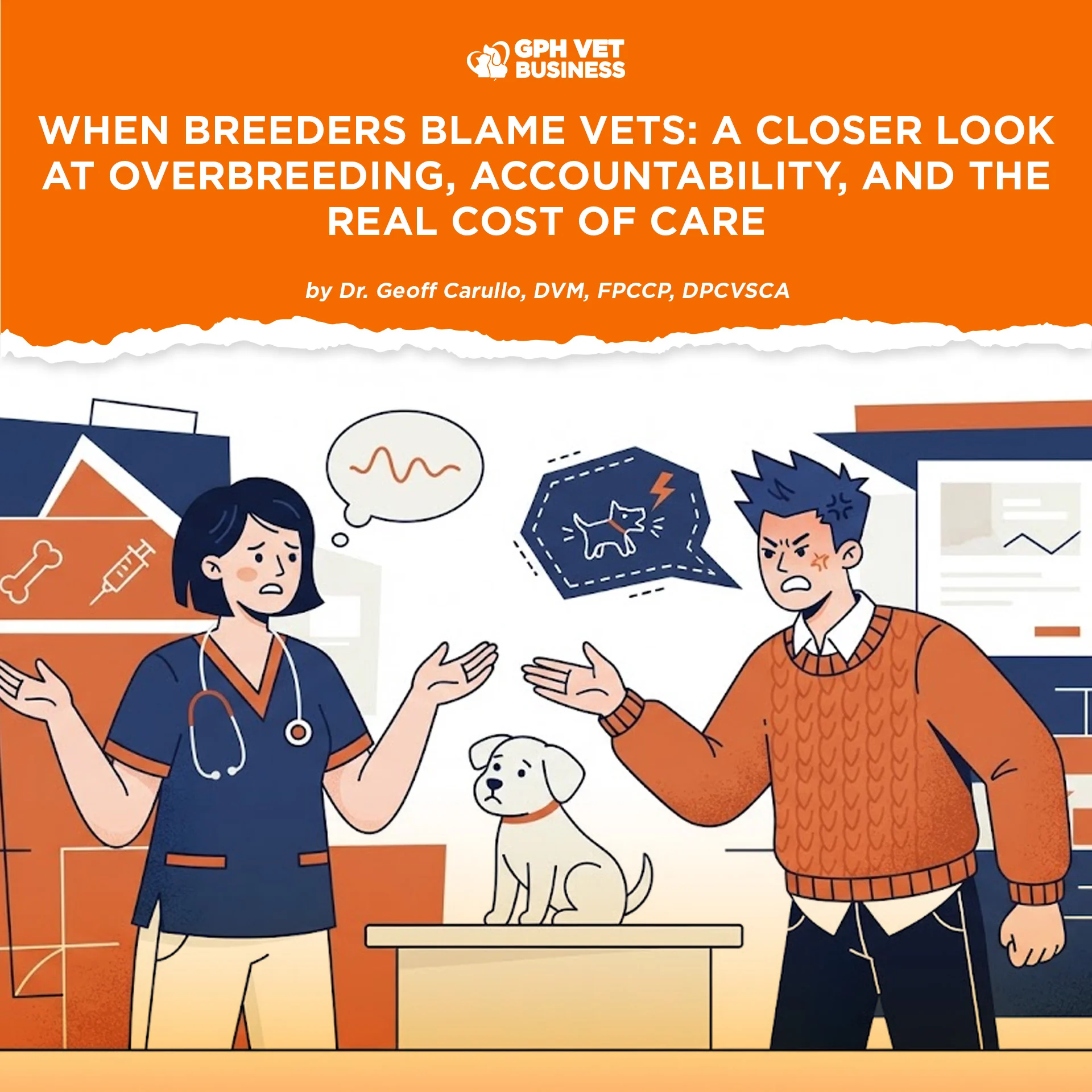
It’s a situation many veterinarians have found themselves in—being accused of being “money-hungry” by certain breeders who, ironically, engage in questionable breeding practices themselves.
These claims don’t just hurt our reputation; they distort the truth about our profession and the real issues behind poor animal outcomes.
Let’s take a moment to unpack this—because it’s not just about defending vets.
It’s about calling out the patterns that are harming animals while the blame is being pointed in the wrong direction.


The Reality of Overbreeding
Some breeders, often driven by profit or misguided ambition, allow female dogs to undergo multiple pregnancies in rapid succession—without giving their bodies time to recover. The result?
- Severe uterine infections
- Malnourished mothers
- Premature or fading puppies
- Complicated deliveries and costly emergencies
Veterinarians are the ones who pick up the pieces when things go wrong—offering medical intervention, emergency C-sections, neonatal support, and grief counseling.
And despite doing everything medically possible, some outcomes are beyond repair.
Still, we often find ourselves at the receiving end of blame.
When Vets Are Accused of Being “Money-Hungry”
It’s a familiar accusation:
“You’re just in it for the money.”
But here’s what breeders—and the public—must understand:
Veterinary medicine is one of the most underpaid, overworked, and emotionally taxing professions.
We invest years in school, hundreds of thousands in education, and carry immense emotional weight for every patient we treat.
Most of us entered this field not for money, but for purpose.
Charging for services isn’t greed—it’s how clinics survive. It’s how we pay for equipment, medications, staff salaries, and continue offering quality care.
To accuse vets of being money-driven while simultaneously running breeding operations for profit—often without medical oversight—is both ironic and insulting.


The Ethics of Breeding: Responsibility Over Revenue
Responsible Breeders:
- Work closely with veterinarians
- Follow ethical breeding intervals
- Monitor maternal health
- Avoid inbreeding and genetic problems
- Prioritize welfare over profit
Entitled Breeders, on the other hand, often:
- Breed back-to-back with no recovery period
- Refuse diagnostics or prenatal care
- Decline veterinary advice
- Show up only when there’s an emergency—and then blame vets for the fallout
This isn’t responsible pet care. This is exploitation masked as animal “passion.”
What Veterinarians Want Breeders to Know
Dear breeders:
We are not your enemies. But we won’t be your scapegoats either.
If a litter fails, ask if proper care was given.
If a dam is sick, ask if she was bred too soon.
If you’re angry about the bill, ask whether this was a preventable situation.
Stop accusing the vet who tried to save your dog’s life after you ignored medical advice. Start taking accountability for the choices before the emergency.

Final Thoughts
Veterinarians are not “in it for the money.” We’re in it for the animals—often to our own emotional and financial detriment.
So the next time someone points fingers at the vet, take a closer look at the breeder.
Ask the hard questions.
Follow the medical history.
Look at the entire picture.
Because until we stop blaming those trying to fix the problem, we’ll never confront the ones actually causing it.
And at the heart of it all?
It’s not about breeders versus vets.
It’s about who truly puts the animal first.
Dr. Geoff Carullo is a Fellow and the current President of the Philippine College of Canine Practitioners.
Sharing this helps others understand what it really means to be a vet. Like and follow if you’re with us.