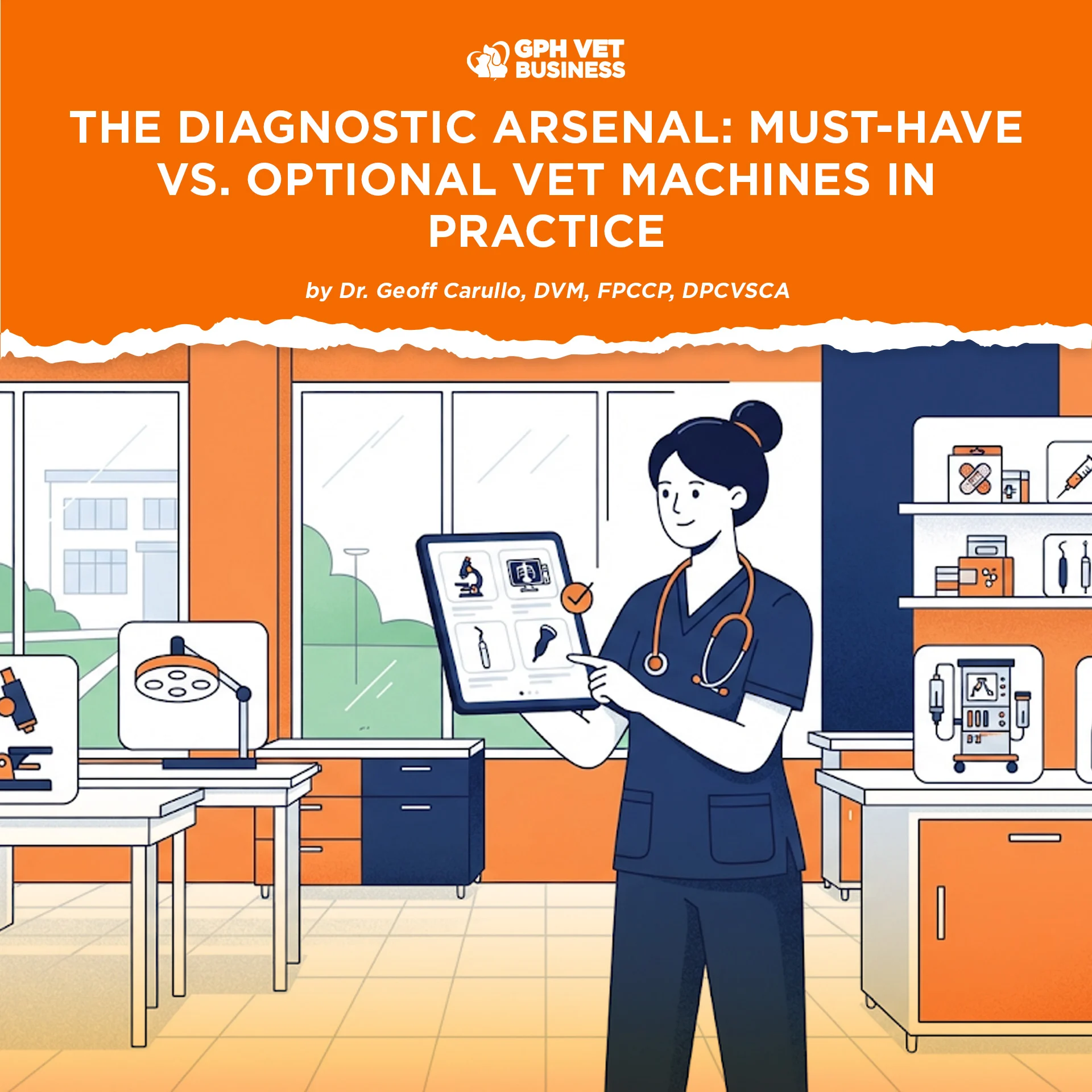
In a veterinary world increasingly shaped by diagnostics, the question isn’t just “What can I treat?”—but “What can I detect, confirm, and manage better with the right tools?”
For many clinics in the Philippines, the challenge is knowing what equipment is essential, and what belongs in the “maybe later” dream list.
Let’s separate the must-haves from the optional, based on frequency, impact, ROI, and practice goals.
THE MUST-HAVES: Diagnostic Machines Every Clinic Should Start With
These are foundational tools that power up 80% of your diagnostic decisions—ideal for general small animal practice, whether in cities or rural areas.
1. Microscope
Uses: Fecal exams, skin/ear cytology, blood smears, aspiration samples.
Why it’s vital: Low-cost, high-yield, and opens the door to in-house parasitology and hematology.
2. Centrifuge + Refractometer
Uses: PCV/TP, fecal flotation, urine specific gravity.
Bonus: Often bundled in diagnostic starter kits from Vet Diagnostix and other Philippine suppliers.
3. Digital X-ray (DR preferred over CR)
Uses: Fractures, pneumonia, heart/lung evaluation, organ size, pregnancies, foreign bodies.
Why DR is better: Less processing time, better clarity, and integrated image storage.
4. Ultrasound Machine
Uses: Pregnancy, bladder stones, organ evaluation, ascites, emergency triage.
Reality: Still underutilized in some clinics—yet one of the best ROI tools.
5. CBC + Chemistry Analyzer
Uses: Wellness blood tests, infection monitoring, liver/kidney function, surgical clearance.
ROI note: Combine with wellness packages for recurring income. Use brands like IDEXX, Abaxis, VetChek, or Mindray.
6. Urinalysis Machine
Uses: Detects glucose, protein, leukocytes, and more in urine.
Why it’s essential: Accurate renal monitoring, especially in seniors, diabetics, and PU/PD cases.
7. AI Stool Analyzer (e.g., automated fecal detection tools)
Uses: Detects ova, protozoa, and larvae with high accuracy and consistency.
Why it’s rising fast: Removes the guesswork and inter-user variability in fecal reading. A potential industry shift for busy practices.
8. ICU Cage (Heated + Oxygen-ready)
Uses: Post-op recovery, trauma stabilization, oxygen therapy.
Why it matters: Elevates patient care during critical moments. A life-saving necessity, not a luxury.


THE OPTIONAL (BUT STRATEGIC) ADD-ONS
These tools level up your clinic—but they should be added only if your caseload, training, and financials are aligned.
1. Electrosurgical Unit
Uses: Precise cutting, reduced bleeding, faster surgical times.
Perfect for: Spays, mass removals, oral surgeries, and eye procedures.
2. Laser Surgical Machine (CO₂ or diode)
Uses: Vaporizes soft tissue with minimal bleeding and pain.
Great for: Oral masses, skin tumors, declaws, gingivectomy.
3. Therapeutic Laser (Cold Laser)
Uses: Speeds up healing for wounds, arthritis, IVDD, post-op recovery.
ROI potential: High in senior pet care and ortho rehab. Market as part of “pain management plans.”
4. Fluoroscopy (X-ray with live video)
Uses: Swallow studies, tracheal collapse, cardiac function, foreign body movement.
Reality check: Expensive, but powerful in surgical and specialty centers. Ideal for teaching, too.
5. Electrolyte Analyzer
Uses: Identifies sodium/potassium imbalances in renal, cardiac, and fluid therapy cases.
Good if: You manage many critical patients or do aggressive fluid therapy.
6. Blood Gas Analyzer
Uses: ICU management, ventilation, shock cases.
Best for: Clinics with ventilator access or handling respiratory crises.
7. Progesterone & T4 Analyzers
Uses: Timing for breeding, hypothyroid/hyperthyroid screening.
Recommended for: Breeder-focused practices or clinics with senior wellness programs.
8. Endoscopy Unit
Uses: Visualizes internal cavities non-invasively.
ROI? Low unless tied to surgical or internal med specialists.
9. CT Scan / MRI
Uses: Advanced neuro, ortho, and oncology imaging.
Best for: Clinics transitioning into specialty referral centers or group practice networks.


HOW TO CHOOSE WISELY
Before buying, ask yourself:
- Is this diagnostic machine used weekly, or just occasionally?
- Can it increase revenue, reduce turnaround, or attract referrals?
- Is my team trained—or willing to train—to maximize it?
- Will it complement what I already offer—or compete with existing tools?
Remember: Shiny doesn’t always mean smart.

FINAL REFLECTION
In this profession, our scalpel may save lives—but our diagnostics guide those decisions.
So invest with wisdom. Start with what’s essential. Scale only when you’re ready.
Because success isn’t measured by how many machines you post on Facebook—
…it’s measured by how many patients go home better, faster, and safer—because you had the right tools.
Dr. Geoff Carullo is a Fellow and the current President of the Philippine College of Canine Practitioners.
Sharing this helps others understand what it really means to be a vet. Like and follow if you’re with us.