
A veterinary clinic is being criticized online because a bottle of Co-Amoxiclav reportedly costs ₱196 outside the clinic but is being sold for ₱430 inside.

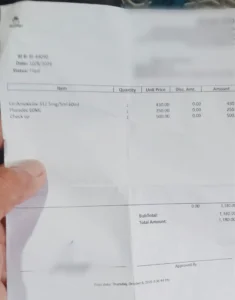
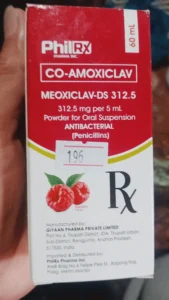
Difference? ₱234.
And suddenly, the accusations started.
“Grabe ang patong!”
“Ginagatasan ang mga pet owners!”
“Dapat 20% lang ang tubo!”
But here’s a question.
Since when did veterinary clinics become obligated to match the prices of outside pharmacies?
Think about Coca-Cola.
A bottle might cost ₱30 at a grocery store but ₱100 at a restaurant.
Same Coke. Different establishment. Different pricing structure.
Why? Because businesses have different operating costs, overhead expenses, and pricing strategies.
And veterinary clinics are no exception.


That ₱234 Difference Is Not Automatically Profit
A veterinary clinic purchases medicines, maintains inventory, pays employees, monitors expiration dates, manages storage, and shoulders the risk of unsold products.
Medicines do not magically appear on pharmacy shelves.
They require working capital.
And when products expire without being sold, who absorbs the loss?
The clinic owner.
When electricity rates increase, who pays?
The clinic owner.
When employees receive their salaries regardless of how many patients arrive, who pays?
Again, the clinic owner.
Yet some people expect veterinary clinics to operate like charitable institutions while maintaining the standards of private hospitals.
How is that economically sustainable?
“Eh, Bakit Hindi Na Lang Sa Labas Bumili?”
Actually, you can.
When medically appropriate, pet owners can request a prescription and purchase their medicines from legitimate outside pharmacies.
There is nothing inherently wrong with that.
But choosing to buy elsewhere does not automatically mean the veterinary clinic is overpricing its products.
Different establishments have different business models.
And no law generally requires a veterinary clinic to sell every medicine at the lowest price available elsewhere.


“Dapat 20% Lang ang Patong!”




Says who?
There is no universal Philippine law limiting the markup of all veterinary medicines to 20%.
Applicable price controls, consumer protection rules, and pricing requirements must still be followed.
But an arbitrary 20% markup ceiling cannot simply be imposed on every veterinary business because somebody on social media thinks it is reasonable.
What works for a high-volume pharmacy may not work for a small veterinary clinic.
You cannot impose the economics of a large retail pharmacy on a veterinary hospital operating at a fraction of its sales volume.
But There Is One Important Detail
The photograph circulating online shows a ₱196 sticker on the medicine box.
That raises a legitimate question.
Was ₱196 the price charged by another seller, an outdated sticker, or the clinic’s actual displayed retail price?
Because under the Consumer Act of the Philippines, businesses generally cannot sell products at prices higher than their displayed price tags.
That deserves clarification.
Defending veterinarians does not mean defending improper price labeling.
But neither should we automatically accuse a veterinary clinic of profiteering without understanding the circumstances.

Veterinary Medicine Is Not a Vow of Poverty
This is what bothers me about the comment section.
Some people seem to believe that because veterinarians love animals, they should earn as little as possible.
That earning a profit somehow diminishes compassion.
That charging more than a drugstore automatically makes a veterinarian greedy.
I disagree.
Veterinarians have families to support, employees to pay, facilities to maintain, and businesses to sustain.
We did not become veterinarians to take a vow of poverty.
We became veterinarians to practice medicine.
And practicing medicine sustainably requires financial resources.
A veterinary clinic that cannot generate sufficient revenue will eventually struggle to maintain its services, retain its employees, and invest in better patient care.
So before publicly condemning a veterinarian because a medicine costs more inside the clinic, remember:
A price difference is not automatically evidence of exploitation. A markup is not automatically greed. And profitability is not the opposite of compassion.
Pet owners deserve fair and transparent pricing.
Veterinarians deserve the freedom to operate financially sustainable businesses within the law.
Both can coexist.
Because loving animals should never mean being ashamed of earning an honest living.
Sharing this helps others understand what it really means to be a vet. Like and follow if you’re with us.
Dr. Geoff Carullo is a Fellow and the current President of the Philippine College of Canine Practitioners.