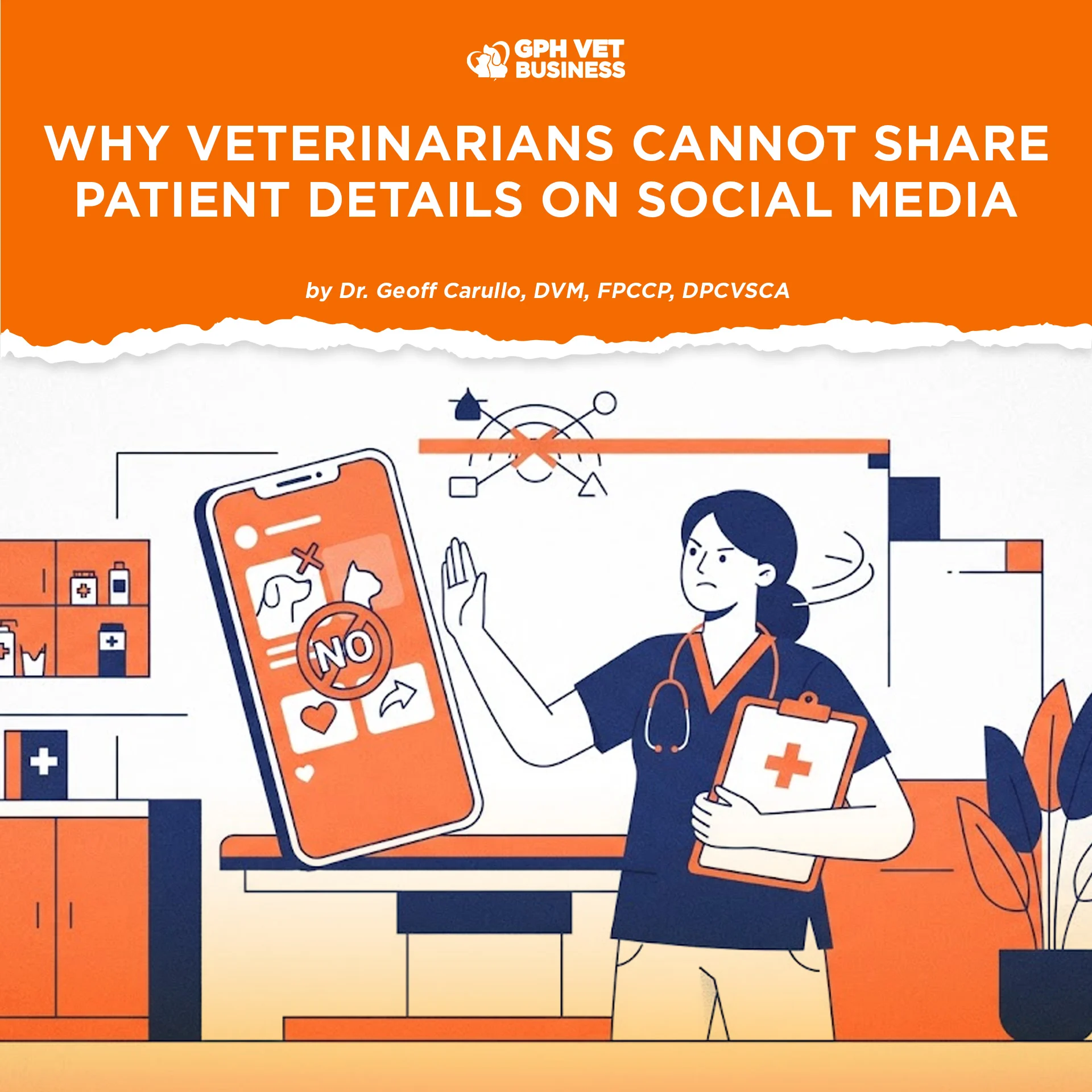
When we bring our pets to the veterinarian, we entrust not just their health, but also their privacy.
Many pet owners are surprised to learn that veterinarians are not allowed to freely post about their cases or discuss patient details on social media or in public.
This restriction isn’t about hiding information—it’s about protecting trust, privacy, and professional ethics.


1. Confidentiality and Trust
Veterinarians, like doctors and lawyers, are bound by professional confidentiality. Information about a pet, including its medical condition, treatment, or even the owner’s details, is considered private.
Posting a photo or sharing a story without permission could breach this trust. Just as human doctors cannot post about patients, veterinarians must respect the privacy of pets and their families.
2. Protection of the Veterinarian–Client–Patient Relationship (VCPR)
The relationship among veterinarian, client, and patient is built on confidence. If owners feel their cases might end up online without consent, they may withhold important details during consultations. This could compromise the quality of care. By keeping cases private, vets protect an open and honest exchange of information within the VCPR.


3. Legal and Ethical Standards
Veterinary boards and professional organizations often have strict codes of conduct. Sharing identifiable patient details without consent may expose a veterinarian to disciplinary action, legal consequences, or even lawsuits. Data privacy laws in many countries—including those protecting personal and client data—apply to veterinary records as well.
4. Avoiding Misinterpretation and Public Misinformation
Medical details taken out of context can easily be misunderstood by the public. A complex treatment or a poor outcome, when shared casually on social media, might appear as negligence or malpractice. This not only harms the veterinarian’s reputation but can also spread misinformation about veterinary medicine.

5. Exceptions: With Permission and for Education
Vets may share cases online, but only when:
- The owner has given explicit, written consent
- Identifying details are removed (no names, addresses, or unique identifiers)
- The purpose is educational, not promotional or sensational
Many veterinarians share anonymized case studies in academic settings or professional forums to advance knowledge while respecting the VCPR.
The Bottom Line
Veterinarians are guardians not only of animal health but also of their clients’ trust. Respecting the Veterinarian–Client–Patient Relationship (VCPR) ensures that pet owners feel safe, valued, and confident when seeking care. That’s why vets think twice before posting about their patients—because professionalism and trust are at the heart of veterinary medicine.
Sharing this helps others understand what it really means to be a vet. Like and follow if you’re with us.
Dr. Geoff Carullo is a Fellow and the current President of the Philippine College of Canine Practitioners.