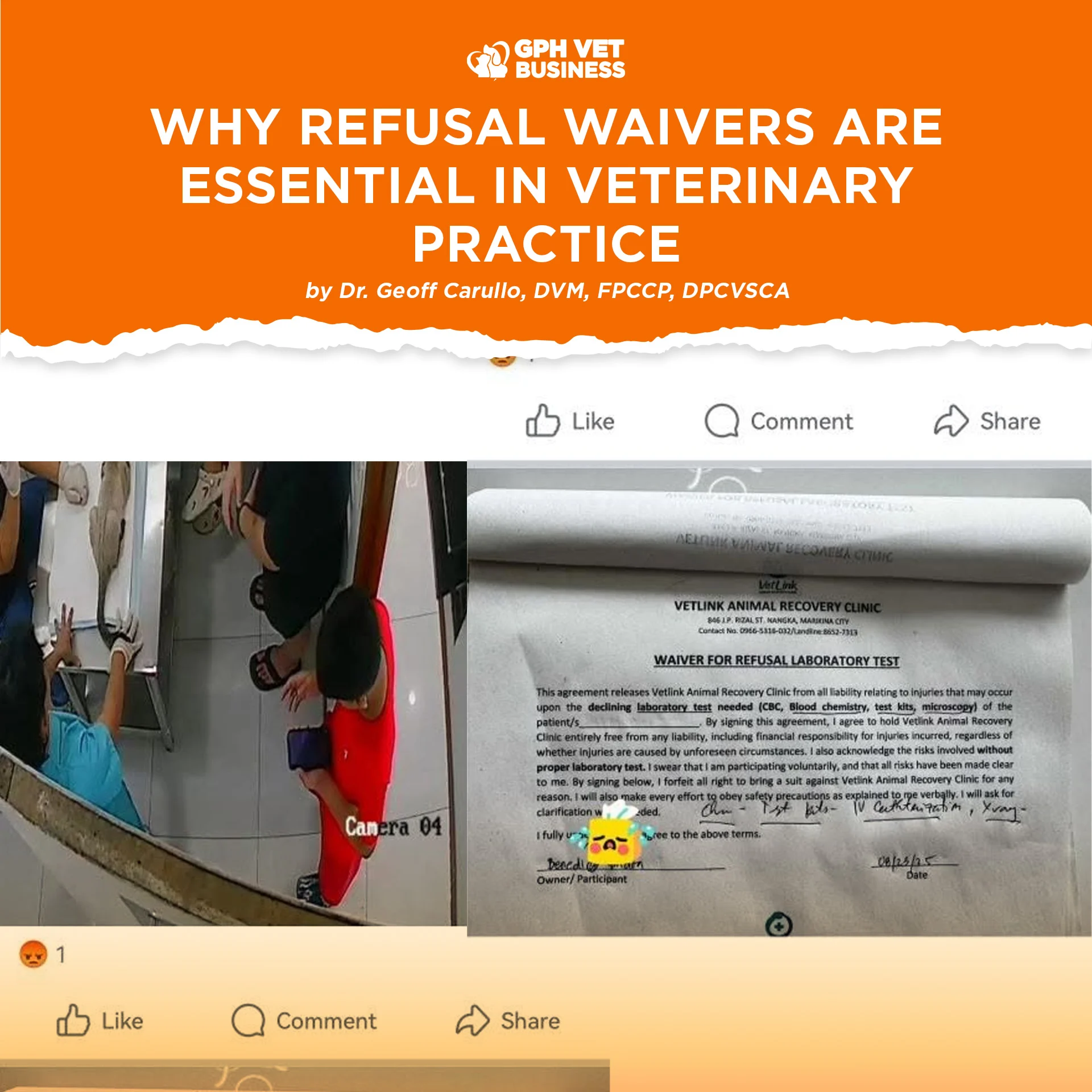
In every veterinary consultation, one of the most crucial but often overlooked aspects is client compliance with diagnostic recommendations. While we, as veterinarians, are committed to providing the best possible care, the reality is that not all pet owners can—or will—agree to the tests we recommend. This is where refusal waivers become indispensable.
Protecting Both Patient and Practitioner
Laboratory tests such as CBC, blood chemistry, test kits, microscopy, or imaging are not optional add-ons—they are tools that allow us to diagnose accurately and treat responsibly. When clients refuse these diagnostics, they limit the veterinarian’s ability to make informed decisions. The patient’s health is at risk, and so is the practitioner’s liability.
A refusal waiver ensures that the client understands the risks of declining tests. By signing, they acknowledge that they were advised of the necessity of diagnostics but chose to proceed without them. This protects the veterinarian from accusations of negligence later on, especially if complications arise.


Transparency and Accountability
These documents are not meant to intimidate clients. Instead, they promote transparency. A refusal waiver communicates clearly:
- The veterinarian has recommended certain tests.
- The client understands why these are important.
- The client accepts responsibility for the risks of declining.
This way, trust between the vet and client is preserved, and both parties are clear about their roles and responsibilities.
Real-World Scenarios
Imagine a patient brought in for sudden weakness. The veterinarian advises immediate blood work, but the client refuses due to financial constraints. If the condition worsens or the pet passes away, the waiver serves as proof that the veterinarian acted appropriately, advised correctly, and respected the client’s choice.
Without this documentation, the veterinarian could be unfairly blamed, even sued, despite having done everything within professional standards.


A Culture of Professionalism
Refusal waivers also strengthen the culture of professionalism within clinics. They show that decisions are guided by medical standards, not guesswork or shortcuts. They remind both clients and staff that veterinary care is a partnership, requiring clear communication and shared accountability.
Final Thoughts
Veterinary practice is not only about treating animals—it’s also about managing expectations and protecting integrity. Refusal waivers are not just pieces of paper. They are safeguards that protect the patient, the client, and the veterinarian.
As professionals, it is our duty to recommend what is best for the patient. But when recommendations are declined, it is equally our duty to ensure that the risks are documented. Because in the end, our responsibility is not only to heal—but also to uphold the standards that give our profession its credibility.

Sharing this helps others understand what it really means to be a vet. Like and follow if you’re with us.
Dr. Geoff Carullo is a Fellow and the current President of the Philippine College of Canine Practitioners.