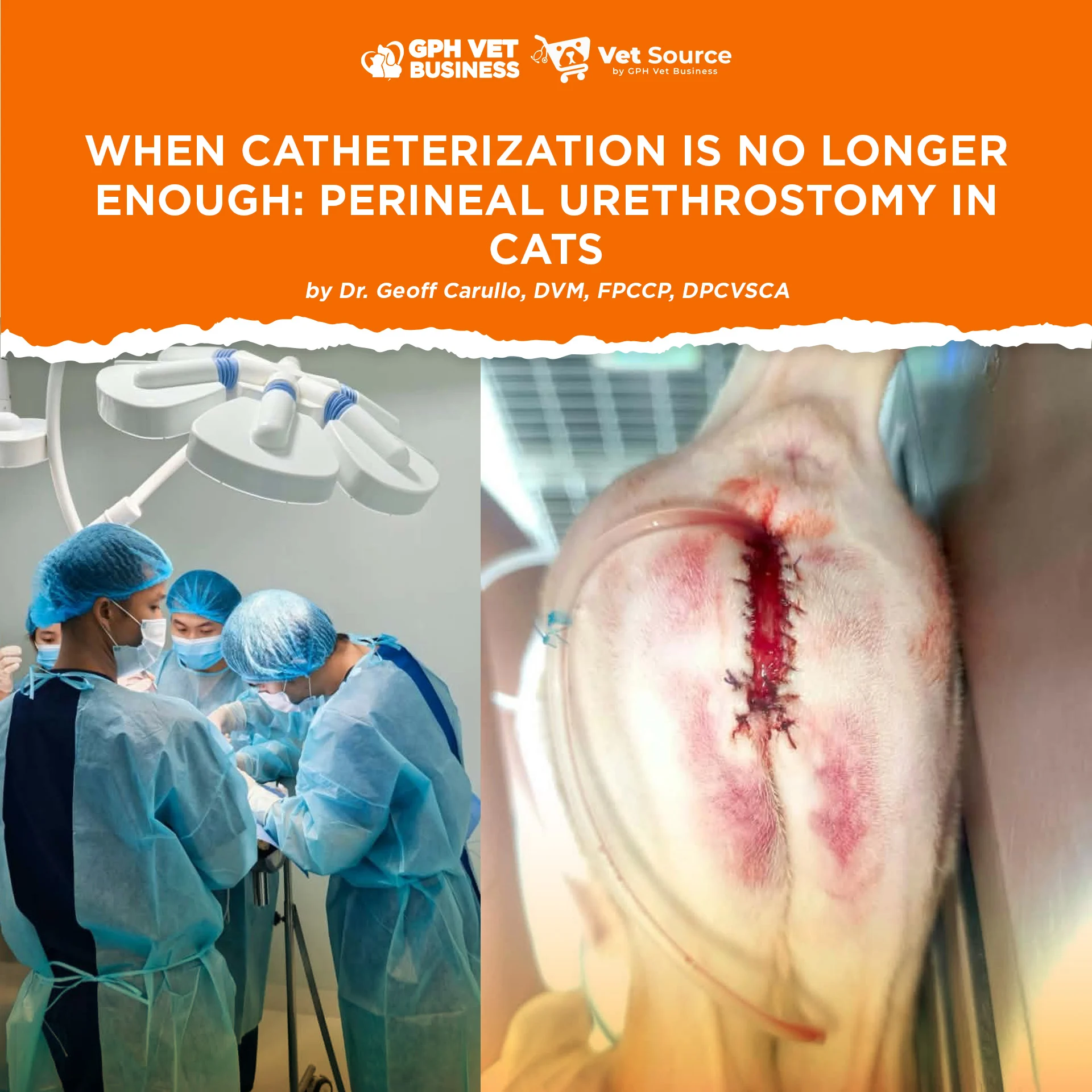
How many times should we catheterize a male cat before considering surgical intervention?
Twice? Three times? Five times?
For veterinarians managing recurrent feline urethral obstruction, this is an important clinical question.
Repeated urethral catheterization may temporarily relieve obstruction, but it does not necessarily address the anatomical factors contributing to recurrence.
And every episode of obstruction carries risks of postrenal azotemia, hyperkalemia, metabolic acidosis, and potentially fatal cardiovascular complications.


WHEN IS PERINEAL URETHROSTOMY INDICATED?
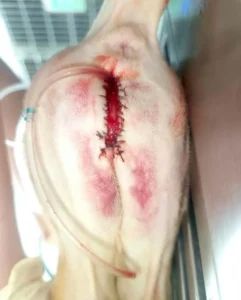
Figure 1. Feline Perineal Urethrostomy and Castration Surgical appearance following perineal urethrostomy (PU) and castration performed by Dr. Bronswick Binos, Dr. RJ Padul and Dr. Gabe dela Fuente of Greenwoods Pet Hospital in a male cat with chronic feline lower urinary tract disease (FLUTD) complicated by recurrent urethral obstruction. The photograph demonstrates the newly constructed perineal urethral stoma, with visible mucocutaneous sutures securing the urethral mucosa to the surrounding skin. A urinary catheter is positioned through the reconstructed urethral opening. Perineal urethrostomy bypasses the narrow distal penile urethra by creating a wider permanent urinary outlet using the pelvic urethra, thereby reducing the likelihood of recurrent urethral obstruction. Clinical significance: Successful outcomes depend on adequate urethral mobilization, precise mucocutaneous apposition, minimal tissue tension, and appropriate postoperative management to minimize complications such as stomal stenosis, wound dehiscence, and urinary tract infection. Photo courtesy of Greenwoods Pet Hospital, Pasig City, Philippines.
The photograph shows a feline patient following castration and perineal urethrostomy (PU) due to chronic feline lower urinary tract disease (FLUTD) complicated by recurrent urethral obstruction.
Perineal urethrostomy involves removing the narrow distal penile urethral segment from the urinary outflow pathway and creating a permanent stoma using the wider pelvic urethra.
The goal is to reduce the likelihood of future obstruction, particularly in patients experiencing repeated episodes despite appropriate medical management.
However, PU should not automatically be considered after every urethral obstruction.
Generally accepted indications include:
- Recurrent urethral obstruction despite appropriate medical management.
- Urethral obstruction that cannot be relieved through catheterization.
- Severe urethral trauma or irreversible urethral damage.
- Distal urethral strictures that cannot be adequately managed conservatively.


THE SURGICAL DETAILS MATTER
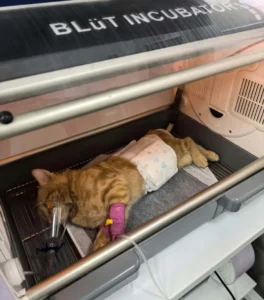
Figure 2. Postoperative Recovery The feline patient, 30 minutes after perineal urethrostomy and castration, recovering inside a temperature-controlled incubator with supplemental oxygen and intravenous support. Close monitoring of vital signs, urinary output, hemorrhage, and anesthetic recovery is essential during the immediate postoperative period. Greenwoods Pet Hospital, Pasig City.
One of the most important technical considerations is adequate dissection to the level of the bulbourethral glands.
Failure to establish the stoma at the appropriate urethral diameter can predispose the patient to postoperative stenosis.
Equally important are atraumatic tissue handling, accurate mucosa-to-skin apposition, and minimizing tension along the surgical margins.
Postoperative complications may include hemorrhage, wound dehiscence, urinary tract infection, and stomal stricture.
A technically successful surgery is not simply one that creates an opening. It is one that maintains a functional urinary passage after healing.

PU IS NOT A CURE FOR FLUTD
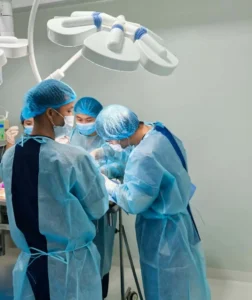
Figure 3. Veterinary Surgical Team The veterinary surgeon, assistant surgeon, anesthetist, and veterinary technician working collaboratively during feline perineal urethrostomy and castration at Greenwoods Pet Hospital. Successful surgical outcomes depend on coordinated teamwork, precise surgical technique, effective anesthetic management, and continuous patient monitoring.
This is perhaps the most important point to communicate to clients.
Perineal urethrostomy addresses the narrow distal urethra, not the underlying pathophysiology of FLUTD.
Patients may continue to experience feline idiopathic cystitis, hematuria, crystalluria, urolithiasis, or urinary tract infections.
Long-term management may still involve therapeutic urinary diets when indicated, increased water consumption, environmental modification, stress reduction, and periodic urinalysis.
THE CLINICAL JUDGMENT BEHIND THE PROCEDURE
In veterinary practice, knowing how to perform a procedure is only one part of surgical competence.
Knowing when to recommend it is equally important.
Performing PU too early may expose a patient to unnecessary surgical risks.
Delaying PU despite repeated clinically significant obstruction may expose the same patient to recurring emergencies, renal injury, and considerable financial burden.
The decision should therefore be based on the patient’s clinical history, underlying disease, response to treatment, and overall prognosis.
The objective is not to eliminate catheterization at all costs. It is to select the intervention most likely to provide the patient with a sustainable quality of life.
Because in small animal surgery, technical skill matters.
But sound clinical judgment matters just as much.
Sharing this helps others understand what it really means to be a vet. Like and follow if you’re with us.
Dr. Geoff Carullo is a Fellow and the current President of the Philippine College of Canine Practitioners.