
What if one of the most sophisticated-looking treatments in veterinary medicine has less scientific evidence behind it than we think?
And here is an even more uncomfortable question.
If you know that the scientific evidence supporting therapeutic laser treatment remains inconclusive, how comfortable are you charging pet owners for it?
I recently came across a provocative discussion in the book Veterinary Controversies and Ethical Dilemmas: Provocative Reflections on Clinical Practice, edited by Tanya Stephens, R. Eddie Clutton, Polly Taylor, and Kathy Murphy.
On page 49, in the chapter Just Because We Can Doesn’t Mean We Should, the author raises concerns about the widespread promotion of therapeutic lasers in veterinary practice.
The concern?
Laser equipment is being marketed to veterinarians as an additional revenue-generating service, despite limited evidence supporting its clinical efficacy.
That statement caught my attention.
Because therapeutic lasers are becoming increasingly popular in small animal practice.
But are we actually improving patient outcomes, or simply adding another billable procedure?


What Does Science Say?
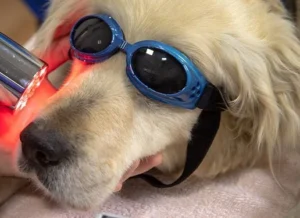
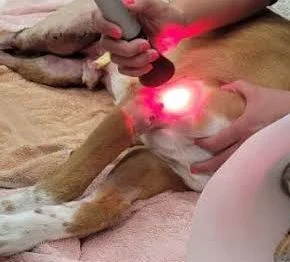
A 2023 systematic review published in Animals examined 45 studies investigating laser therapy in veterinary medicine.
The researchers identified inconsistent findings, methodological limitations, and insufficient reliable evidence supporting many clinical applications.
Interestingly, some studies showed promising results.
A 2018 randomized, placebo-controlled trial involving 20 dogs with elbow osteoarthritis reported improvements in pain and lameness, with several laser-treated dogs requiring less NSAID medication.
Another 2022 study involving 20 dogs with hip osteoarthritis also reported encouraging outcomes.
However, other investigations have failed to demonstrate significant improvements in wound healing or certain postoperative recovery measures.
So, is laser therapy useless?
Not necessarily.
But is laser therapy scientifically proven to be effective for every condition veterinarians are charging pet owners to treat?
Absolutely not.


The Uncomfortable Business Question

Therapeutic laser machines represent a substantial financial investment.
Some clinics invest heavily in these devices, hoping to improve patient care while generating additional revenue.
There is nothing inherently wrong with that.
But here is where veterinary ethics becomes uncomfortable.
Are we recommending laser therapy because our patients genuinely need it, or because our machines need to pay for themselves?
Imagine recommending repeated laser sessions to a pet owner without adequately explaining that the supporting evidence for that particular condition remains uncertain.
The pet owner trusts your medical judgment.
They assume that because a veterinarian recommends a treatment, its effectiveness has been reasonably established.
But has it?
And if the evidence is weak, shouldn’t that uncertainty be disclosed before accepting payment?
There is nothing unethical about charging for an emerging treatment when its limitations are clearly explained and its use is clinically defensible.
The ethical problem begins when uncertainty is marketed as certainty.

My Take
I am not against therapeutic lasers.
Some clinical studies suggest genuine benefits, particularly in canine osteoarthritis.
But the overall evidence remains inconsistent, and research involving cats is especially limited.
Even the 2022 AAHA Pain Management Guidelines acknowledge limitations in the available controlled clinical evidence.
Different wavelengths, dosages, devices, and treatment protocols also cannot automatically be assumed to produce identical clinical outcomes.
We must distinguish between a treatment that shows promise and one whose clinical effectiveness has been convincingly demonstrated.
Those are two very different things.
And veterinarians have a professional responsibility to explain that distinction.
Because just because we can charge for a procedure doesn’t automatically mean we should recommend it.
Perhaps the veterinary profession needs to confront one final question:
If therapeutic laser treatment generated absolutely no additional income for your clinic, would you still recommend it as frequently?
Think about that.
Our responsibility is to treat the patient based on the best available evidence.
Not to pay off the machine.
References
Bergh et al. (2023). A Systematic Literature Review of Complementary and Alternative Veterinary Medicine: Laser Therapy. Animals, 13(4), 667. https://doi.org/10.3390/ani13040667
Looney et al. (2018). Randomized placebo-controlled trial investigating photobiomodulation therapy for canine elbow osteoarthritis. Canadian Veterinary Journal, 59(9), 959–966.
Alves et al. (2022). Randomized controlled trial investigating photobiomodulation in canine osteoarthritis. American Journal of Veterinary Research.
AAHA (2022). Pain Management Guidelines for Dogs and Cats.
Stephens, T., Clutton, R. E., Taylor, P., & Murphy, K. (Eds.). Veterinary Controversies and Ethical Dilemmas: Provocative Reflections on Clinical Practice. CRC Press, Chapter 6, p. 49.
Sharing this helps others understand what it really means to be a vet. Like and follow if you’re with us.
Dr. Geoff Carullo is a Fellow and the current President of the Philippine College of Canine Practitioners.