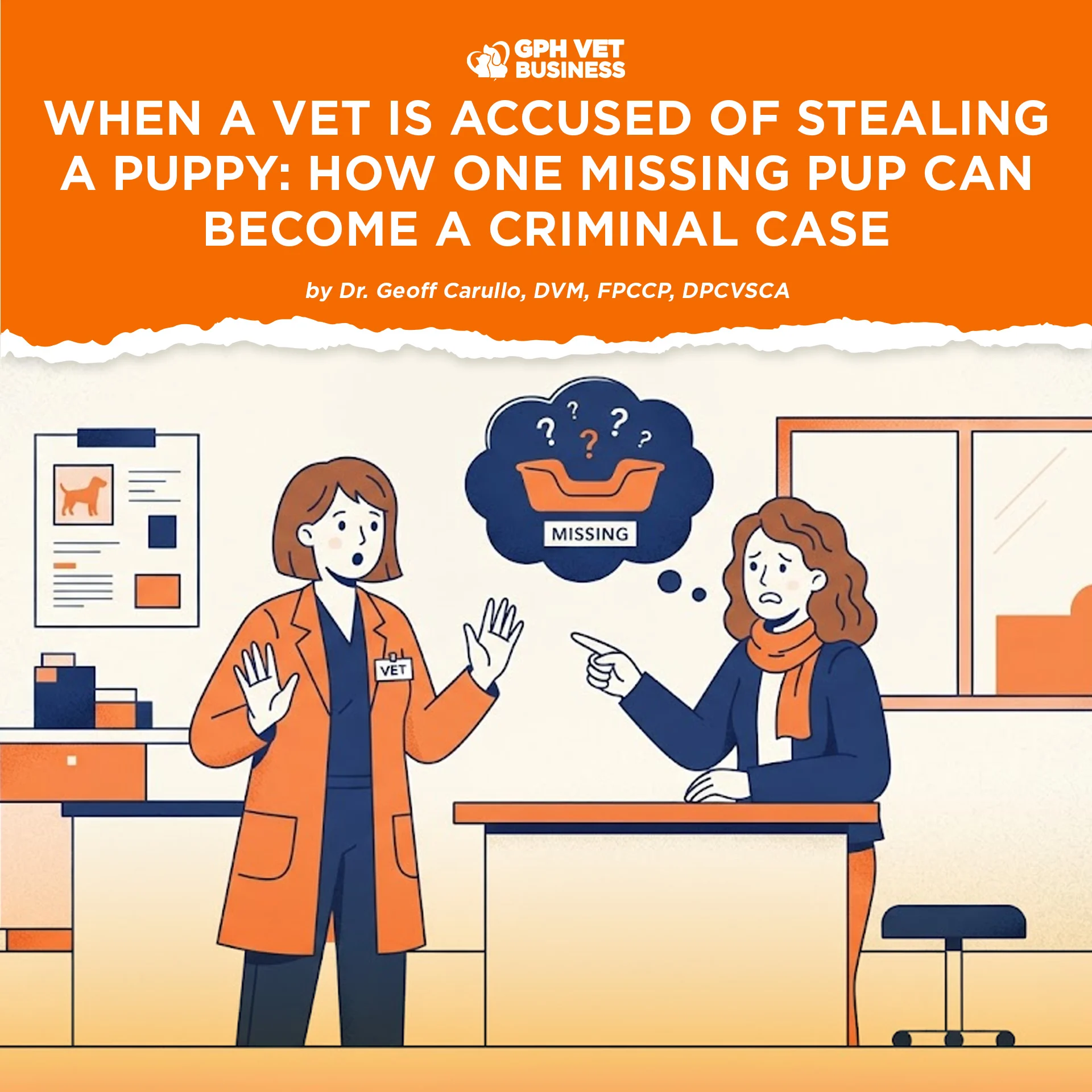
A pregnant dog is confined.
An x-ray is taken—it shows three puppies.
But when whelping happens, only two live puppies are handed over.
The client asks: “Where’s the third?”
The staff says: “It must have been resorbed, or stillborn.”
The client doesn’t believe it.
Now, they’re accusing the clinic of theft.
Is This Possible? Can You Be Sued or Charged?
Yes.
Even if no puppy was stolen, if the client believes there was intent to take a newborn without consent, the clinic may still face:
- Criminal charges
- Civil lawsuits
- PRC administrative complaints
- Online defamation and damage to reputation
This situation, though emotionally charged, can be legally dangerous—especially if documentation is lacking.


What Legal Charges Could Apply if a Puppy Was Stolen?
1. Theft (Article 308, Revised Penal Code)
Taking a newborn puppy—considered personal property—without consent and with intent to gain is a criminal act.
Punishment depends on value, but can include fines, jail time, and permanent record.
2. Estafa (Article 315)
Lying or misleading the owner—claiming a puppy died or disappeared when it didn’t—is deceit with intent to gain, which may be considered estafa.
3. Professional Misconduct
The vet or staff may be reported to the PRC for unethical conduct or malpractice, leading to:
- License suspension or revocation
- Practice closure
- Sanctions from veterinary associations
But What If the Puppy Was Never Born?
This is where things get murky.
Radiographs and ultrasounds are diagnostic tools—but not perfect predictions.
A fetal outline may:
- Be miscounted due to overlapping shadows
- Represent a reabsorbed fetus
- Indicate a puppy that died and was reabsorbed or mummified
- Appear unclear without serial follow-up imaging


How Vets Should Protect Themselves
Documentation is your best defense.
To avoid misunderstandings or accusations:
- Keep and label all radiographs and ultrasound images
- Include written reports indicating possible errors or estimations in fetal count
- Explain fetal resorption and absorption scenarios during consults
- Take photos or videos during and after whelping if client is absent
- Get the client to sign consent and post-whelping acknowledgment forms
Without these? You’re vulnerable to “he said, she said” battles—even if you’re innocent.
Responsibility of Clinic Owners
If the vet is employed in your practice and commits theft—or fails to document properly—you may still be held liable.
Why?
- Vicarious liability applies to employers for the actions of staff
- Your clinic’s name and reputation is what the client remembers—not the individual vet

Final Thoughts
Sometimes it’s just a missing puppy.
Sometimes it’s a stolen one.
Either way, one thing is certain: without proper documentation, the law will not automatically be on your side.
As veterinarians, we must not only provide care—but protect the trust our clients place in us.
So document everything. Communicate clearly. Educate your clients.
Because in this profession, a single accusation can take down an entire practice.
Dr. Geoff Carullo is a Fellow and the current President of the Philippine College of Canine Practitioners.
Sharing this helps others understand what it really means to be a vet. Like and follow if you’re with us.