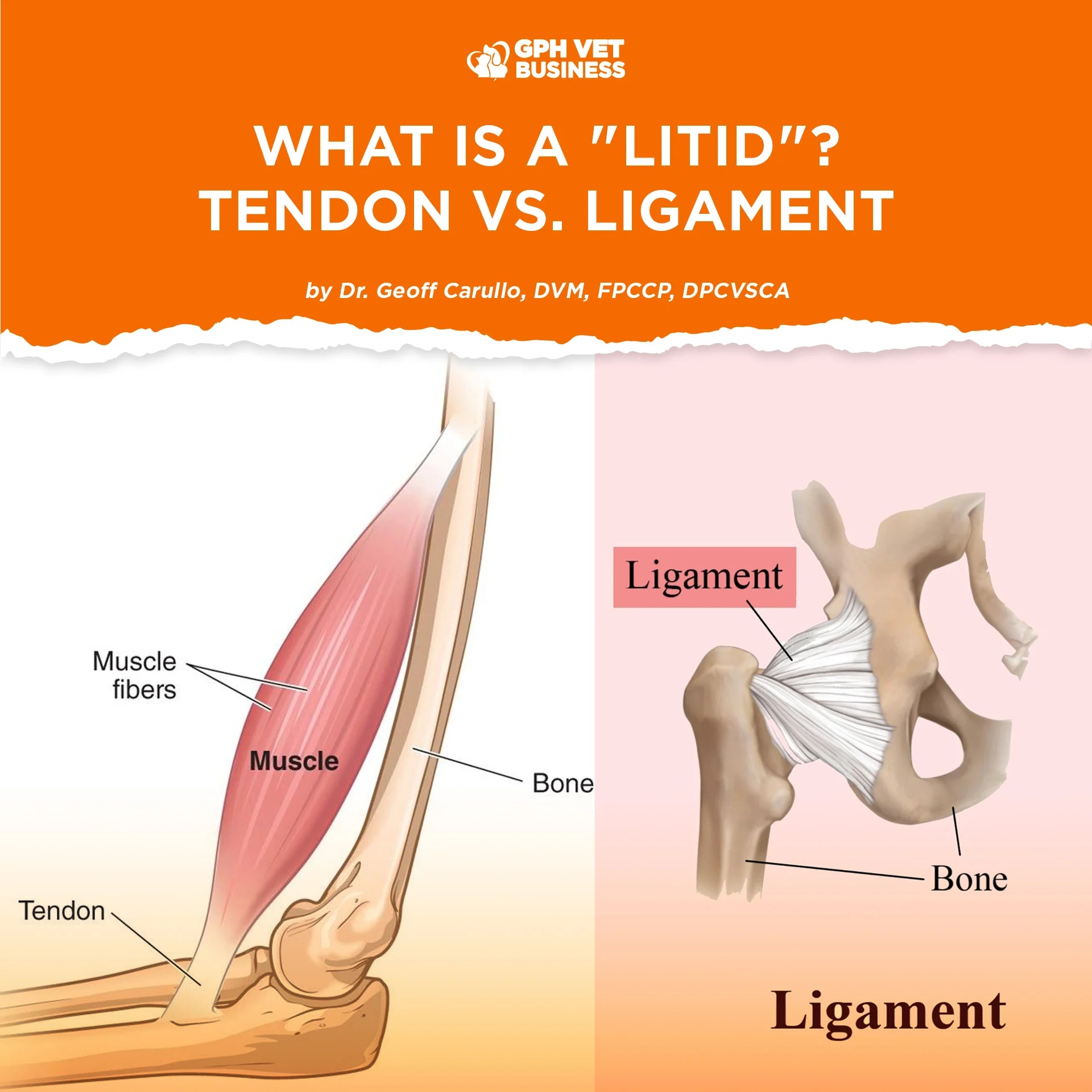
Many Filipinos use the word “litid” to describe any tough tissue inside the body. While this is common in everyday conversation, the word litid can actually refer to two different anatomical structures: the tendon and the ligament.
Although they are both made of strong fibrous connective tissue, they serve different purposes.
A tendon is a type of litid that connects a muscle to a bone. Its job is to transfer the force produced by a muscle so that the bone moves. Every time you walk, run, jump, or lift something, your tendons are working.
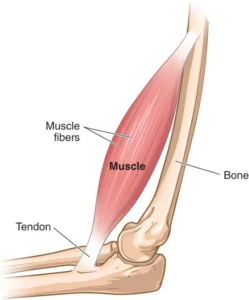
Figure 1. A tendon is a strong fibrous tissue that connects muscle to bone, allowing movement by transmitting the force generated during muscle contraction.


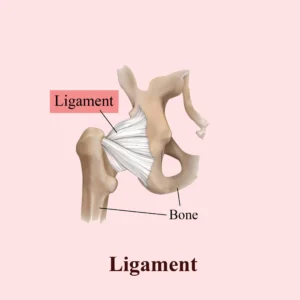
A ligament is another type of litid that connects one bone to another bone. Instead of producing movement, ligaments stabilize joints and prevent excessive or abnormal motion. They help keep joints strong while allowing normal flexibility.

Figure 2. A ligament is a strong fibrous connective tissue that connects one bone to another, providing stability and support to a joint while limiting excessive movement.
An easy way to remember the difference is this:
- Tendon = Muscle to Bone = Movement
- Ligament = Bone to Bone = Stability
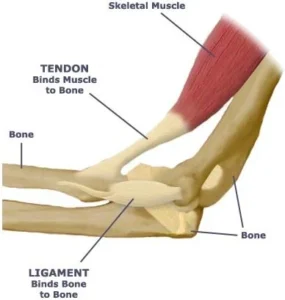
Figure 3. Comparison of a tendon and a ligament. A tendon connects muscle to bone to produce movement, while a ligament connects bone to bone to stabilize and support a joint.
In veterinary medicine, injuries to both tendons and ligaments are common. Tendon injuries can reduce an animal’s ability to move normally, while ligament injuries can lead to joint instability and lameness. One of the best-known examples is a torn cranial cruciate ligament (CCL) in dogs, a common cause of hindlimb lameness.


So, is “litid” the correct Filipino word?
Yes. Litid is the general Filipino term. However, in anatomy and medicine, it is more accurate to specify whether the structure involved is a tendon or a ligament, because each has a different function and requires different treatment when injured.
Understanding this simple distinction helps us appreciate how the body’s support system works, whether in people or in our animal patients.

Sources
- Gray’s Anatomy. Standring S, ed. Gray’s Anatomy: The Anatomical Basis of Clinical Practice. 42nd ed. Elsevier; 2021.
- Miller’s Anatomy of the Dog. Evans HE, de Lahunta A. Miller’s Anatomy of the Dog. 4th ed. Elsevier; 2013.
- Merck Veterinary Manual. “Musculoskeletal System.” A tendon connects muscle to bone, while a ligament connects bone to bone and stabilizes joints.
- MSD Manual. “Tendons and Ligaments.” Tendons transmit muscular force to bones, whereas ligaments connect bones and maintain joint stability.
Dr. Geoff Carullo is a Fellow and the current President of the Philippine College of Canine Practitioners.
Sharing this helps others understand what it really means to be a vet. Like and follow if you’re with us.