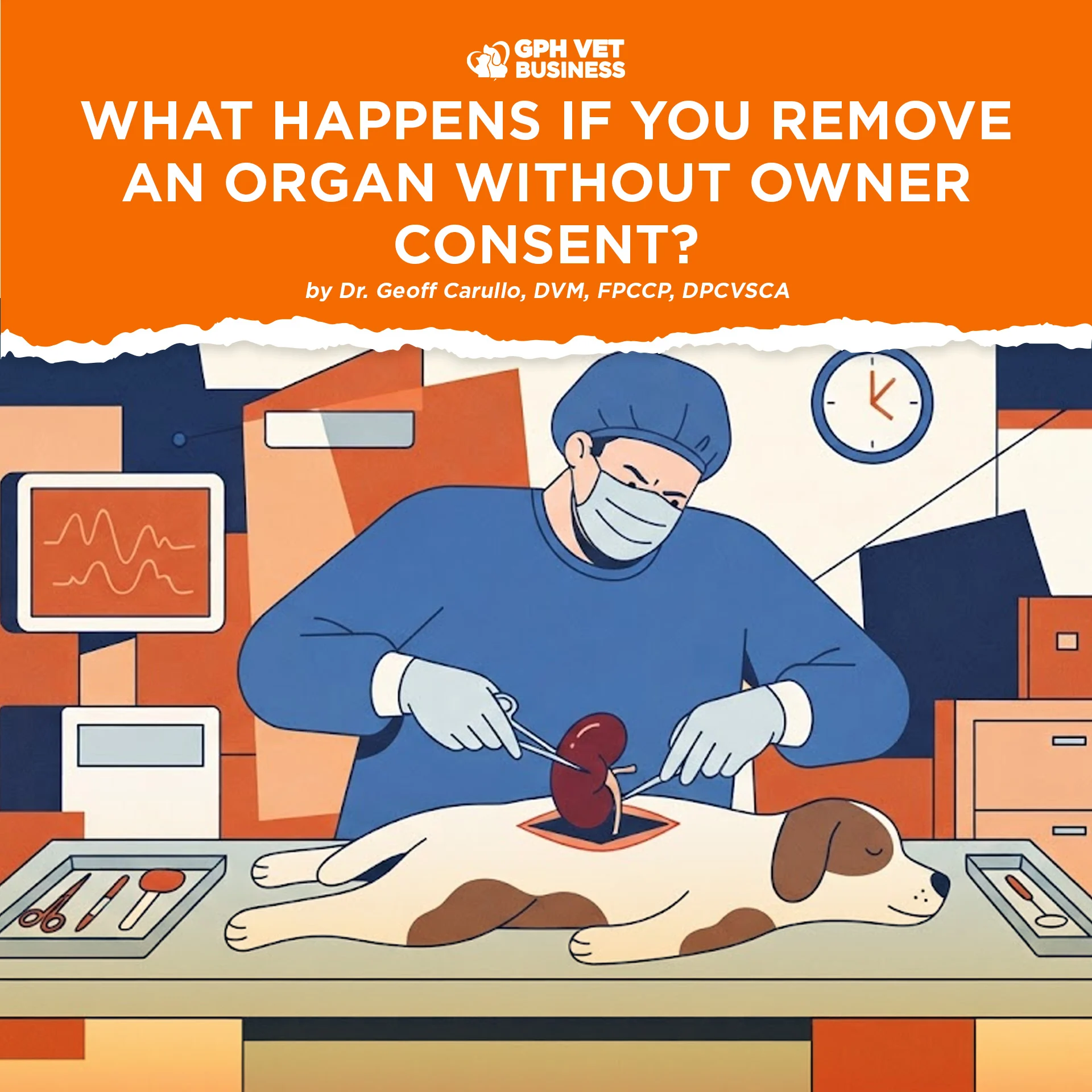
You perform surgery on a dog. It’s an emergency…
You find a ruptured spleen, remove it, close up, and inform the owner after.
The dog lives—but the owner is shocked.
They didn’t consent to the organ removal.
Now they’re threatening legal action.
What’s your defense?
Is It Theft?
No.
Under Philippine law, removing a dog’s organ without permission is not classified as theft under Article 308 of the Revised Penal Code.
Why?
Because theft requires two key things:
- Intent to gain
- Taking personal property without consent
A spleen has no economic value after removal, and there’s usually no intention to gain—only to save the animal’s life.
But just because it’s not theft doesn’t mean you’re safe.


What Cases Can Be Filed Against You?
Here’s what the owner can pursue—and why you need to be concerned:
1. Veterinary Malpractice / Medical Negligence
If you performed a major, irreversible procedure without informed consent, you could be charged with:
- Negligence under civil law
- An administrative case before the PRC
- Loss or suspension of your veterinary license
2. Estafa (Swindling)
If the owner was misled about the procedure, or if you charged for something they never approved, they may file estafa under Article 315 of the Revised Penal Code.
This is a criminal offense.
3. Cruelty to Animals (RA 8485 / RA 10631 – Animal Welfare Act)
If the procedure causes unjustified suffering, or is deemed unnecessary, criminal charges for animal cruelty may follow.
Penalties include:
- ₱30,000 to ₱250,000 fine
- Up to 3 years in prison
4. Civil Damages (Article 2176, Civil Code)
Even if your actions were in good faith, if the owner believes your decision harmed their pet or violated trust, they may demand compensation.


What About Emergencies?
In true life-or-death cases, where the owner cannot be contacted, and delaying treatment could kill the animal, you may be covered under implied consent.
But even then:
- Document your decision thoroughly
- Explain everything post-op
- Get witness statements if possible
- And most importantly: Be transparent
Protect Yourself with Proper Consent
This could all be avoided by one thing:
A well-written, signed consent form.
Your surgical consent should include:
- The nature of the procedure
- What the vet may need to do if complications arise
- A clause for intraoperative decisions (organ removal, resuscitation, etc.)
Don’t skip this. One missing signature could cost your clinic its credibility—or worse.

Final Thoughts for Vets
You may have saved a life. But if the owner didn’t consent, you could still face charges.
Because in the eyes of the law, intentions don’t always outweigh actions.
As vets, we walk the line between doing what’s right medically and respecting legal and ethical boundaries.
And if we cross that line without consent?
We don’t just lose trust—we risk everything.
Dr. Geoff Carullo is a Fellow and the current President of the Philippine College of Canine Practitioners.
Sharing this helps others understand what it really means to be a vet. Like and follow if you’re with us.