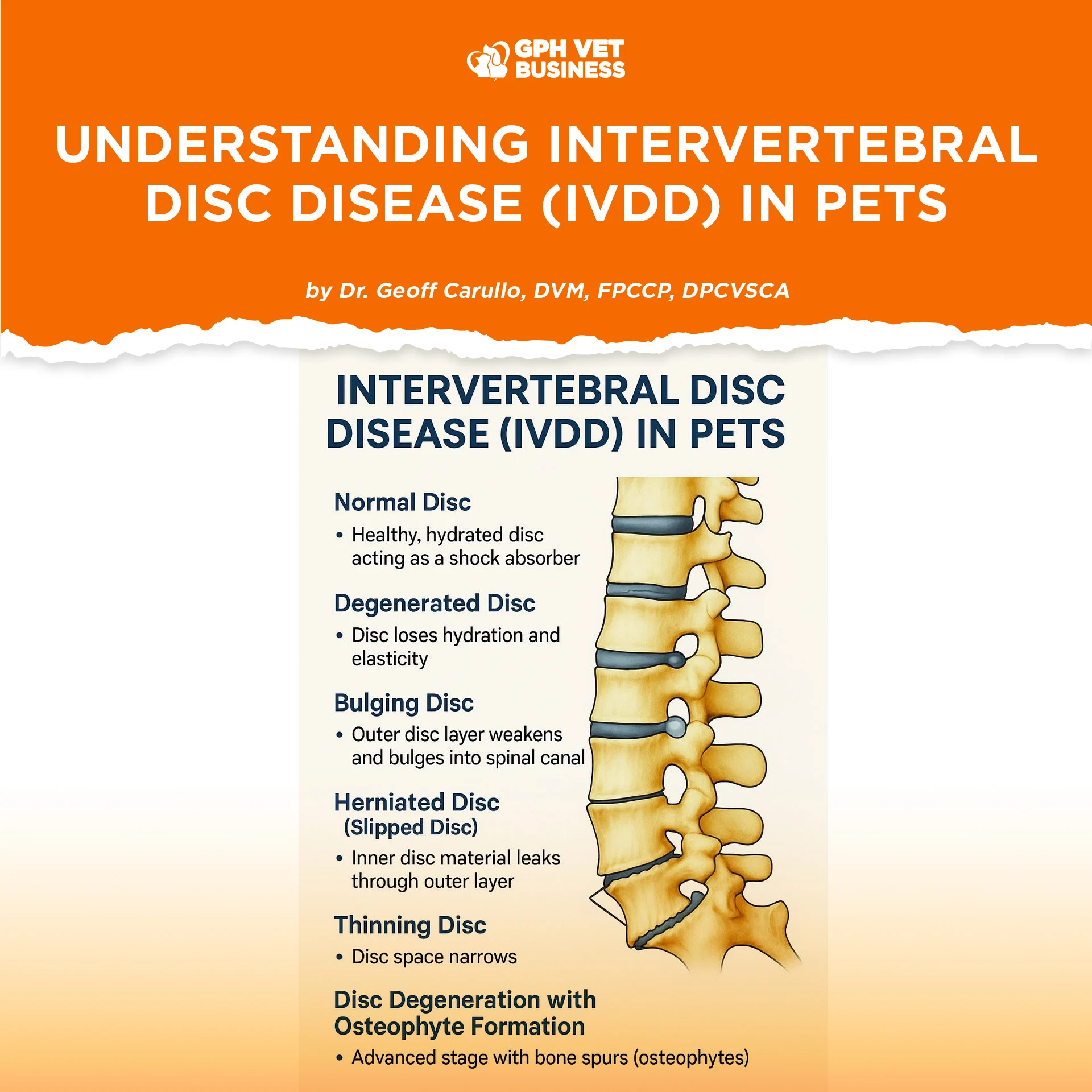
Back problems are not just a human concern—dogs and cats can suffer from spinal disc issues too, especially chondrodystrophic breeds like Dachshunds, Shih Tzus, Beagles, and Corgis.
The intervertebral discs act like cushions between the vertebrae of the spine. Over time or due to trauma, these discs can degenerate, leading to pain, nerve compression, and even paralysis.
Understanding the stages of disc changes can help veterinarians recognize and address the problem early.


Stages of Disc Degeneration in Pets
Normal Disc
- Healthy, hydrated disc acting as a shock absorber
- Pet moves normally, no pain or stiffness
Degenerated Disc
- Disc loses hydration and elasticity
- Early sign of IVDD, may present as mild back pain or stiffness after activity
Bulging Disc
- Outer layer (annulus fibrosus) weakens and bulges into the spinal canal
- May compress nerves, causing intermittent pain, yelping, or reluctance to jump
Herniated Disc (Slipped Disc)
- Inner gel (nucleus pulposus) leaks through the outer layer
- Can cause sudden, severe pain, limb weakness, or even paralysis depending on location


Thinning Disc
- Disc space narrows, reducing spinal flexibility
- May contribute to chronic discomfort and stiffness
Disc Degeneration with Osteophyte Formation
- Advanced stage where bone spurs form around the vertebrae
- Common in older dogs and cats, often linked to spondylosis deformans
- Can cause nerve irritation and chronic back pain
Clinical Signs to Watch Out For:
- Sudden yelping or pain when picked up
- Reluctance to jump, climb stairs, or play
- Stiff gait or hunched posture
- Dragging of hind limbs or loss of coordination
- In severe cases, loss of bladder or bowel control

Management and Treatment
- Mild cases: Rest, anti-inflammatory medications, and supportive care
- Moderate to severe cases: Imaging (X-ray, CT, or MRI) and possibly surgery to relieve spinal compression
- Preventive care: Weight management, controlled exercise, and avoiding activities that strain the spine (like excessive jumping)
Key Takeaway for Pet Owners and Vets:
Early detection is critical. Any sudden back pain or weakness in at-risk breeds is an emergency. Prompt veterinary care can make the difference between recovery and permanent paralysis.
Sharing this helps others understand what it really means to be a vet. Like and follow if you’re with us.
Dr. Geoff Carullo is a Fellow and the current President of the Philippine College of Canine Practitioners.