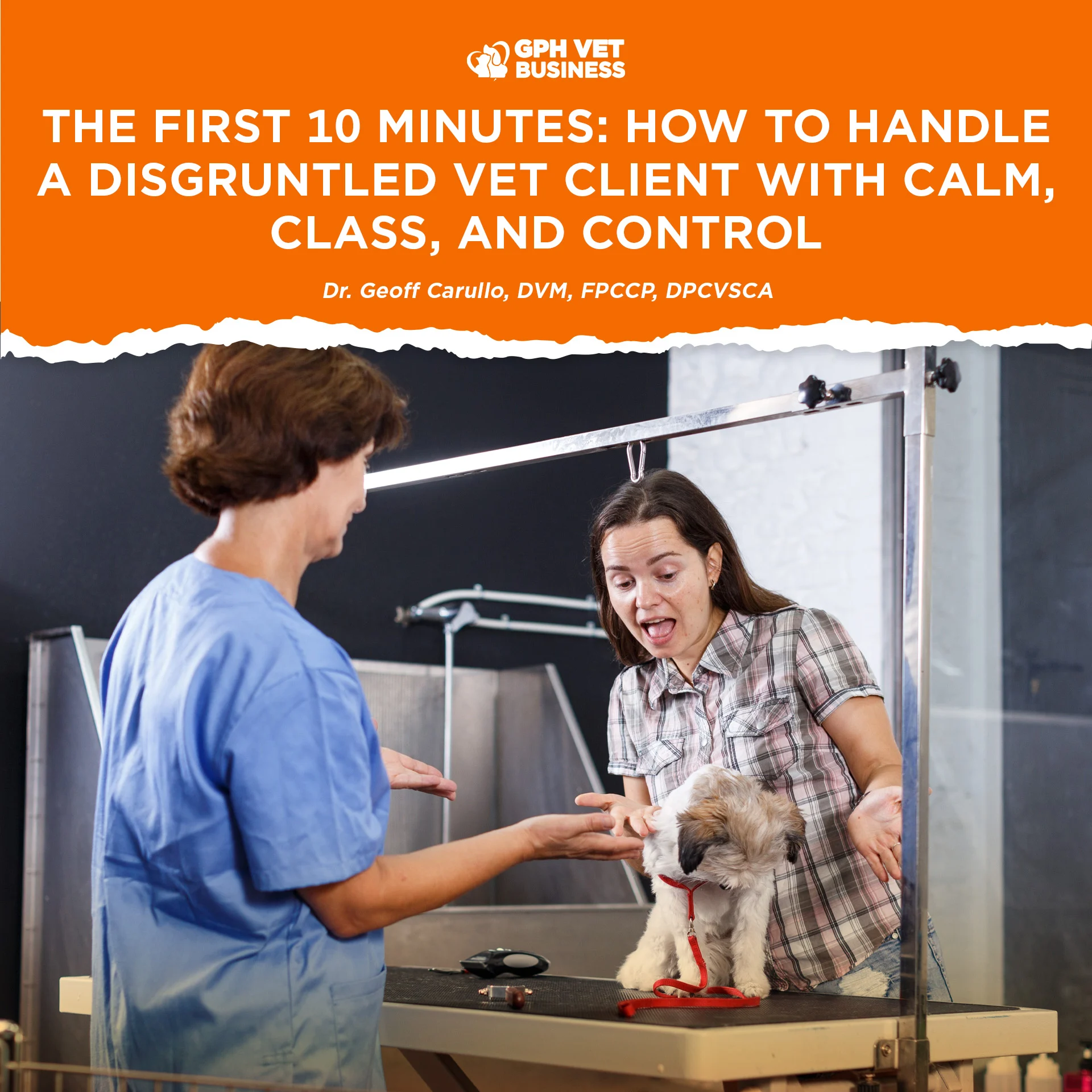
Disgruntled clients are an inevitable part of veterinary practice.
Whether it’s due to a billing concern, a miscommunication, or grief over a pet’s condition, those first ten minutes can either de-escalate a storm—or pour gasoline on a fire.
So what should you think, say, and do in those critical first 10 minutes?
1. What to THINK: Anchor Yourself Before You React
“This isn’t personal.”
Remind yourself: they’re upset about the situation, not you as a person. Don’t let your ego jump into defense mode.
“They’re hurting.”
Anger often masks fear, guilt, or sadness. A pet owner’s frustration can come from a place of emotional overwhelm.
“Stay calm = stay in control.”
The more composed you are, the more control you maintain over the situation and your clinic’s reputation.
2. What to SAY: The First Words Set the Tone
Your opening lines must disarm—not ignite.
Sample Phrases:
- “I hear you, and I want to understand what happened.”
- “I’m here to help you and your pet. Let’s talk through this.”
- “I can see you’re upset—and that matters to me.”
- “Thank you for bringing this to our attention.”
Even if you disagree with the complaint, showing empathy first builds a bridge toward resolution.
Avoid saying:
- “That’s not our fault.”
- “Calm down.”
- “There’s nothing we can do.”
These only escalate.


3. What to DO: Calm the Environment, Then Clarify
Sit down.
Lower your voice.
Offer a chair.
A calm tone and posture influences the other person’s energy.
Body language is your secret weapon.
Take notes.
Show you’re listening.
Pull out a pen and pad.
It signals seriousness and professionalism.
Use the pet as your mutual focus.
“Let’s see what’s going on with Max first, then we’ll go over the details together.”
Bring in a second team member if needed.
A witness or additional support can keep things grounded and add authority.
Bonus Tips
- Keep your voice 20% slower and softer than usual.
- Maintain neutral facial expressions—no eye-rolling, smirks, or sighs.
- Don’t rush to fix.
- First, fully listen.
- Then explain.
- Then offer solutions.


Why This Approach Works
Most angry clients are looking for three things:
- To be heard
- To be understood
- To know someone is taking responsibility for addressing the concern
When people feel heard, emotions often decrease and logic returns.
The goal is not to win an argument.
The goal is to preserve trust, protect the relationship, and find a path forward.

Final Thought
The first 10 minutes aren’t about solving everything—they’re about building trust, calming emotions, and shifting the conversation from conflict to collaboration.
When you lead with compassion and professionalism, even the most difficult client can walk away saying:
“At least they really cared.”
In veterinary medicine, technical skills save patients—but communication skills often save relationships.
Sharing this helps others understand what it really means to be a vet. Like and follow if you’re with us.
Dr. Geoff Carullo is a Fellow and the current President of the Philippine College of Canine Practitioners.