Why Vets Consider Tablet Splitting
Veterinarians often face the dilemma of adjusting doses when available drug formulations do not match the exact requirements of canine or feline patients. Despite the wide variety of veterinary-only products, many treatment plans still rely on human medicines. Common scenarios include:
- A dog requiring a lower dose than the smallest marketed strength.
- A cat needing precise micro-dosing not available in commercial veterinary tablets.
- Owners requesting cost-saving options, since buying higher-strength tablets and splitting them can be cheaper.
In these cases, tablet splitting seems like a practical solution.
The Pharmacological Challenge
Unlike in human medicine, where body weights are relatively similar, veterinary patients range from a 1-kg kitten to a 60-kg Labrador. Achieving accuracy in dosing is therefore even more critical.
Concerns in veterinary tablet splitting include:
- Uneven distribution of active ingredient – Even scored tablets may not guarantee equal potency in each half or quarter. For drugs with a narrow therapeutic index (e.g., levothyroxine, digoxin), this variability can compromise treatment.
- Altered pharmacokinetics – Splitting sustained-release or enteric-coated tablets destroys their design, leading to dose dumping or gastric irritation.
- Handling issues – Bitter-tasting or cytotoxic drugs (e.g., chemotherapy agents) pose additional risks when split, exposing pet owners or staff to active ingredients.


The Regulatory Context in the Philippines
The FDA regulates human drug formulations. Splitting human tablets for veterinary use is considered off-label and falls under the veterinarian’s professional judgment and responsibility.
The BAI (Bureau of Animal Industry) governs veterinary biologicals and feed products, but not tablets. Thus, prescribing split human tablets to animals is a matter of clinical discretion, client consent, and proper documentation.
Because only a limited number of FDA-registered veterinary tablets are available locally, many veterinarians resort to this practice—making it important to be aware of both risks and safeguards.
Best Practices for Veterinarians
- Prioritize veterinary-formulated drugs whenever available, to ensure safety and efficacy.
- Avoid splitting:
- Sustained-release, enteric-coated, or film-coated tablets.
- Drugs with a narrow safety margin.
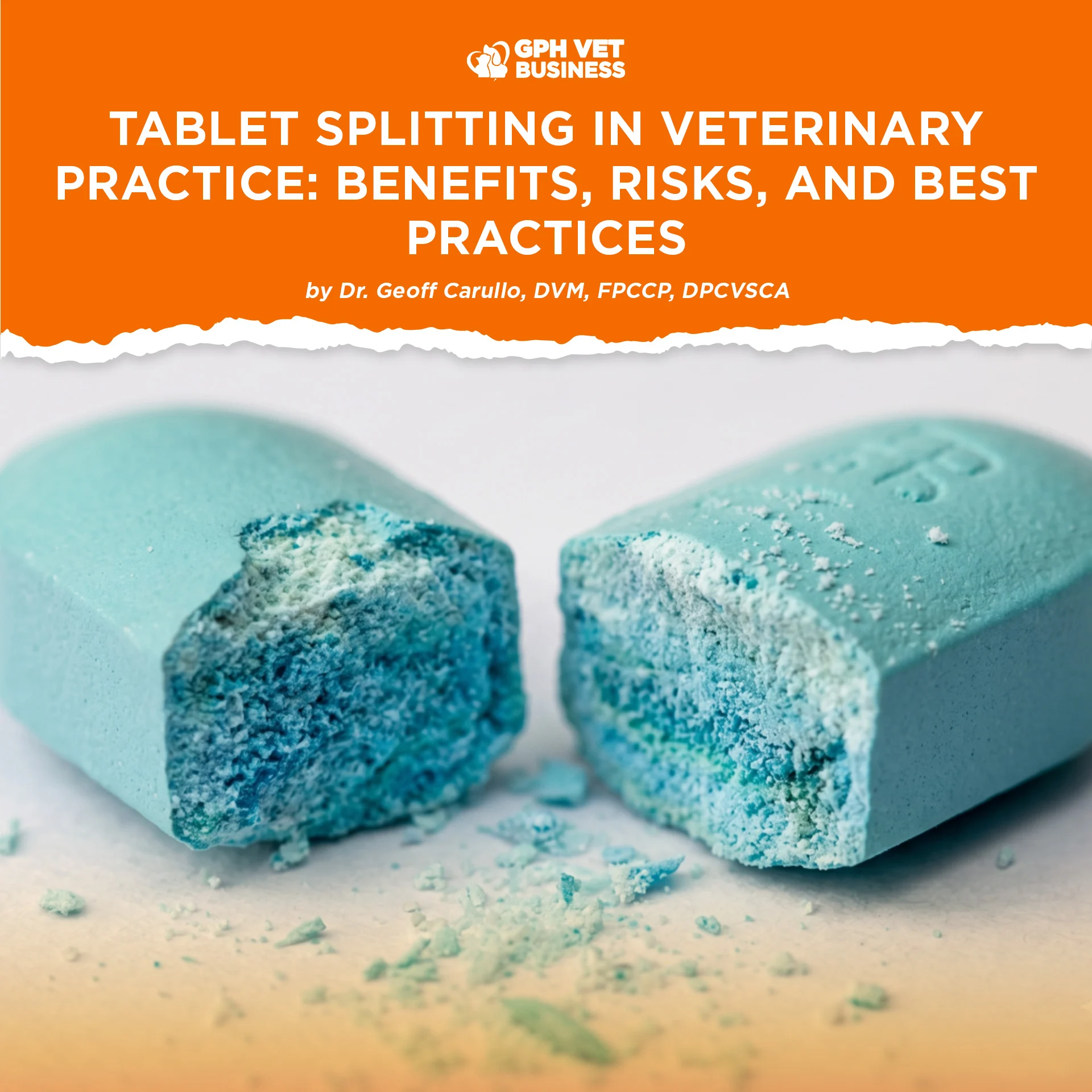
- Very small or friable tablets that crumble when cut.
- Use a proper tablet splitter instead of knives or scissors to improve accuracy.
- Prescribe clear instructions for pet owners (e.g., “split only at the time of administration” to avoid degradation from air or moisture).
- Educate owners about handling precautions—especially with potentially toxic drugs.
- Document the off-label use in the medical record and, when appropriate, obtain a waiver or informed consent.
Final Thoughts
Tablet splitting will likely remain part of small animal veterinary practice in the Philippines, given the limitations in available formulations. Done carefully and with clinical judgment, it can be a safe, practical, and cost-effective tool. However, inappropriate tablet splitting can lead to under-dosing, overdosing, or adverse events—problems veterinarians must prevent through sound pharmacological knowledge, owner education, and strict adherence to professional standards.
Dr. Geoff Carullo is a Fellow and the current President of the Philippine College of Canine Practitioners.


Sharing this helps others understand what it really means to be a vet. Like and follow if you’re with us.