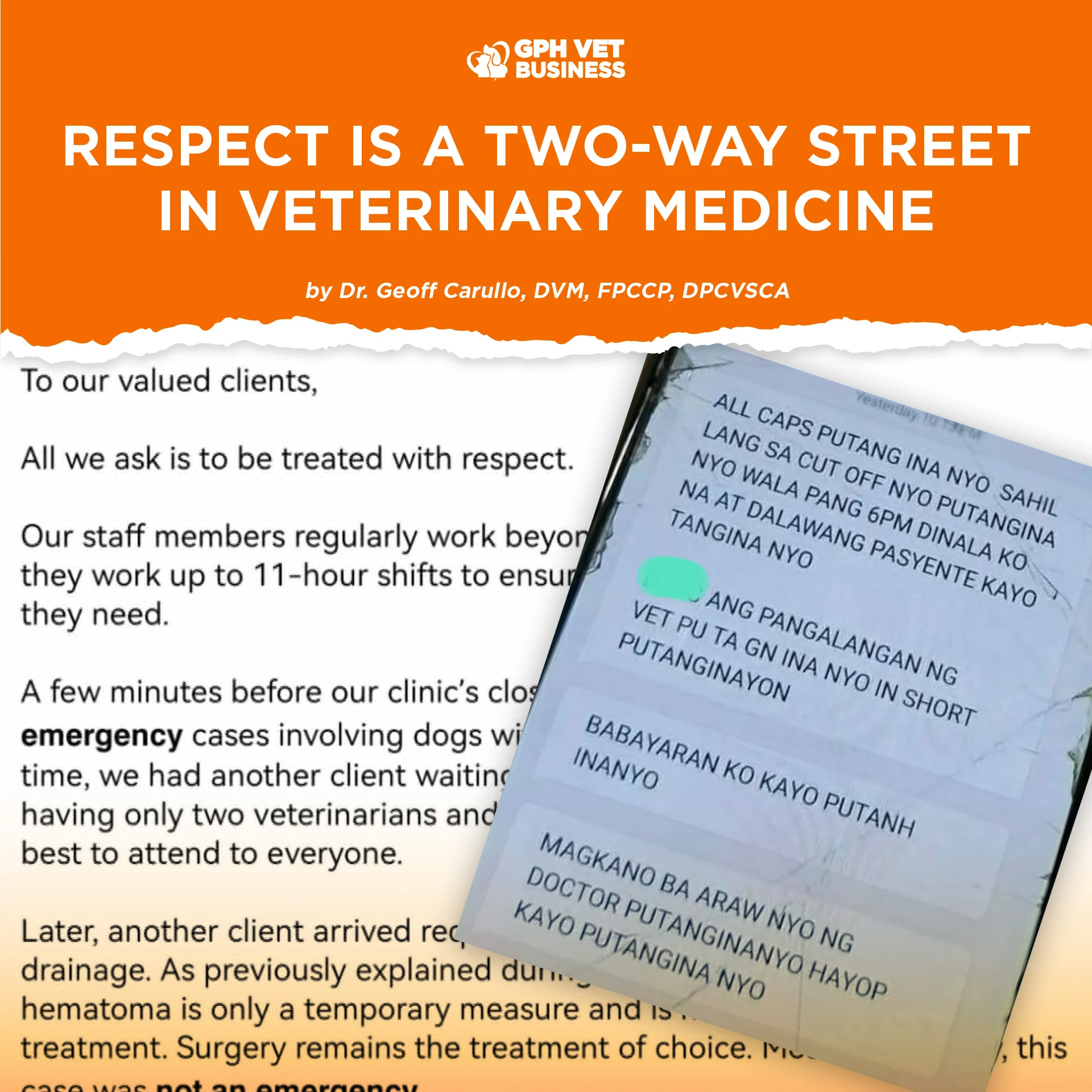
A screenshot of an abusive message sent to a veterinary clinic recently circulated online. It contained insults, profanity, and personal attacks directed at veterinarians and clinic staff because the client was not accommodated after the clinic had already implemented its consultation cut-off.
The clinic later explained what had actually happened.
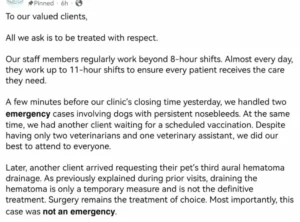
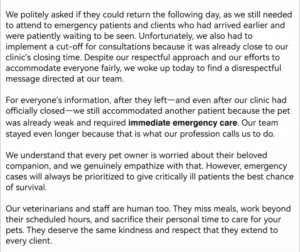
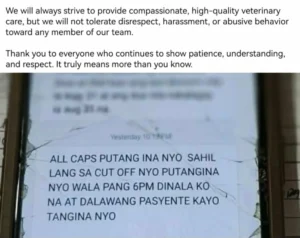
They had already been handling multiple emergency patients near closing time. Their veterinarians and staff had extended their working hours to care for dogs suffering from persistent nosebleeds, while another scheduled patient was also waiting. Shortly after, another client arrived requesting drainage of an aural hematoma, a condition that, while important, was not considered a life-threatening emergency compared to the patients already being managed.
The clinic respectfully requested that the client return the following day.
Instead, they woke up to a barrage of verbal abuse.

This incident highlights an important reality that many people outside the profession may not fully appreciate.


Veterinary clinics, especially private practices, have finite resources. There are only so many veterinarians, veterinary nurses, assistants, consultation rooms, and hours in a day. Unlike human hospitals, many veterinary clinics operate with very small teams. When several emergency cases arrive simultaneously, difficult decisions have to be made regarding which patients require immediate attention.
That process is known as triage.
Triage is an internationally accepted medical practice in both human and veterinary medicine. Patients with life-threatening conditions are attended to first because every minute can determine whether they survive. Less urgent cases may understandably need to wait or be scheduled for another day.
This is not discrimination.
It is responsible medical practice.
Many veterinarians also stay far beyond their scheduled shifts. They miss meals, postpone family time, cancel personal commitments, and continue treating patients long after clinics have officially closed. These sacrifices are rarely seen by the public because they happen behind closed doors.


Of course, pet owners are often emotional, anxious, and worried when their beloved companions are sick. Those feelings are completely understandable.
However, frustration should never become an excuse for harassment, threats, or verbal abuse.
Respect should never depend on whether someone receives the answer they were hoping for.
It should remain constant.
Veterinary professionals have every obligation to provide compassionate, competent, and ethical medical care. Clients, in turn, also have a responsibility to treat healthcare workers with basic courtesy and respect.
No veterinarian should have to fear opening their phone in the morning because of abusive messages sent simply for doing their professional duty.

The veterinary profession faces enough challenges already, including long working hours, emotional fatigue, compassion fatigue, burnout, and alarmingly high rates of mental health struggles worldwide. Kindness costs nothing, but it can make an enormous difference to the people who dedicate their lives to caring for animals.
Disagreements can always be expressed respectfully.
Profanity and harassment should never become part of veterinary medicine.
Sometimes, the greatest act of compassion is not only caring for the patient, but also remembering that the people wearing scrubs are human beings too.
Dr. Geoff Carullo is a Fellow and the current President of the Philippine College of Canine Practitioners.
Sharing this helps others understand what it really means to be a vet. Like and follow if you’re with us.