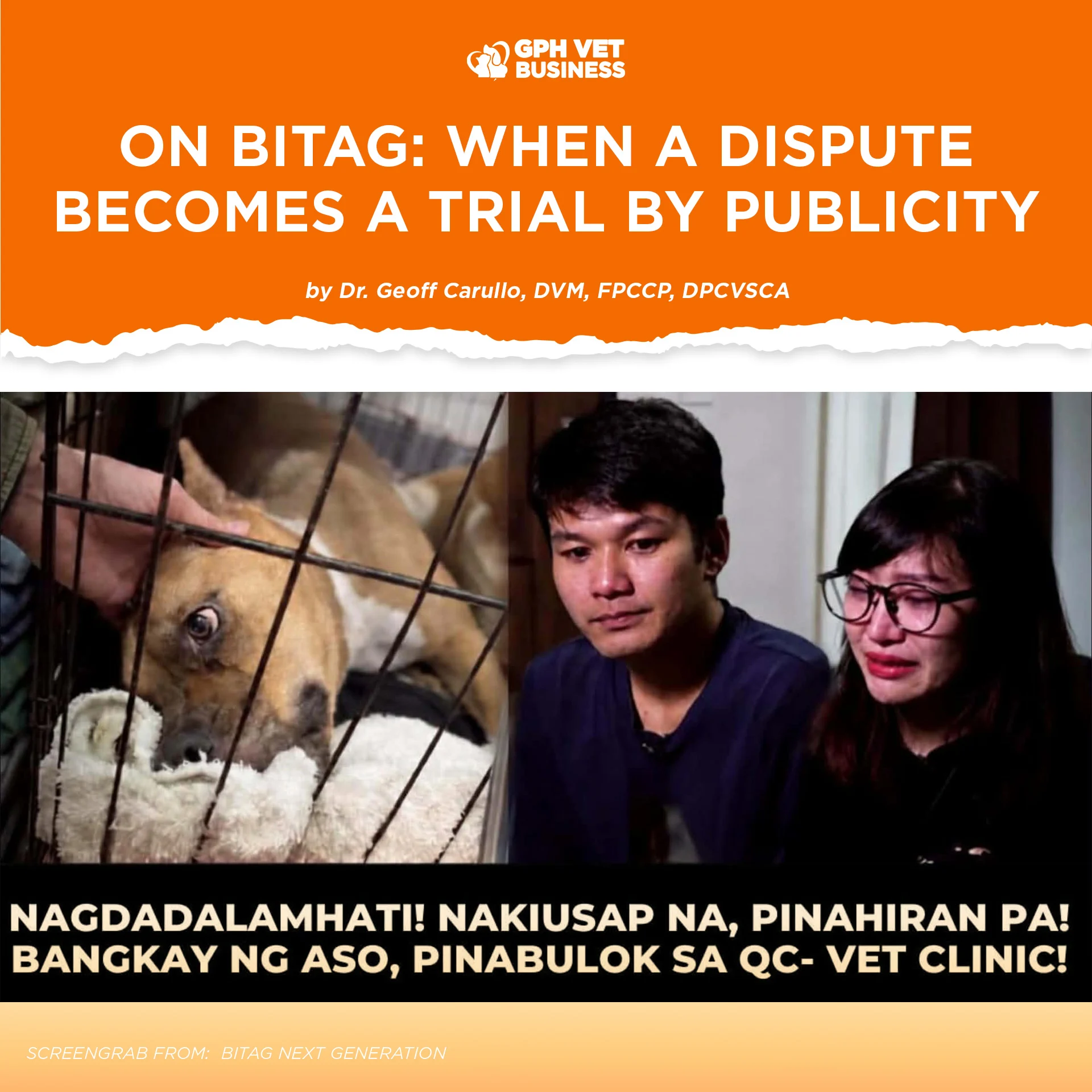
A veterinary dispute should be resolved by facts, documents, contracts, medical records, and applicable law, not by whoever tells the more emotional story in front of a camera.
When only one side of a controversy dominates the public narrative, there is a danger that legitimate questions of payment, consent, professional services, and contractual obligations are reduced to a simple storyline: the pet owner is the victim and the veterinarian is the villain.
That is not due process.
That is the danger of trial by publicity.
There are always two sides to a veterinary dispute
Financial hardship deserves compassion. But inability to pay does not automatically extinguish a legitimate veterinary bill.
Veterinary clinics are private professional establishments with employees, medicines, diagnostic equipment, utilities, taxes, and operating expenses.
When services have been requested and properly rendered, the resulting financial obligation does not disappear simply because payment later becomes difficult.
Likewise, a promissory note is a promise to pay, not payment itself.
A proposed payment arrangement requires agreement between the parties. Compassion may encourage a clinic to accept one, but compassion should not be converted into a compulsory credit policy.


The deceased pet makes the issue more emotional
When an animal dies, the discussion understandably becomes painful. But grief should not prevent us from examining the complete circumstances.
Questions involving custody or release of remains, unpaid charges, consent forms, clinic policies, and lawful disposition should be examined carefully rather than decided through public pressure.
This is precisely why veterinary clinics need clear written policies.
GPH is changing its approach
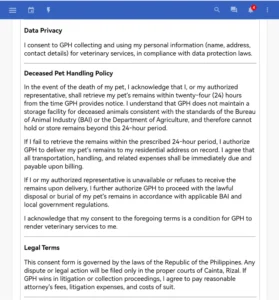
At Greenwoods Pet Hospital, our new Deceased Pet Handling Policy requires the owner or authorized representative to retrieve a deceased pet within 24 hours of notification.
If the remains are not retrieved, GPH may arrange delivery to the owner’s registered address, with the corresponding transportation and handling expenses charged to the owner.
If the owner is unavailable or refuses to receive the remains, the policy authorizes GPH to proceed with lawful disposal or burial subject to applicable regulations.
The objective is simple: do not allow a deceased animal to become the bargaining chip in a financial dispute.
The handling of the remains and the collection of an outstanding account should be addressed through proper procedures.


Veterinarians deserve to be heard too
Media programs have every right to investigate complaints. Pet owners have every right to raise legitimate grievances.
But veterinarians likewise deserve an opportunity to present their records, agreements, policies, and side of the story before the public reaches a verdict.
Public sympathy is not evidence.
Viral outrage is not due process.
And a television program is not a courtroom.
If veterinarians are wrong, hold them accountable based on evidence and law.
But if pet owners have unpaid obligations, signed agreements, or responsibilities of their own, those facts deserve the same scrutiny.

Because fairness is not about choosing the more sympathetic side.
Fairness means hearing both sides before deciding who was wrong.
Dr. Geoff Carullo is a Fellow and the current President of the Philippine College of Canine Practitioners.
Sharing this helps others understand what it really means to be a vet. Like and follow if you’re with us.