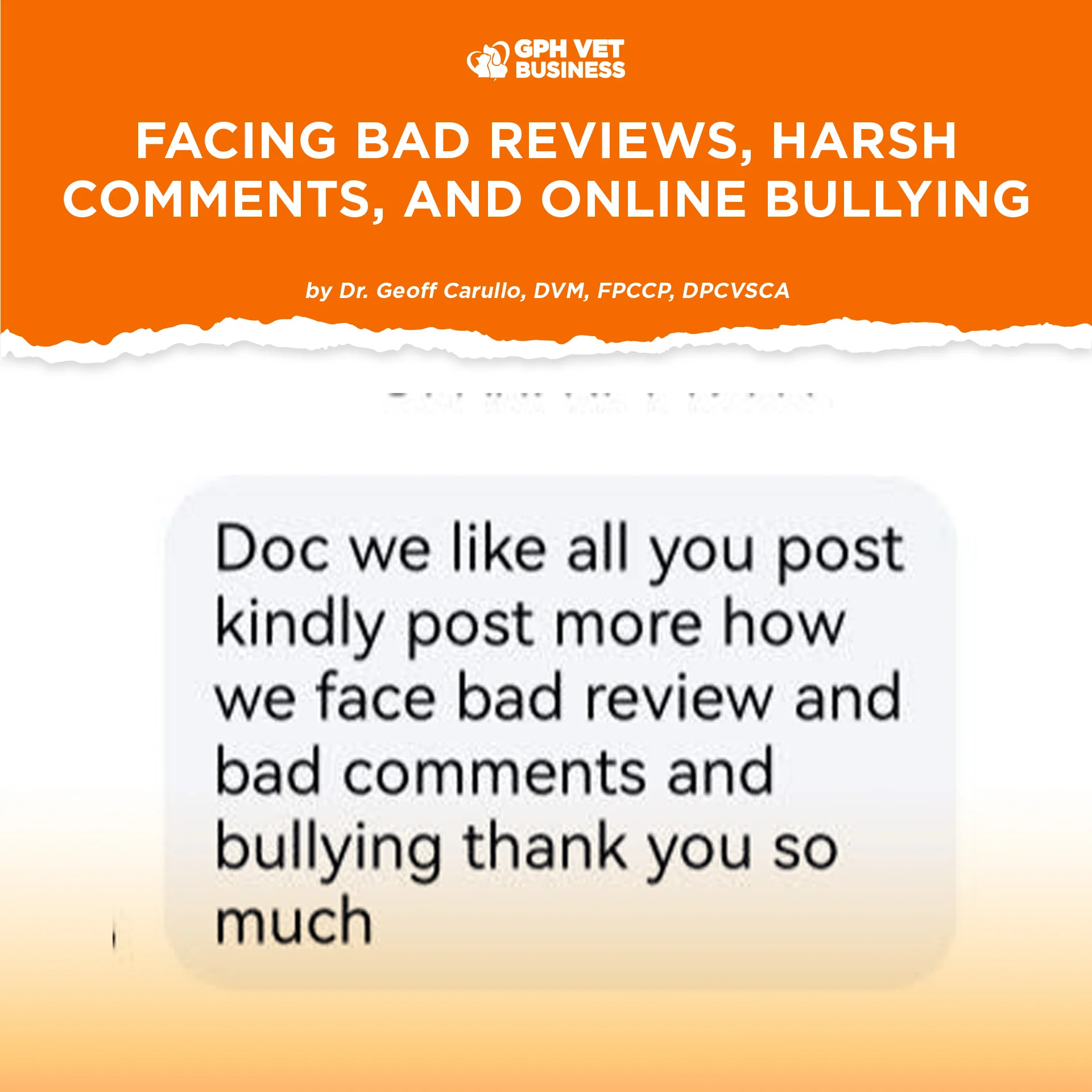
In the field of veterinary medicine, every consultation, every surgery, and every late-night emergency comes from a place of love—for animals, for their families, and for the profession we’ve dedicated our lives to. Yet despite that devotion, we are not immune from harsh realities outside the clinic walls.
Bad reviews, cruel comments, and even forms of online bullying have become a new kind of stress that many veterinarians quietly carry. It can feel unfair when the success of saving a life is reduced to a single star rating or when your professional identity is questioned by someone who does not fully understand the complexity of veterinary work.


This is not just about “criticism.” This is about how negativity affects our sense of worth, our confidence, and sometimes even our mental health. That is why learning how to face these challenges is just as important as learning how to handle emergencies in the ER.
1. Recognize the weight—but don’t let it define you
A bad review or comment can feel heavier than a hundred praises. That’s human nature—we fixate on the one voice that hurts instead of the many that uplift. Acknowledge that it stings, but remind yourself: one comment is not the entirety of your career. The thousands of pets who walked out healthier are proof of your competence.
2. Separate fact from noise
Some reviews carry constructive feedback. Those, we humbly take as lessons to grow. But others are born out of frustration, misunderstanding, or even malice. Learn to filter: Does this help me improve, or is this only meant to tear me down? If it’s the latter, it deserves no power over you.


3. Do We Need to Answer Online Rants?
The short answer: not always.
Not every rant deserves your time and energy. The key is knowing when to respond, and when to walk away.
Respond if: it’s a genuine concern, a misunderstanding, or silence may harm your reputation. Keep your tone professional, factual, and calm.
Example: “Thank you for your feedback. We’re sorry you feel this way. Our team did everything possible within medical standards, and we are open to discussing this further privately.”
Do not respond if: it’s abusive, irrational, or repetitive bullying. Fighting fire with fire will only give their words more visibility.
Golden Rule: Respond once, respond gracefully, and then stop. People will remember your professionalism—not their anger.
4. Guard your mental and emotional health
You cannot pour from an empty cup. If reading reviews or messages triggers stress, assign a trusted staff member to screen them first. Take digital breaks. Surround yourself with positivity. Protecting your peace is not weakness—it is wisdom.
5. Build a wall of truth
One bad comment may echo loudly, but it cannot erase the truth that lives in the silent gratitude of clients and pets you’ve helped. Keep thank-you notes, patient photos, and success stories close. On days when the noise is overwhelming, let these reminders speak louder.

6. Lean on your community
No veterinarian should face bullying alone. Share your struggles with colleagues who understand. Often, they’ve gone through the same. There is strength in knowing that we are not isolated—that others have stood in the same storm and survived.
7. Redefine your worth
At the end of the day, your worth as a veterinarian is not measured by online comments, nor by the harshness of one client’s words. It is measured by the silent wag of a tail, the purr of a recovering cat, the tears of a family reunited with their pet. These are your real reviews, and they matter more than anything typed on a screen.
Final Thoughts
To my fellow veterinarians: facing bad reviews and online bullying will never be easy. But remember—no amount of digital noise can diminish the real, tangible difference you make in the lives of animals and the families who love them.
Walk forward with dignity. Choose peace over reaction. And never let temporary negativity shake your eternal calling.
Because at the heart of it, no comment—no matter how cruel—can ever take away the truth that you are a healer. And that is the greatest profession of all.
Sharing this helps others understand what it really means to be a vet. Like and follow if you’re with us.
Dr. Geoff Carullo is a Fellow and the current President of the Philippine College of Canine Practitioners.