The moment a client walks into a veterinary clinic, their first impression is not the diplomas on the wall or the advanced equipment—it’s the smell. A clinic that smells fresh builds trust instantly. A clinic that smells of wet dogs, urine, or harsh disinfectants, on the other hand, makes clients question hygiene and professionalism before you even start the consultation.
Why Clinics Develop Odors
- Animal factors: natural oils, dander, pheromones, and accidents (urine, feces, vomit).
- Moisture: from baths, grooming, or cleaning, creating a “wet dog” smell.
- Airflow problems: stagnant air, poorly maintained ducts, and unbalanced ventilation systems.
- Surface absorption: odors cling to curtains, upholstery, and even walls.
These aren’t just comfort issues—uncontrolled air quality can affect staff morale, client perception, and even infection control.


Negative vs. Positive Pressure: The Science of Airflow
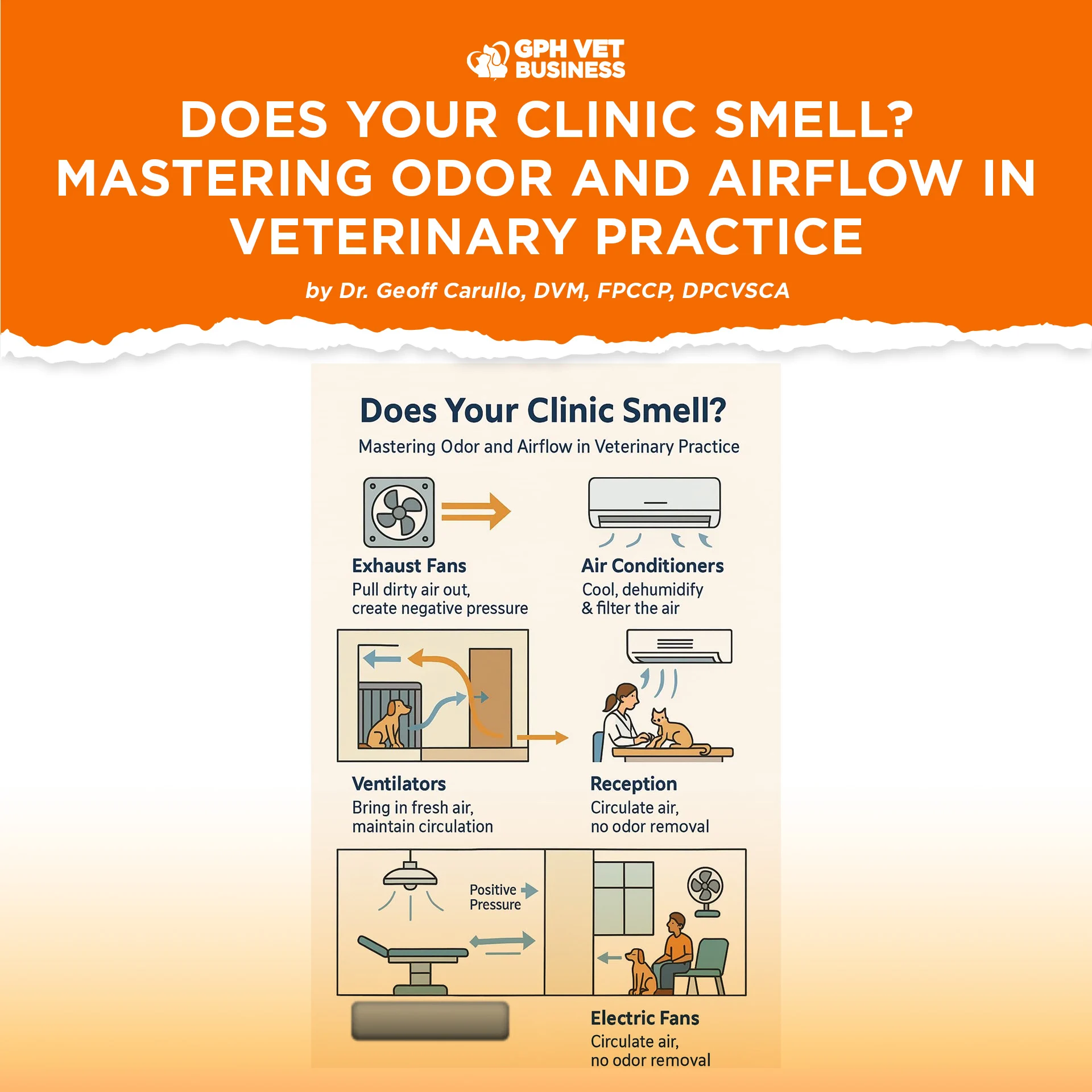
Negative Pressure: Air pressure inside a room is lower than outside. Air is pulled inward but cannot escape outward. This is ideal for kennels, isolation rooms, and treatment areas because odors and pathogens stay contained.
Positive Pressure: Air pressure inside is higher than outside. Clean, filtered air is pushed outward, preventing contaminated air from entering. This is best for surgical suites and reception areas where sterility and freshness are critical.
Balancing both is the key to a hygienic and pleasant-smelling clinic.
Equipment and Their Functions in Odor & Airflow Control
1. Exhaust Fans
Function: Pull dirty, odor-filled air out of the building.
Effect: Creates negative pressure in rooms where they are installed, drawing in replacement air from cleaner adjacent spaces.
Best Use: Kennels, isolation wards, restrooms, and treatment areas.
Limitation: Alone, they don’t guarantee complete negative pressure unless the room is properly sealed and airflow is balanced.
2. Air Conditioners (Aircon)
Function: Cool the room, filter particles, and dehumidify the air.
Effect: Reduces humidity (and “wet dog smell”), prevents mold growth, and filters out some dander and bacteria.
Best Use: Exam rooms, waiting areas, offices, and surgical suites.
Limitation: If filters and ducts are not regularly cleaned, AC units can become odor sources themselves.
3. Ventilators / Fresh Air Systems
Function: Bring in fresh outside air, push out stale indoor air, and maintain circulation.
Effect: Prevents air stagnation and maintains oxygen balance in busy areas. When combined with HEPA filters, they keep surgical suites sterile with positive pressure.
Best Use: Operating rooms, recovery rooms, and high-traffic waiting areas.
4. Electric Fans
Function: Circulate air within a room by pushing it around.
Effect: Improves comfort for people and pets but does not filter, remove odors, or change pressure. In fact, if used in a kennel or isolation room, fans can spread odors and pathogens to other areas.
Best Use: Only as a supplemental tool in well-ventilated spaces such as lobbies or non-clinical staff areas. Not recommended in surgical or isolation settings.


Practical Steps for a Fresh-Smelling Clinic
- Designate airflow systems: Negative pressure for kennels and isolation; positive pressure for surgery and reception.
- Install exhaust fans in odor-heavy rooms and pair them with sealed doors.
- Service aircon units regularly—clean filters, ducts, and coils.
- Add ventilators or purifiers with HEPA filters for continuous fresh airflow.
- Use electric fans cautiously—for comfort only, never as a replacement for proper ventilation.
- Deep clean walls, floors, AC units, and soft furnishings regularly.
- Use true odor neutralizers (enzyme-based cleaners) instead of masking sprays.
Final Takeaway
A veterinary clinic doesn’t have to “smell like animals.” By combining smart cleaning practices with airflow management—using exhaust fans, air conditioners, ventilators, and proper pressure controls—you can create a space that is safe, hygienic, and welcoming.
Electric fans may provide comfort, but the real difference comes from airflow design: negative pressure where odors start, positive pressure where sterility and client impressions matter most.
Clients may never see the engineering behind your clinic, but they will always notice how it smells—and that single detail could mean the difference between a one-time visit and a lifelong client.

Sharing this helps others understand what it really means to be a vet. Like and follow if you’re with us.
Dr. Geoff Carullo is a Fellow and the current President of the Philippine College of Canine Practitioners.