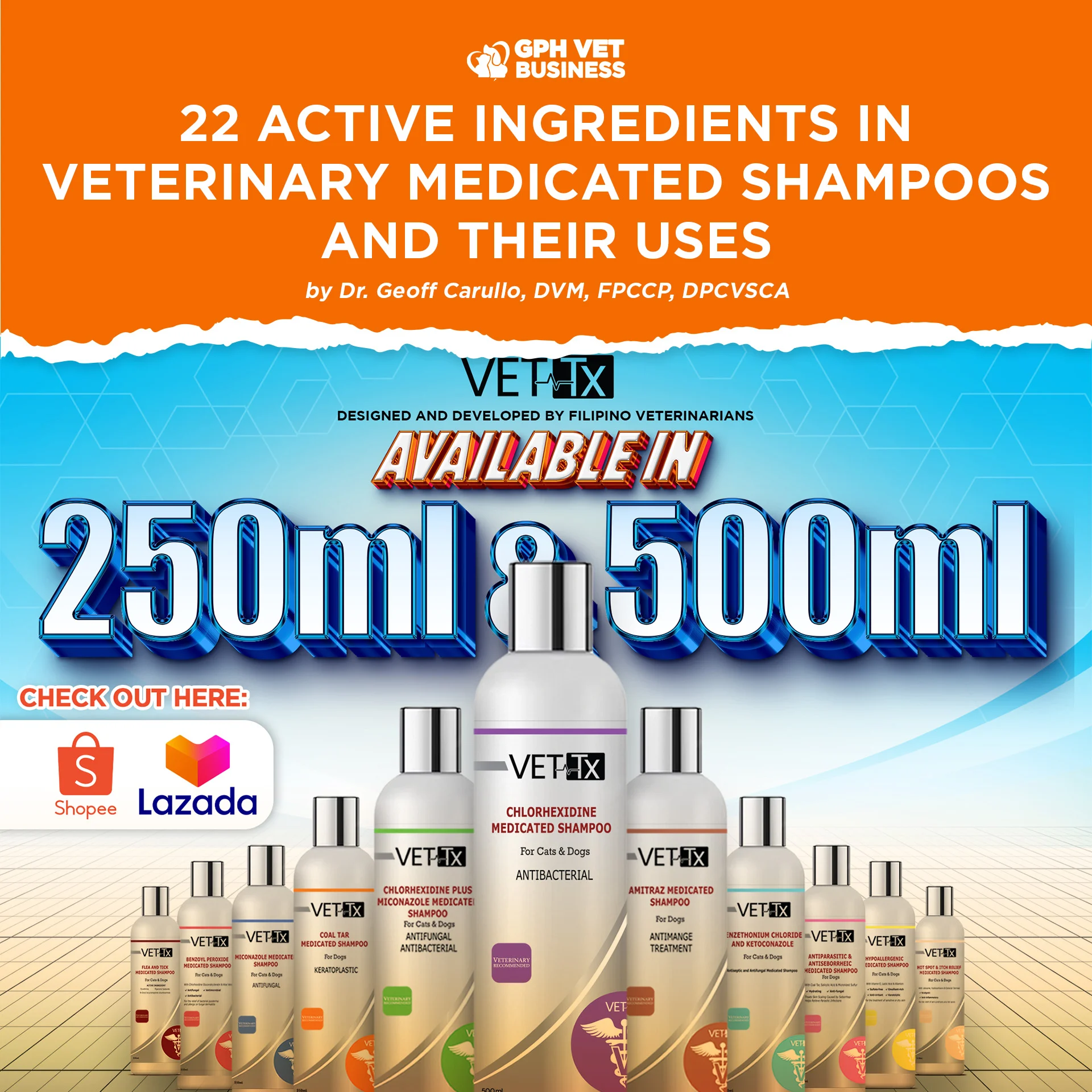
When a dog or cat develops skin disease, many owners first think of ointments or tablets.
But in reality, one of the most powerful tools in veterinary dermatology is something as simple as a bath.
Medicated shampoos are more than just cleansers — they deliver active ingredients directly to the skin where they are needed most, treating infections, soothing inflammation, removing excess oil, or restoring the natural barrier.
Below is a detailed yet practical guide to 22 active ingredients commonly used in veterinary shampoos.


1. Chlorhexidine
How it works: A broad-spectrum antiseptic that binds to the skin and continues working even after rinsing.
Best for: Bacterial infections (pyoderma), hotspots, and yeast (Malassezia).
Usage: Typically in 2–4% shampoos, left on for 5–10 minutes.
Special note: Safe for long-term use, but avoid eyes and ears.
2. Miconazole
How it works: Antifungal that stops yeast and fungal cells from forming their protective membrane.
Best for: Malassezia dermatitis (itchy, greasy, smelly skin).
Usage: Often combined with chlorhexidine for stronger results.
Special note: Very well tolerated by most pets.
3. Ketoconazole
How it works: Similar to miconazole but often more potent against chronic yeast.
Best for: Recurrent Malassezia overgrowth and seborrhea with odor.
Usage: Found in 1–2% shampoos.
Special note: Rotate with chlorhexidine to reduce skin dryness.
4. Climbazole
How it works: An antifungal related to the azole family, with high activity against yeast.
Best for: Long-term management of allergic dogs that keep developing yeast infections.
Usage: Found in shampoos and mousses for daily or weekly use.
5. Benzoyl Peroxide
How it works: Breaks down into benzoic acid and oxygen, flushing hair follicles, killing bacteria, and reducing oil.
Best for: Canine acne, deep pyoderma, demodicosis.
Usage: Commonly in 2.5–3% shampoos.
Special note: Can bleach fabrics and dry skin — follow with conditioner.
6. Ethyl Lactate
How it works: Penetrates follicles and converts to lactic acid and ethanol, lowering pH and controlling bacteria.
Best for: Mild to moderate bacterial infections.
Usage: Less harsh than benzoyl peroxide, so it’s better for sensitive pets.
7. Selenium Sulfide
How it works: Slows skin cell turnover and reduces yeast growth.
Best for: Severe seborrhea and greasy Malassezia dermatitis.
Usage: Usually 1% concentration.
Special note: Not safe for cats due to ingestion risk.
8. Sulfur
How it works: Keratolytic (breaks down scales), keratoplastic (normalizes skin turnover), mild antibacterial.
Best for: Seborrhea sicca (dry flaky skin) and scale disorders.
Usage: Often paired with salicylic acid.
9. Salicylic Acid
How it works: Dissolves the “glue” between skin cells, helping flakes shed naturally.
Best for: Scaling skin, mild hyperkeratosis, seborrhea sicca.
Usage: Usually 1–2% in shampoos.
10. Coal Tar
How it works: Reduces itching and slows down overactive skin cell growth.
Best for: Severe seborrhea and thickened, lichenified skin in dogs.
Usage: In very resistant scaling cases.
Special note: Not safe for cats, has a strong odor, and may stain.


11. Povidone Iodine
How it works: Releases iodine to kill bacteria, fungi, and viruses.
Best for: Pre-surgical scrubbing or short-term infection control.
Usage: Diluted solutions; color should be golden-brown when active.
Special note: Less popular now due to drying effect.
12. Hypochlorous Acid
How it works: A naturally occurring antimicrobial that also calms inflammation.
Best for: Hotspots, interdigital dermatitis, and skin folds.
Usage: Commonly in sprays and rinses, safe even if licked.
13. Tris-EDTA
How it works: Chelates minerals and weakens the cell walls of resistant bacteria like Pseudomonas.
Best for: Gram-negative bacterial infections.
Usage: Used as a pre-soak or combined with chlorhexidine.
14. Zinc Pyrithione
How it works: Disrupts yeast cell membranes and regulates skin scaling.
Best for: Seborrheic conditions with yeast involvement.
Usage: Found in some veterinary shampoos and human dandruff shampoos.
15. Colloidal Oatmeal
How it works: Contains avenanthramides that reduce inflammation and soothe itch.
Best for: Allergies, dry or sensitive skin.
Usage: Gentle, safe for frequent use, even in puppies and kittens.
16. Pramoxine
How it works: A local anesthetic that numbs nerve endings to stop itching.
Best for: Allergic flare-ups, insect bites, and hotspots.
Usage: Found in shampoos, sprays, and conditioners.
17. Hydrocortisone
How it works: A mild steroid that reduces redness and irritation.
Best for: Short-term relief of itchy allergic skin.
Usage: Found in shampoos and leave-on conditioners.
Special note: Not for chronic use due to risk of thinning the skin.
18. Phytosphingosine
How it works: A natural lipid that strengthens the skin barrier and reduces bacterial/yeast adhesion.
Best for: Allergic pets and recurrent infections.
Usage: Found in premium medicated shampoos and mousses.
19. Ceramides & Fatty Acids
How it works: Replace the natural oils of the skin, repairing dryness and preventing water loss.
Best for: Atopic dermatitis and chronic dry seborrhea.
Usage: Often used as follow-up conditioners after medicated baths.
20. Lactic Acid
How it works: Keratolytic and pH regulator, helps remove scales and discourage microbial growth.
Best for: Mild infections and scaling.
Usage: Frequently paired with acetic acid.
21. Acetic Acid
How it works: Acidifies skin and prevents yeast/bacterial growth.
Best for: Skin folds, ears, and interdigital areas.
Usage: Also found in ear cleansers.
Special note: Can sting on raw or ulcerated skin.
22. Chloroxylenol
How it works: Broad-spectrum antiseptic.
Best for: General infection control when chlorhexidine isn’t tolerated.
Usage: Less common in pets but available in some veterinary formulations.

Proper Use of Medicated Shampoos
- Always wet the coat thoroughly with lukewarm water before application.
- Work shampoo into the skin, not just the hair.
- Leave on for 5–10 minutes to maximize contact time.
- Rinse until water runs clear.
- Follow with a conditioner if dryness occurs.
Key Takeaway
Infection control: Chlorhexidine, benzoyl peroxide, ethyl lactate.
Yeast control: Miconazole, ketoconazole, climbazole, selenium sulfide.
Scaling & keratinization disorders: Sulfur, salicylic acid, coal tar.
Itch & barrier repair: Oatmeal, pramoxine, hydrocortisone, phytosphingosine, ceramides.
Medicated shampoos are cornerstones of veterinary dermatology. They allow us to deliver therapy directly to the skin, manage chronic conditions safely, and reduce reliance on systemic drugs.
Dr. Geoff Carullo is a Fellow and the current President of the Philippine College of Canine Practitioners.
Sharing this helps others understand what it really means to be a vet. Like and follow if you’re with us.