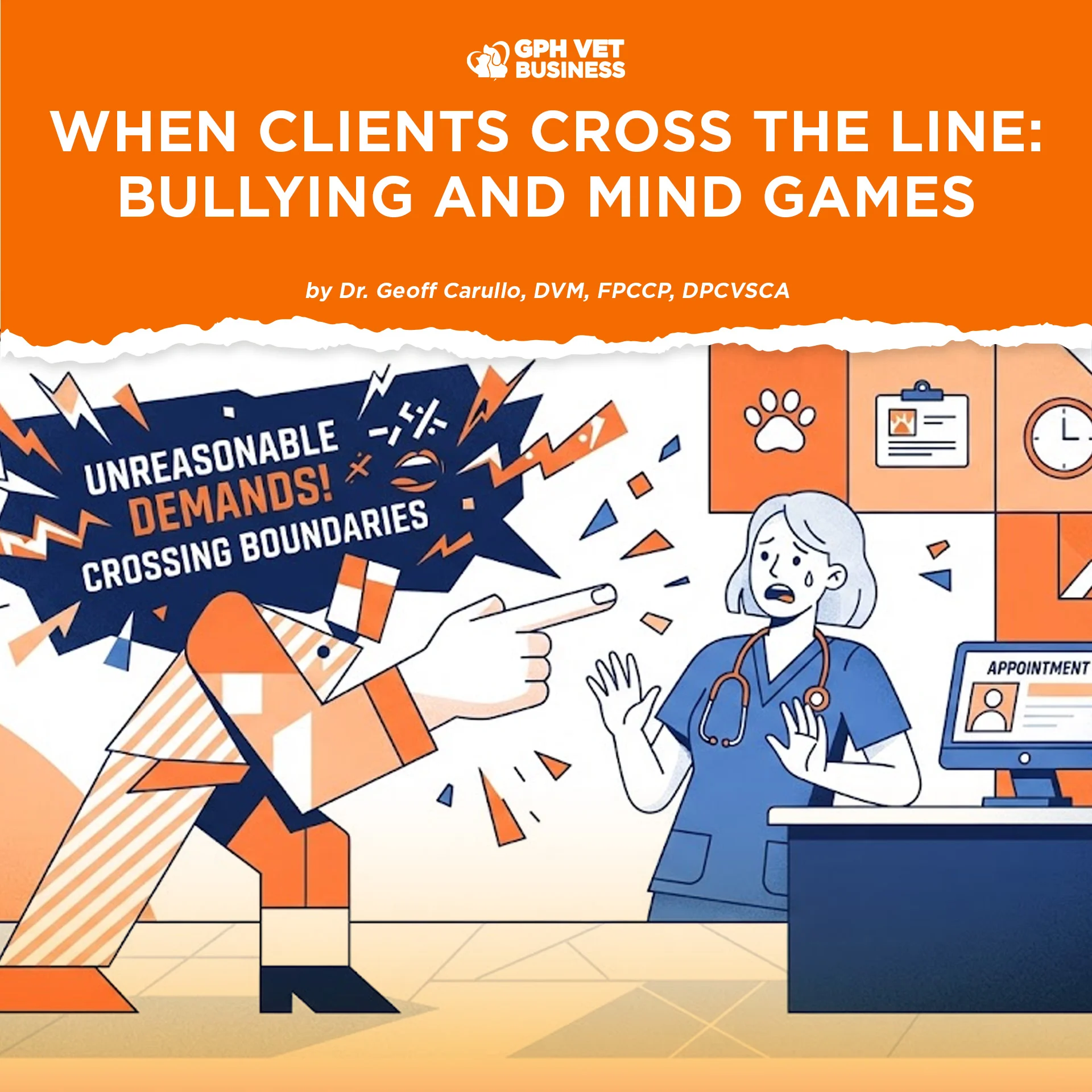
Veterinarians are trained to handle disease, emergencies, and even death. What most of us were never trained for, however, are the psychological mind games some clients play.
There are cases when a patient survives, recovers well, and yet the vet still ends up receiving harsh words, unreasonable complaints, or even threats. The pet is alive, stable, and cared for—but somehow, the narrative is twisted. Suddenly, a vet finds themselves facing emails filled with accusations or chat messages laced with blackmail and intimidation.
This is not just about feedback. This is bullying.


The Nature of Client Bullying
Client bullying often doesn’t come from rational concerns. It comes from stress, fear, or sometimes deeper personal issues projected onto the veterinarian. Some clients will magnify small details, invent faults, or change their tone depending on who’s listening. Others use late-night messages or long-winded emails to disturb a vet’s peace of mind, making it clear that their goal is not resolution but control.
For vets, this creates a mental trap: you think you’re at peace after a long day, then a notification comes in, and suddenly your anxiety spikes. These are not just complaints—they’re power plays.
Why This Hurts Vets More Than We Admit
Unlike other professionals, vets often carry both the emotional burden of life-and-death cases and the financial weight of running a practice. When clients turn toxic, it doesn’t just sting—it shakes your confidence, drains your energy, and may even cause you to question your worth. And because the bullying comes digitally—via chat or email—it invades our safe spaces, following us home.


How Do We Deal With This?
Set Boundaries.
Don’t let clients dictate the hours they can disturb your peace. Office hours are there for a reason. Automated replies can serve as a professional barrier.
Document Everything.
Save the emails, chats, and threats. These aren’t just messages—they’re records. If escalation happens, you’ll have proof.
Don’t Take It Alone.
Share these encounters with colleagues, mentors, or even associations. Sometimes, it takes a professional community to remind you that you are not isolated.
Know When to Step Back.
Not every battle is worth fighting. If a client is abusive, it’s okay to disengage professionally. Protecting your mental health is not weakness—it’s wisdom.
Seek Help If It Gets Too Heavy.
Bullying can scar deeply. Talking to a counselor or therapist is not a sign of weakness, but of self-preservation.
A Final Word
As veterinarians, we must remember: we can save lives, but we cannot save everyone from their own negativity. Some complaints are not about us—they are about them. Our duty is to the patient and to the oath we swore, not to appease unreasonable demands that cross the line into harassment.
Protect your peace. Protect your practice. Protect yourself.

Sharing this helps others understand what it really means to be a vet. Like and follow if you’re with us.
Dr. Geoff Carullo is a Fellow and the current President of the Philippine College of Canine Practitioners.