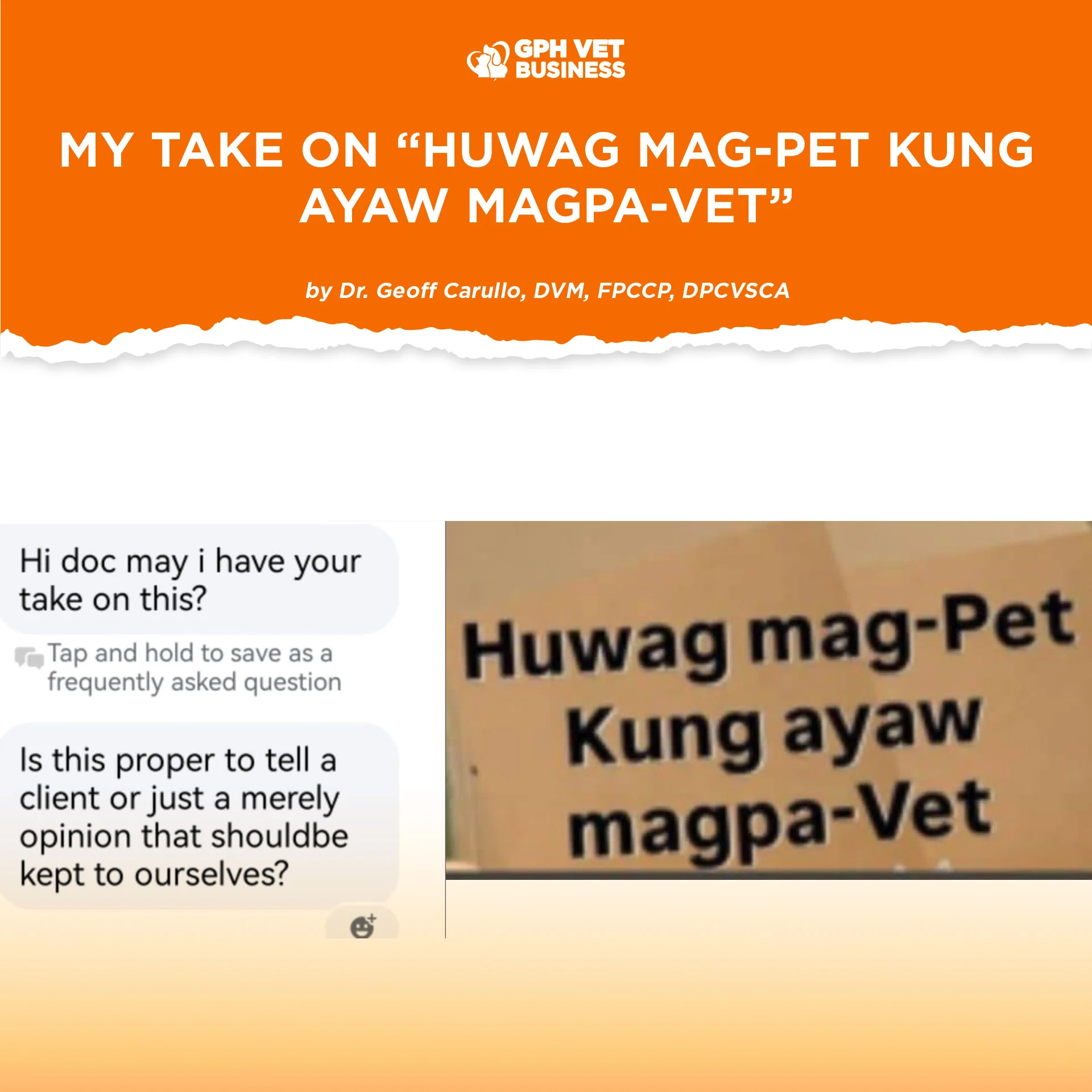
I recently came across a viral post that said: “Huwag mag-Pet kung ayaw magpa-Vet.” At first glance, the statement sounds blunt and even confrontational. Some may agree wholeheartedly, others may find it too harsh. But let’s take a step back and look at what it really means—and whether it’s something we should tell clients directly or just keep among ourselves as professionals.
The Heart of the Message
At its core, the statement carries truth. Owning a pet is not just about enjoying their cuteness, loyalty, or companionship. It comes with responsibility—one of the biggest being the commitment to proper veterinary care. Vaccinations, check-ups, parasite control, and emergency treatments are not optional luxuries; they are essential to keeping pets healthy and preventing suffering.
When someone refuses to bring their pets to the vet, it often results in preventable illnesses, complications, or even loss of life. In that sense, the phrase is a wake-up call: if you cannot commit to vet care, maybe you are not yet ready for pet ownership.


The Issue of Tone
The real question is not about the truth of the message, but how we communicate it. Telling a client bluntly, “Huwag mag-pet kung ayaw magpa-vet,” may feel like a scolding. Instead of encouraging responsible ownership, it might trigger defensiveness or resentment. People are more likely to listen if they feel respected, not judged.
In practice, we need to balance honesty with empathy. Our role is not only to treat animals but also to educate owners with compassion. The same message can be reframed in a way that is less combative yet equally clear:
“Pets deserve the same health care we give our loved ones. If you’re ready to love a pet, part of that love is bringing them to the vet.”
“Pet ownership is a commitment—happiness, play, and also responsibility. Vet visits are part of that journey.”


Professional Responsibility
As veterinarians, we carry the responsibility of guiding clients toward better pet care. We can’t stay silent when we see neglect, but we must also be mindful of how our words land. Advocacy is powerful when delivered with empathy.
So, is the statement proper to tell clients? The answer: yes, in spirit—but with careful choice of words. The principle is correct, but the delivery must be tailored with kindness and education.
Final Thoughts
Huwag mag-Pet Kung ayaw magpa-Vet is not wrong—but it is raw. It reflects the frustration many vets feel when faced with preventable suffering. But our challenge as professionals is to translate that frustration into constructive dialogue. The goal is not to shame, but to inspire responsibility.
Because at the end of the day, pets don’t get to choose their owners. But owners do get to choose whether to give them the life—and the health—they deserve.

Dr. Geoff Carullo is a Fellow and the current President of the Philippine College of Canine Practitioners.
Sharing this helps others understand what it really means to be a vet. Like and follow if you’re with us.