In veterinary practice, choosing the right IV cannula can make all the difference—especially in emergencies or critical care. From tiny neonates to giant breeds, the right size ensures safe fluid therapy, smooth medication administration, and life-saving interventions.
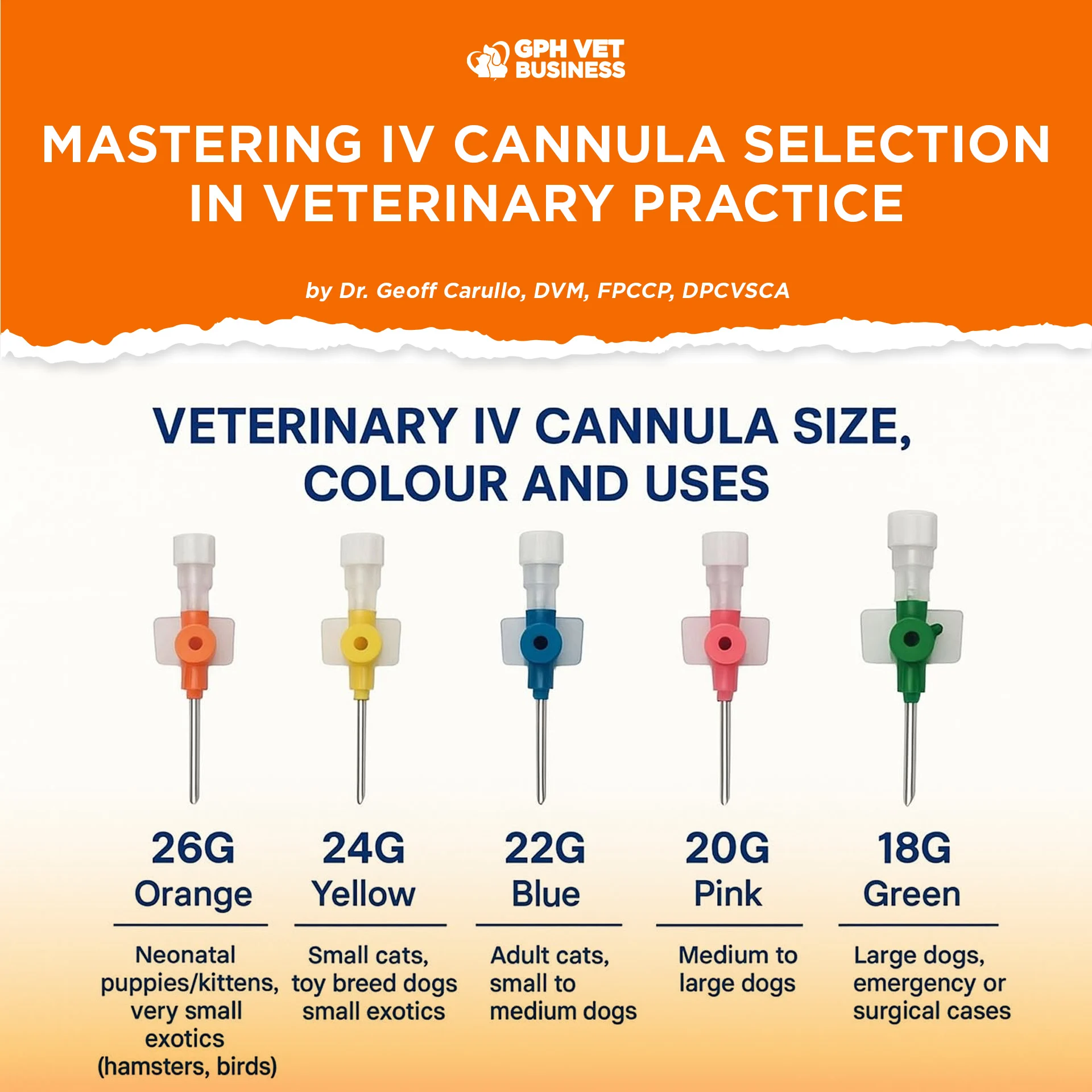
Here’s a vet-focused guide to IV cannula sizes, colors, and when to use them:


26G – Orange
Best for: Neonatal puppies and kittens, very small exotics (hamsters, birds)
When to use:
- Critical care in tiny patients
- Gentle, slow fluid therapy
- Emergency cases where veins are extremely small
Vet Tip: Always secure gently. A single movement can dislodge in fragile neonates.
24G – Yellow
Best for: Small cats, toy breed dogs, small exotics
When to use:
- Routine fluid therapy
- Medication administration
- Mild dehydration cases
Vet Tip: Ideal for your everyday feline patient or toy poodle on IV fluids.


22G – Blue
Best for: Adult cats, small to medium dogs
When to use:
- Routine hospitalization
- Blood collection for transfusion in small animals
- IV fluids and medications for stable patients
Vet Tip: This is your workhorse size—fits most small animal patients.
20G – Pink
Best for: Medium to large dogs
When to use:
- Surgical fluid therapy
- Blood transfusions
- Moderate to rapid fluid administration
Vet Tip: Go for pink when you need speed and stability without over-traumatizing veins.
18G – Green
Best for: Large dogs, emergencies, surgical patients
When to use:
- Rapid fluid resuscitation in shock cases
- Emergency blood transfusions
- Major surgical procedures

Vet Tip: In emergencies, bigger is better. A large-bore cannula saves precious time.
Key Takeaway for Vets:
The smallest gauge your patient’s vein can comfortably accommodate is often the safest. But in emergencies, larger cannulas allow for life-saving fluid and blood administration in seconds.
A prepared vet is a life-saving vet.
Sharing this helps others understand what it really means to be a vet. Like and follow if you’re with us.
Dr. Geoff Carullo is a Fellow and the current President of the Philippine College of Canine Practitioners.