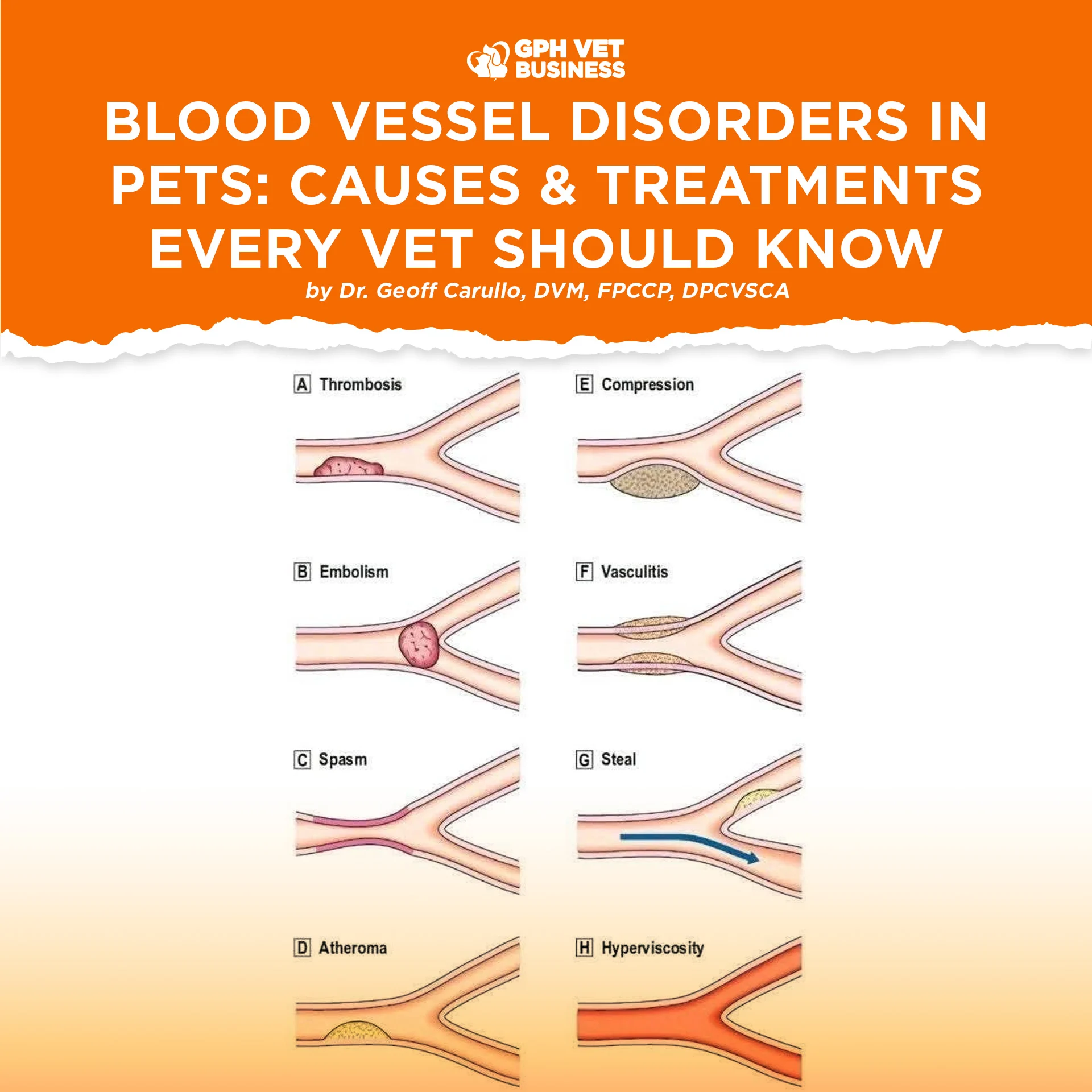
Blood vessel disorders in dogs and cats can disrupt normal circulation, cause tissue damage, and, if not addressed quickly, lead to life-threatening complications.
Early recognition and prompt intervention are critical for saving lives.
Below are some of the most important vascular conditions encountered in veterinary practice and their management strategies.


1. Thrombosis
A blood clot (thrombus) forms inside a blood vessel, obstructing blood flow. This is common in cats with feline aortic thromboembolism (FATE), often secondary to heart disease.
Treatment:
- Anticoagulants (e.g., heparin, clopidogrel)
- Thrombolytic therapy in select cases
- Pain control and supportive care
- Treat underlying cause (e.g., cardiomyopathy)
2. Embolism
A traveling clot or other material lodges in a distant vessel. In pets, this can occur secondary to infections, parasites, or heart disease.
Treatment:
- Anticoagulants
- Thrombolytics in critical cases
- Oxygen therapy if hypoxic
- Surgery if embolus is accessible
3. Vasculitis
Inflammation of the blood vessels, often immune-mediated or secondary to infections like ehrlichiosis, distemper, or fungal disease.
Treatment:
- Corticosteroids (prednisone)
- Immunosuppressants (azathioprine, cyclosporine)
- Addressing underlying infection with antibiotics or antifungals


4. Vascular Compression Syndromes
Blood vessels are compressed by surrounding tissues or masses, reducing blood flow. Examples include tumors pressing on major veins or arteries.
Treatment:
- Surgical decompression or tumor removal
- Vascular stenting in select cases
- Physical therapy if related to musculoskeletal compression
5. Steal Syndrome
Blood is diverted away from its intended area, causing ischemia. Rare in pets, but may occur after certain surgical shunts or vascular malformations.
Treatment:
- Surgical correction
- Angioplasty or bypass procedures in specialized centers
6. Atheroma (Atherosclerosis)
In pets, true atherosclerosis is rare, but cholesterol or lipid plaques can develop in hypothyroid dogs or diabetic cats.
Treatment:
- Manage underlying endocrine disease
- Low-fat diet and omega-3 supplementation
- Statins in rare cases, with careful monitoring

7. Vasospasm
Sudden narrowing of blood vessels, more common in cerebral or coronary circulation after trauma or surgery.
Treatment:
- Vasodilators (e.g., nitroglycerin paste in critical care)
- Calcium channel blockers in select cases
- Supportive fluid therapy
Final Reminder for Vets:
Blood vessel disorders are often secondary to systemic disease. Always treat the root cause, not just the vascular symptom. Rapid diagnosis—often requiring Doppler ultrasound, echocardiography, or angiography—can mean the difference between recovery and loss of life.
Sharing this helps others understand what it really means to be a vet. Like and follow if you’re with us.
Dr. Geoff Carullo is a Fellow and the current President of the Philippine College of Canine Practitioners.