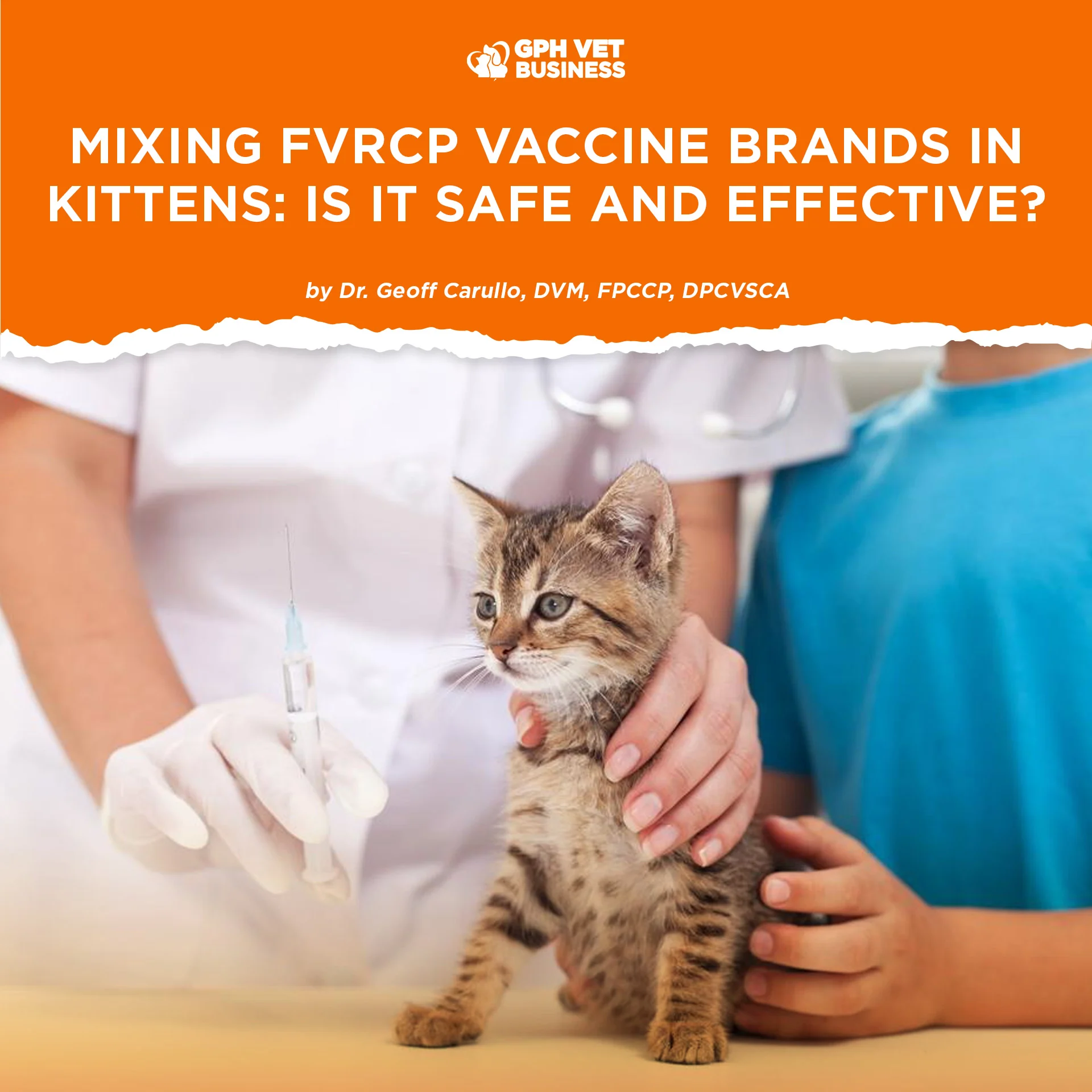
When it comes to kitten vaccinations, one common dilemma veterinarians face is the mixing of vaccine brands across the FVRCP series.
Sometimes, due to client transfer, stock limitations, or clinic policies, a kitten may receive different brands during its core vaccine schedule.
This raises an important question:
Does switching FVRCP vaccine brands affect potency or immune protection?
What’s in an FVRCP Vaccine?
The FVRCP vaccine protects against Feline Viral Rhinotracheitis (FHV-1), Calicivirus (FCV), and Panleukopenia (FPV)—diseases that can be fatal, especially in young cats.
Most brands contain modified-live viruses (MLVs), and though the formulation or viral strains may vary slightly, the goal is the same: to stimulate durable immunity.


What Happens If We Mix Brands?
Let’s say a kitten receives its first shot with Felocell by Zoetis, the second dose with Purevax by Boehringer Ingelheim, and the final dose with Nobivac by MSD.
Will it still be protected?
According to both WSAVA guidelines and leading feline experts, brand switching within the same vaccine type (e.g., MLV to MLV) is generally acceptable as long as the following are observed:
- Doses are spaced properly—typically every 3–4 weeks.
- Final dose is administered at or beyond 16 weeks of age.
- At least three doses are completed, particularly in kittens younger than 12 weeks.
The immune system recognizes the antigen, not the label. So long as the vaccines are reputable and FDA-approved, protection should not be significantly compromised.
Precautions and Clinical Pearls
- Avoid mixing killed and modified-live vaccines across a series unless absolutely necessary, as immunogenicity may vary.
- Be extra cautious with Purevax recombinant lines—they’re safe but follow a different manufacturing technology.
- Always ensure cold chain compliance, especially when switching stocks.
- Record vaccine brand and batch number for transparency and traceability.


Why Completion Matters More Than Consistency
While it’s ideal to use the same brand throughout a kitten’s vaccine series, what’s far more critical is ensuring they receive timely and complete protection during the window of maternal antibody decline.
A missed booster poses a bigger risk than a brand switch.
Conclusion
Mixing brands in the FVRCP series is safe, when done responsibly.
If you’re a vet in the field with limited stock or changing suppliers, don’t panic—stay within protocol, finish the series, and provide proper documentation.
Because at the end of the day, what matters is that the kitten walks out protected—not which box the vaccine came from.

Dr. Geoff Carullo is a Fellow and the current President of the Philippine College of Canine Practitioners.
Sharing this helps others understand what it really means to be a vet. Like and follow if you’re with us.