Vaccination is one of the most critical pillars of preventive medicine in both human and veterinary care. It protects not only the individual animal but also the broader population through herd immunity.
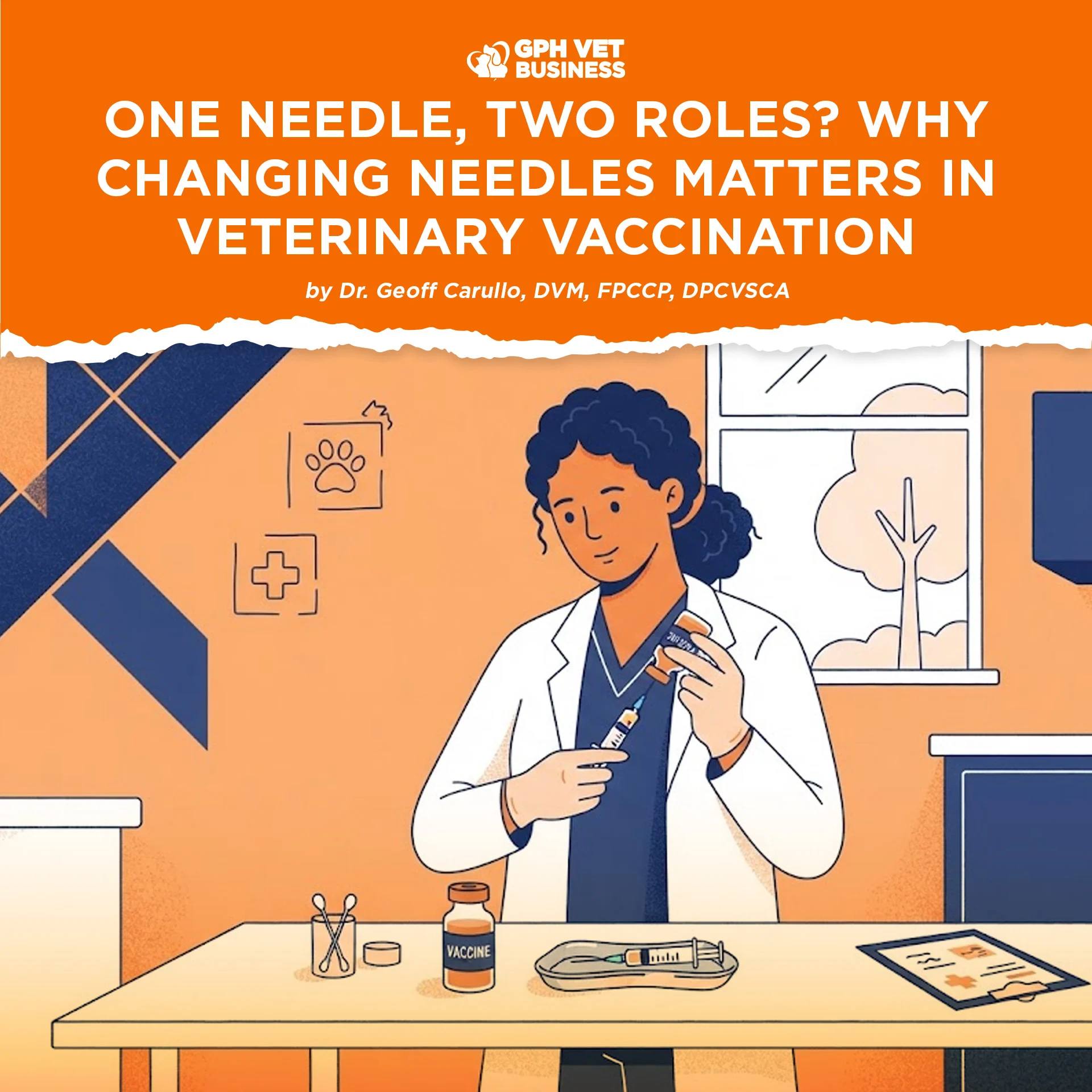
However, beyond the science of vaccine development lies an equally vital factor—the practice of proper vaccine handling and administration. One often overlooked but essential aspect is the practice of changing needles between reconstituting a vaccine and injecting it into a patient.
So, the question stands:
Should we use the same needle to draw the diluent, reconstitute the vaccine, and inject it into the animal?
The short and evidence-based answer is: No. It is not advisable.
Let’s explore why.


1. Cross-Contamination Prevention
When using the same needle for both drawing up the vaccine and administering it, you increase the risk of contaminating the vaccine vial or the needle tip. This is especially critical in multi-dose vial systems, where one contaminated needle can compromise the sterility of the entire vial—putting other patients at risk.
2. Needle Integrity and Sharpness
Reconstituting a lyophilized (freeze-dried) vaccine typically involves puncturing rubber stoppers—once on the diluent vial, and again on the vaccine vial. Each puncture dulls the needle’s edge. By the time it’s ready for patient use, the needle may already be blunted, increasing injection pain and tissue trauma.
A fresh, sharp needle:
- Reduces pain and distress in the animal
- Minimizes tissue damage
- Improves compliance in regular vaccination schedules
3. Avoiding Injection-Site Reactions
Needles that have passed through vial stoppers may carry microscopic rubber particles or contaminants. Injecting these into the patient can lead to:
- Local inflammation
- Abscess formation
- Nodules or granulomas at the injection site
Veterinary clients expect professional, pain-free, and complication-free care. Something as simple as changing the needle supports this standard.


4. Professional Standards and Guidelines
Veterinary institutions and vaccine manufacturers alike recommend aseptic technique and the use of separate needles for drawing and injecting. While not strictly mandated in every practice, it’s considered best practice by:
- WSAVA (World Small Animal Veterinary Association)
- AAHA (American Animal Hospital Association)
- Major veterinary vaccine manufacturers (e.g., Zoetis, Merial, MSD)
Most guidelines recommend the “Two-needle rule”:
Use one sterile needle to draw up the vaccine and another new sterile needle to inject the patient.
5. Real-World Application: The Cost Argument
Some may argue that changing needles increases cost. However, the actual increase is minimal—particularly when weighed against the cost of treating injection-site complications, client dissatisfaction, or worse, a vaccine failure due to contamination.
A few extra pesos per patient could mean the difference between a routine visit and a medical complaint.

6. Best Practices in Vaccine Handling
To summarize:
- Always inspect vaccine vials and diluents before use
- Use a clean needle to withdraw the diluent
- Reconstitute using aseptic technique
- Change to a new, sterile needle before injecting the vaccine
- Dispose of used needles in sharps containers—never recap
Final Thoughts
Veterinary medicine is not just about treatment—it’s about trust. Every vaccine you give represents your standard of care. By simply changing needles, you uphold safety, reduce risk, and enhance your patient’s comfort. It’s a small action that makes a big statement: we care enough to do it right.
Dr. Geoff Carullo is a Fellow and the current President of the Philippine College of Canine Practitioners.
Sharing this helps others understand what it really means to be a vet. Like and follow if you’re with us.