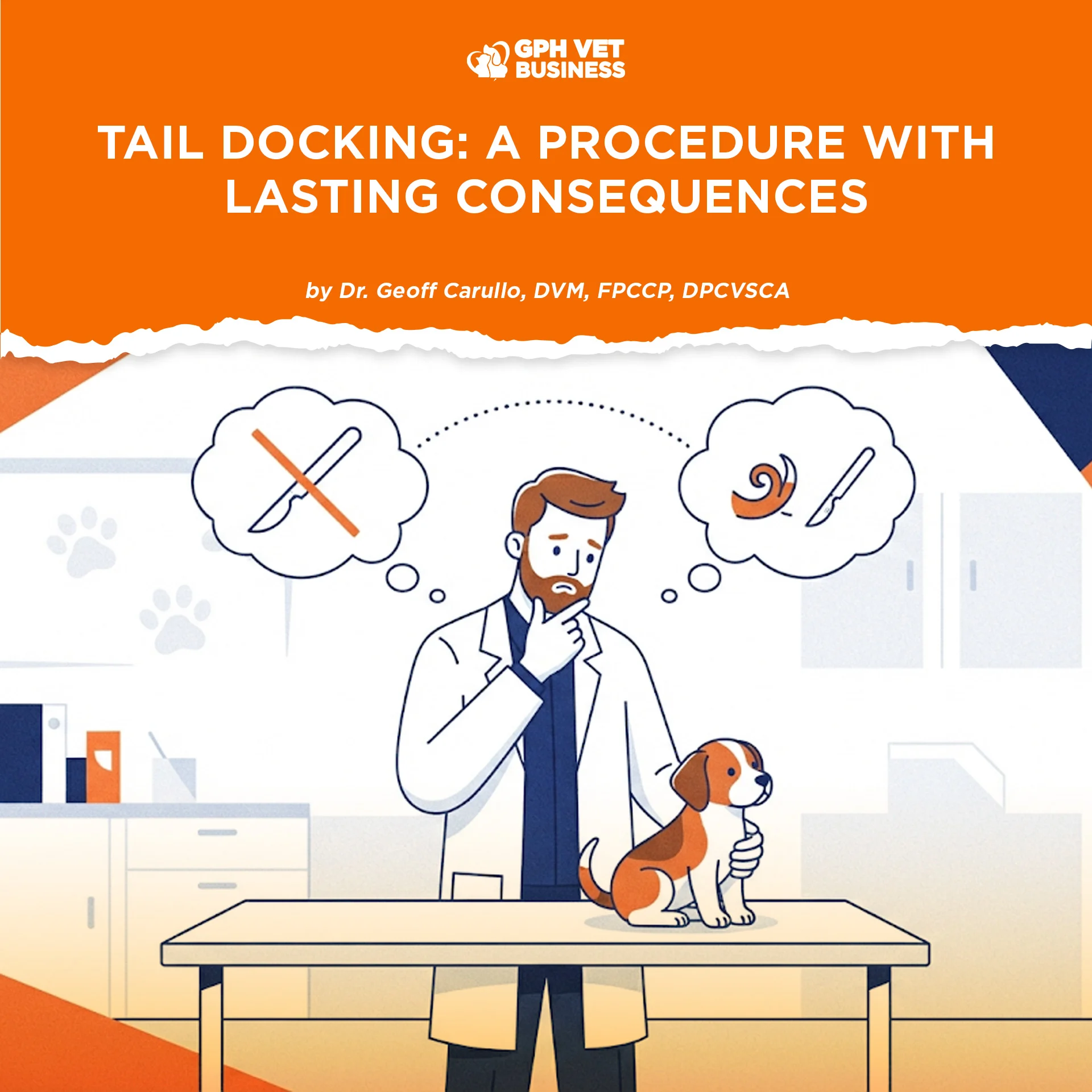
As veterinarians, we understand that the tail is not a mere appendage — it is a continuation of the spinal column, composed of vertebrae, nerves, blood vessels, and soft tissue. Tail docking involves the amputation of living, innervated tissue, often performed without adequate analgesia in neonates, leading to both acute pain and potential long-term neuropathic complications.
Beyond Anatomy: The Tail as a Communication Tool
Beyond its anatomical function, the tail plays a critical role in canine communication and behavior. Dogs rely on tail movement to express fear, excitement, social cues, and emotional states. Removal of the tail compromises their ability to communicate, potentially increasing the risk of behavioral misunderstandings and aggression.


Lack of Medical Benefit
Tail docking offers no proven medical benefit for the majority of breeds and is often requested solely for cosmetic or traditional purposes. However, as advocates of animal welfare, we must continue educating clients on the ethical, behavioral, and physiological costs of this outdated practice.


Message to Colleagues and Clients
Before consenting to tail docking for “aesthetic reasons,” consider the neurologic trauma, behavioral impact, and lifelong deprivation it causes. This is not a beauty procedure — it is a painful surgical intervention with permanent consequences.

Dr. Geoff Carullo is a Fellow and the current President of the Philippine College of Canine Practitioners.
Sharing this helps others understand what it really means to be a vet. Like and follow if you’re with us.