Vincristine is one of the most commonly administered chemotherapeutic drugs in small animal practice, particularly for canine transmissible venereal tumor (TVT), immune-mediated thrombocytopenia (IMT), and certain hematologic malignancies. While generally safe when administered intravenously, vincristine is a vesicant, meaning accidental leakage outside the vein (extravasation) can cause severe local tissue injury.
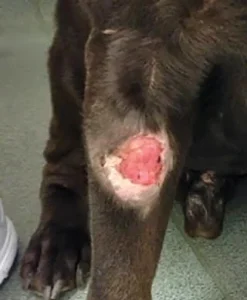
Figure 1. Vincristine extravasation causing severe tissue necrosis following accidental leakage into surrounding tissues. Photo source: Vet Times.
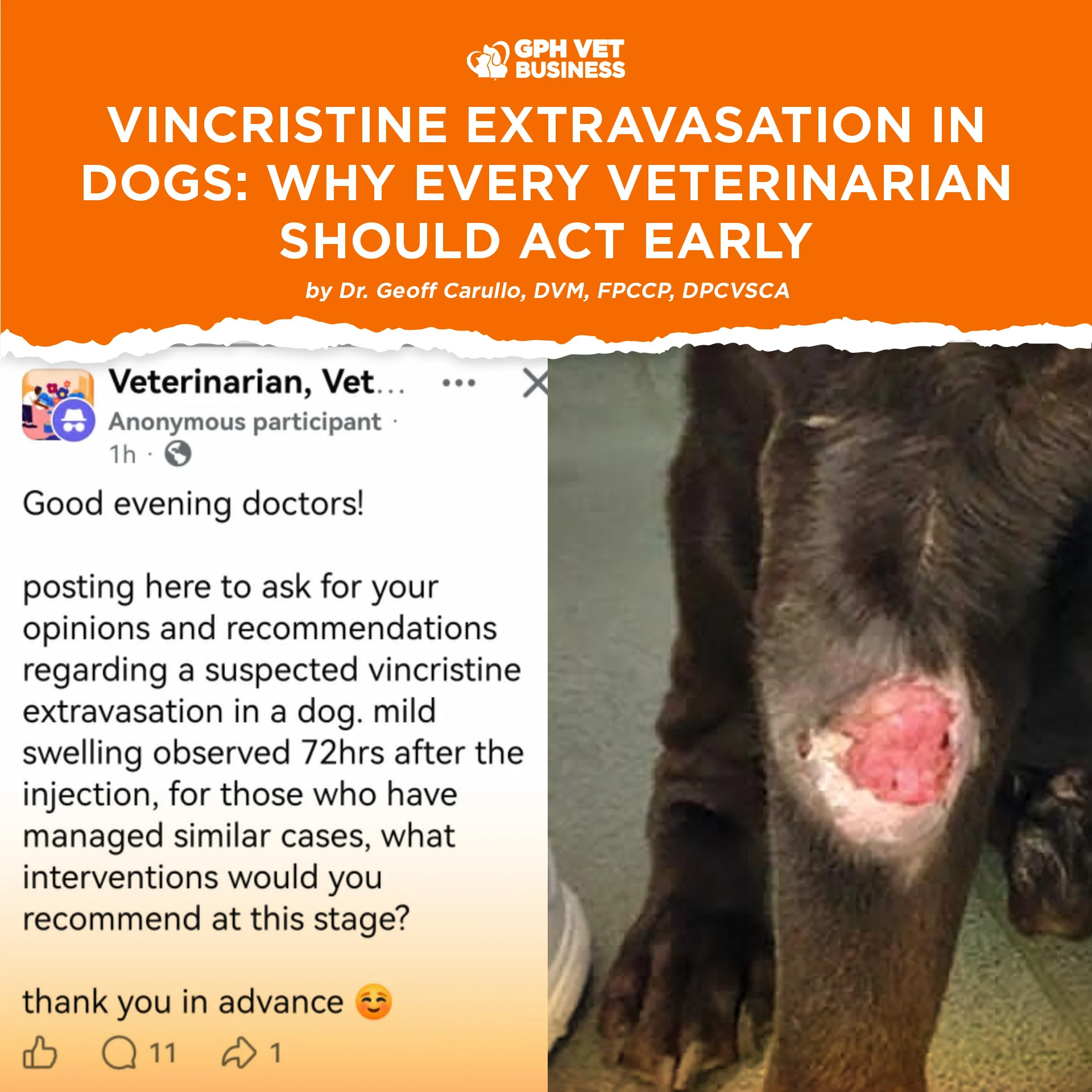
A recent discussion among veterinarians asked about a dog that developed mild swelling approximately 72 hours after vincristine administration, raising concern for delayed recognition of extravasation. This is an important topic because tissue damage may continue to progress even after the initial event.


What Happens During Vincristine Extravasation?
Vincristine belongs to the vinca alkaloid class of chemotherapy drugs. When it escapes from the vein into surrounding tissues, it binds to cells locally and disrupts microtubule formation, leading to:
- Inflammation
- Progressive edema
- Pain
- Cell death
- Skin ulceration
- Tissue necrosis
- Delayed wound healing
Unlike many IV infiltrations that resolve spontaneously, vesicant injuries may worsen over several days.
Clinical Signs
Signs may include:
- Mild to severe swelling
- Pain on palpation
- Warmth or erythema
- Firm swelling
- Blister formation
- Skin discoloration
- Progressive ulceration
- Tissue necrosis over the following days
Some patients initially appear normal and develop swelling only after 24 to 72 hours.
Management Within the First Few Hours
If extravasation is recognized immediately:
- Stop the infusion immediately.
- Leave the catheter in place.
- Aspirate any residual drug through the catheter if possible.
- Avoid flushing the catheter.
- Remove the catheter after aspiration.
- Elevate the limb.
- Administer hyaluronidase by multiple small subcutaneous injections around the affected area if available.
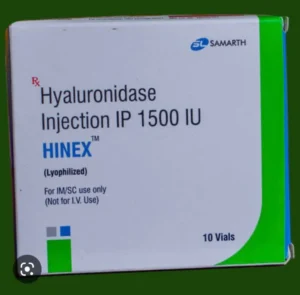
Figure 2. Hyaluronidase is the recommended antidote for vincristine extravasation, helping disperse the leaked drug and reduce the risk of severe tissue injury when administered promptly after the event. Warm compresses are typically used as an adjunctive treatment.
- Apply warm compresses because vinca alkaloids respond better to warmth, which promotes drug dispersion.
Prompt intervention can substantially reduce tissue injury.


What If Swelling Appears 72 Hours Later?
At 72 hours, much of the leaked drug has already interacted with local tissues, making reversal difficult. Management now focuses on limiting further injury and monitoring progression.
Recommended approaches include:
- Careful daily examination.
- Measurement or photography to monitor lesion progression.
- Warm compresses if still in the inflammatory phase.
- Appropriate analgesia.
- Elizabethan collar if licking is expected.
- Monitor for ulceration or necrosis.
- Surgical consultation if tissue devitalization develops.
If secondary bacterial infection occurs, antimicrobial therapy should be guided by clinical findings rather than used routinely.
Should Corticosteroids Be Used?
Routine corticosteroid administration is not universally recommended specifically for vincristine extravasation because evidence supporting benefit is limited. Management is generally directed toward local tissue care, pain control, and monitoring.
Can Surgery Become Necessary?
Unfortunately, yes.
Severe extravasation may eventually require:
- Debridement
- Reconstructive surgery
- Skin grafting
- Advanced wound management
These interventions are reserved for cases where tissue necrosis develops despite conservative treatment.
Prevention Remains the Best Treatment
Because treatment options after extravasation are limited, prevention is critical.
Good practices include:
- Use a freshly placed, well-functioning IV catheter.
- Confirm blood return before administration.
- Flush with saline before and after chemotherapy.
- Closely observe the injection site throughout administration.
- Never administer vincristine if catheter patency is questionable.
- Consider a central venous catheter in patients requiring repeated chemotherapy.

Take-Home Message
A dog showing mild swelling 72 hours after vincristine injection should be considered a potential extravasation case until proven otherwise. Even seemingly mild swelling deserves close observation because tissue injury can evolve over several days. Early recognition, supportive care, and timely surgical intervention when indicated can significantly improve outcomes.
Fortunately, many mild cases resolve with conservative management, but veterinarians should remain vigilant for progression to ulceration or necrosis.
References
- Veterinary Cooperative Oncology Group (VCOG). Safe Handling of Cytotoxic Drugs in Veterinary Practice.
- Withrow SJ, Vail DM, Thamm DH. Withrow & MacEwen’s Small Animal Clinical Oncology. 6th ed. Elsevier.
- Plumb DC. Plumb’s Veterinary Drug Handbook. Vincristine monograph.
- BSAVA. Manual of Canine and Feline Oncology.
- Oncology Nursing Society (ONS). Chemotherapy and Immunotherapy Guidelines and Recommendations for Practice (vesicant extravasation principles).
- European Society for Medical Oncology (ESMO). Clinical Practice Guidelines for the Management of Chemotherapy Extravasation.
Dr. Geoff Carullo is a Fellow and the current President of the Philippine College of Canine Practitioners.
Sharing this helps others understand what it really means to be a vet. Like and follow if you’re with us.