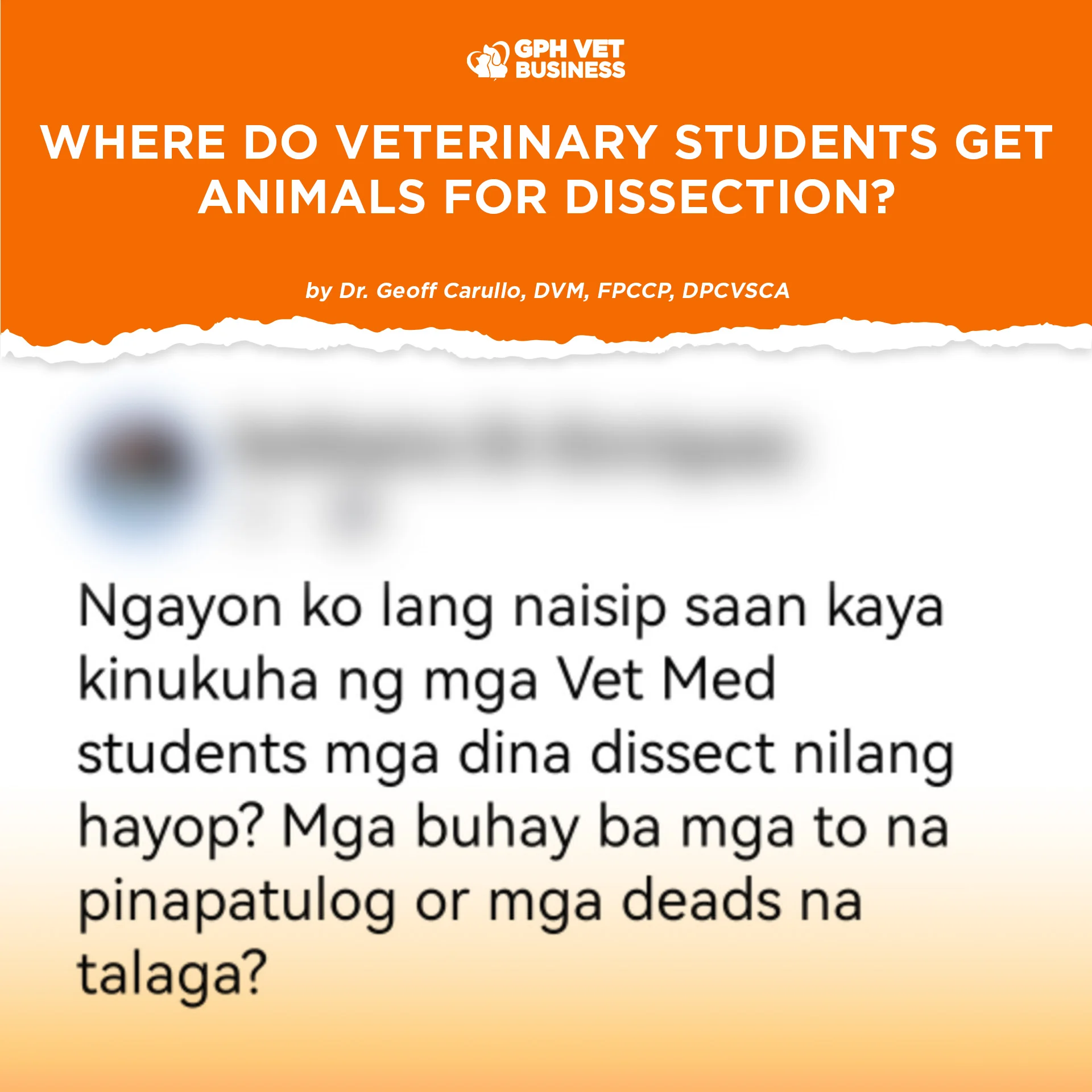
One of the most common questions people ask about veterinary school is:
“Do veterinary students dissect live animals, or are they already dead?”
The simple answer is no. Veterinary students do not perform anatomy dissections on conscious, living animals.
The purpose of anatomy laboratories is to understand the body’s structure, not to harm healthy animals.
So where do the specimens come from?
Depending on the veterinary school, institutional policies, and local regulations, cadavers may come from several ethical sources:


1. Animals that died naturally or from disease
Many anatomy specimens come from animals that died due to illness, old age, trauma, or other natural causes. With proper documentation and institutional approval, these animals may be donated to veterinary schools for educational purposes.
2. Donated pets
Some pet owners choose to donate the bodies of their beloved pets after death. Their final gift helps educate future veterinarians who will one day care for thousands of other animals. It is a meaningful contribution to veterinary education.
3. Animals humanely euthanized for medical or welfare reasons
Some cadavers come from animals that were humanely euthanized because of terminal illness, severe injury, or poor welfare. The decision to euthanize is made to relieve suffering and is not performed simply to obtain a specimen for teaching.
4. Municipal pounds or animal shelters
In some veterinary schools, cadavers may also come from municipal animal pounds or shelters. These are typically animals that have already been humanely euthanized in accordance with applicable animal welfare laws and local government regulations, often because they were unclaimed after the legally required holding period or were suffering from severe illness or injury.
It is important to understand that these animals are not euthanized for the purpose of anatomy classes. Rather, after a lawful and humane euthanasia decision has already been made, their remains may be used for veterinary education. In this way, one animal’s death may help train future veterinarians who will go on to save countless other lives.


What about live animals?
Veterinary students do work with live animals, but not for anatomy dissection.
Live animals are involved in supervised activities such as:
- Physical examinations
- Clinical skills training
- Diagnostic imaging (X-rays and ultrasound)
- Surgical training under general anesthesia
- Medical and surgical patient care during clinical rotations
Throughout veterinary education, animal welfare remains a core principle. Students are taught not only how to diagnose and treat disease but also how to respect life, minimize pain, and uphold the highest ethical standards.

The Bigger Picture
Every veterinarian spends hundreds of hours studying anatomy because understanding the normal body is essential before diagnosing disease or performing surgery. Cadaver-based education has trained generations of veterinarians while continuously evolving with stronger ethical oversight, simulation models, and modern teaching technologies.
The goal has always been the same: to educate competent veterinarians while treating every animal with dignity and respect.
The next time you see a veterinarian confidently performing surgery or saving a critically ill pet, remember that years of anatomy training made those skills possible. Behind every cadaver used in veterinary education is an opportunity to improve the lives of countless animals in the future.
Dr. Geoff Carullo is a Fellow and the current President of the Philippine College of Canine Practitioners.
Sharing this helps others understand what it really means to be a vet. Like and follow if you’re with us.