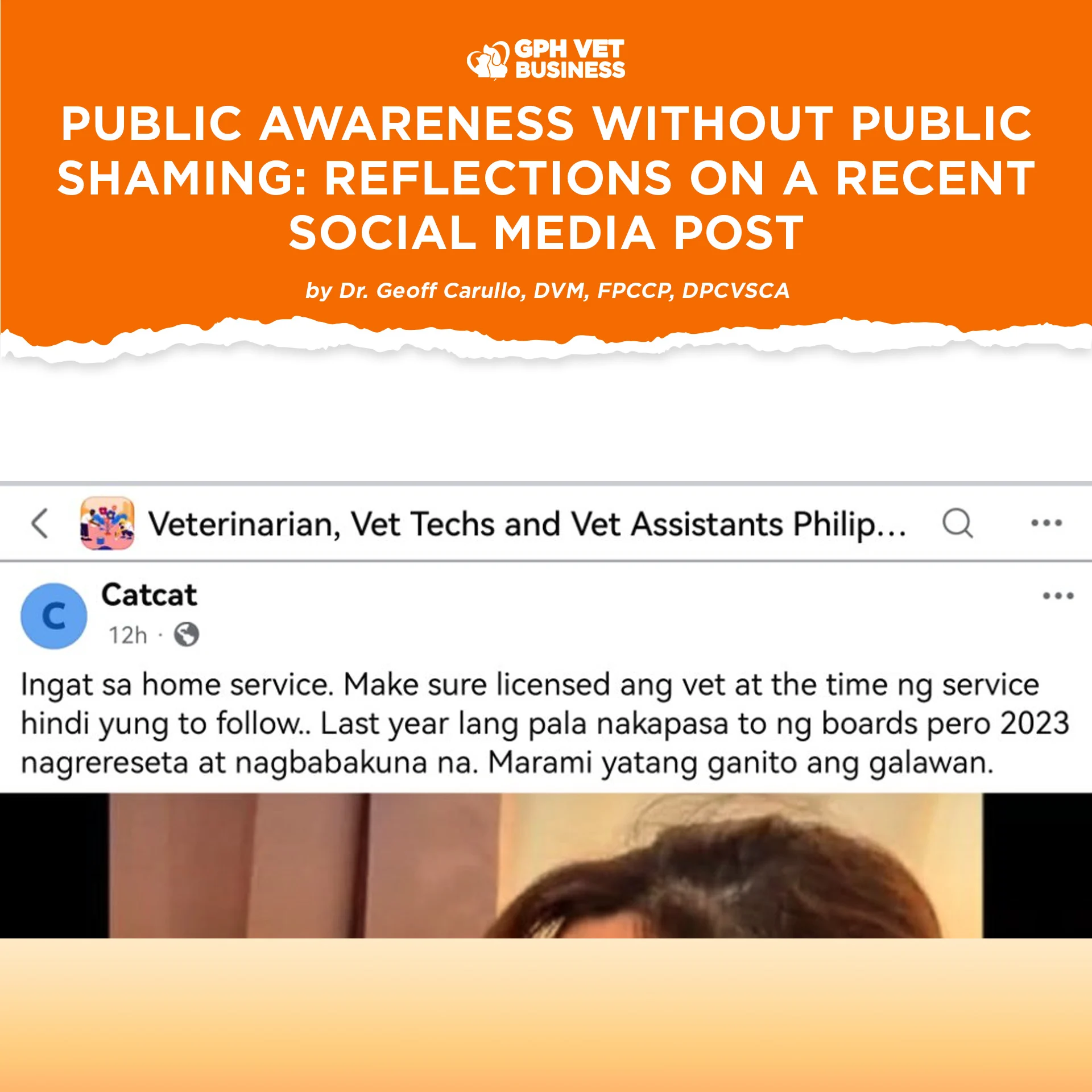
Recently, a post circulated in a Facebook group for veterinarians, veterinary technicians, and veterinary assistants in the Philippines. The post warned pet owners to verify that the veterinarian providing home service was already licensed at the time the services were rendered. Along with the warning, it included the photograph of a specific individual.
The message raises an important issue. Pet owners have every right to know whether the person diagnosing, prescribing medications, or administering treatment is legally authorized to practice veterinary medicine. Protecting the public is a legitimate concern.
However, another question deserves equal attention.
Was it necessary to publish the individual’s face?
If the objective was to educate pet owners, the answer is often no.


The public can be reminded to verify a veterinarian’s PRC license, ask to see a Professional Identification Card, and confirm that the practitioner is legally licensed. Those educational messages remain effective even without identifying a specific person.
Once a photograph is attached to allegations of unauthorized practice, the discussion changes. It is no longer just about the legal requirements of veterinary practice. It becomes about one identifiable individual, whose reputation may be affected before any official determination has been made.
This is why due process matters.
If someone is believed to have violated the law, there are proper mechanisms for investigation through the appropriate authorities. Public education and regulatory enforcement are not the same thing. Social media should not automatically become the venue where guilt is decided.


This does not mean that the public should ignore suspected violations. If there is credible evidence that someone has practiced veterinary medicine without the required license, the matter should be reported to the proper regulatory authorities for investigation and appropriate action.
As professionals, we should strive to educate rather than inflame. Our goal should always be to protect animal welfare, safeguard the public, and preserve the integrity of the veterinary profession while respecting fairness and due process.
The recent post serves as a timely reminder that what we say on social media is important, but how we say it is equally important.

Sometimes, the most responsible warning is the one that informs the public without unnecessarily identifying an individual before the proper authorities have completed their work.
References
- Republic Act No. 9268
- Cybercrime Prevention Act of 2012
- Civil Code of the Philippines
Dr. Geoff Carullo is a Fellow and the current President of the Philippine College of Canine Practitioners.
Sharing this helps others understand what it really means to be a vet. Like and follow if you’re with us.