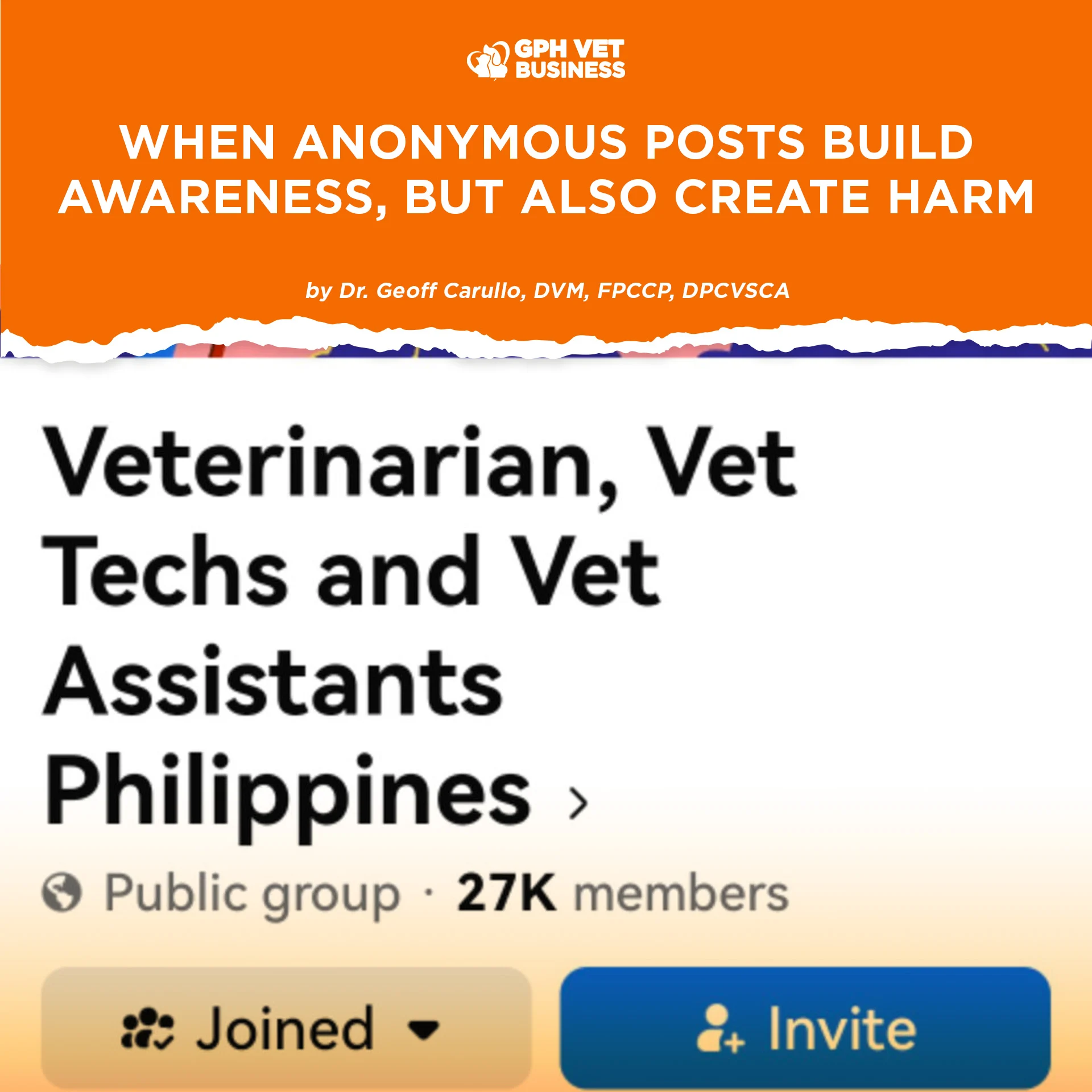
The Facebook group “Veterinarian, Vet Techs and Vet Assistants Philippines” has grown into one of the largest online communities for veterinary professionals in the country. With more than 27,000 members, it has the potential to become an excellent venue for learning, collaboration, mentorship, and healthy professional discussion.
However, many members have noticed a growing concern.
Anonymous postings have become increasingly common. While anonymity can protect individuals who genuinely fear retaliation when discussing sensitive workplace issues, it can also be misused. Without accountability, discussions sometimes shift from constructive criticism to public accusations, personal attacks, and trial by social media.
This is where everyone should pause.
Due process still matters.


In any profession, allegations should be investigated fairly. A person accused of wrongdoing deserves the opportunity to explain, respond, and present their side before the public reaches a conclusion.
When anonymous posts identify individuals, clinics, or organizations without sufficient evidence, the damage can be immediate and long-lasting. Even if later proven false, reputations may already have been harmed.
Social media should never replace proper investigation.
Anonymous does not always mean untraceable.
Many people mistakenly believe that posting anonymously provides complete legal protection.
It does not.
If a post contains false factual allegations that injure another person’s reputation, the author, and in some circumstances even those who knowingly help spread defamatory content, may still face legal consequences under Philippine law. The fact that a post appears anonymously inside a Facebook group does not automatically shield the poster from accountability if proper legal processes are initiated.
Freedom of expression is a constitutional right, but it is not absolute. It carries corresponding responsibilities.


Healthy discussion benefits everyone.
Professional groups become stronger when members feel safe asking questions, sharing experiences, and respectfully disagreeing without fear of public humiliation.
Instead of asking:
“Who should we shame?”
Perhaps we should ask:
“How do we solve the problem?”
Constructive discussions focus on improving standards, educating colleagues, strengthening ethics, and protecting both the profession and the public.
A call to group administrators
Managing a community of thousands is not easy, and moderators deserve appreciation for the time they devote to maintaining order.
As online communities continue to grow, it may be worth considering stronger moderation policies, such as:
- Removing posts that contain unsupported personal accusations.
- Encouraging complainants to provide evidence privately to administrators before public posting.
- Prohibiting doxxing or unnecessary publication of identifiable personal information.
- Promptly removing content that may expose members or the group to potential libel claims.
- Encouraging respectful, fact-based discussions instead of personal attacks.
These measures are not intended to suppress legitimate concerns. Rather, they help ensure that concerns are raised responsibly and fairly.

Building a Better Veterinary Community
Our profession already faces many challenges. The online spaces we share should become places where veterinarians, veterinary technicians, assistants, and students learn from one another instead of tearing each other down.
A healthy professional community is built on accountability, respect, evidence, and fairness.
We can protect the public while still respecting due process.
We can discuss important issues without resorting to public shaming.
And we can disagree without becoming toxic.
That kind of community benefits everyone.
Dr. Geoff Carullo is a Fellow and the current President of the Philippine College of Canine Practitioners.
Sharing this helps others understand what it really means to be a vet. Like and follow if you’re with us.