In the past decade, the Philippine retail landscape has been shifting—silently, but with massive implications. While mega-malls still dominate urban skylines, a new retail force has emerged: community malls.
These scaled-down, hyperlocal centers are no longer just places to grab groceries or pay bills. They’re becoming the new heart of the Filipino consumer experience—and veterinary medicine has every reason to take a front-row seat.
The Rise of Community Malls: A New Retail Mindset
As traffic worsens and urban life becomes more congested, developers like SM, Ayala, Robinsons, Vista Land, and WalterMart have pivoted.
Instead of building bigger malls in bigger cities, they’re bringing the mall experience closer to the people—literally within their neighborhoods.
This decentralized retail strategy has redefined “convenience.”
These community malls:
- Are strategically placed in high-density residential areas.
- Feature essential services like groceries, clinics, pharmacies, and food outlets.
- Attract regular foot traffic from nearby barangays, not just weekend crowds.
And that’s where the veterinary profession finds its next opportunity.
The Veterinary Shift: From Central Hospitals to Neighborhood Access
Traditionally, veterinary clinics have clustered around city centers or commercial zones. But today’s pet owners—especially millennials and young families—want quick, easy, and stress-free vet visits that don’t require crossing EDSA or enduring parking nightmares.
This is why the hub-and-spoke model fits perfectly.
The Hub:
Your main veterinary hospital—complete with diagnostics, surgery, in-patient care, and specialty services.
The Spokes:
- Vaccinations
- Deworming and flea/tick prevention
- Wellness consultations
- Minor grooming
- Essential pet products
- Referral coordination to the main hub
You decentralize veterinary access—without compromising brand strength.


Why This Model Works for Vets
1. Foot Traffic = Visibility
Pet owners already frequent community malls. They’re buying groceries, visiting clinics, and grabbing coffee. Having your vet clinic right there makes preventive care top of mind.
2. Cost-Effective Expansion
Compared to large-scale hospital investments, community mall units require smaller capital, less manpower, and limited equipment.
3. Convenience is King
Sunday errands + pet vaccines? Done. Pet owners love one-stop destinations. You’re making life easier—and loyalty stronger.
4. Emotional Anchoring
A familiar, neighborhood vet clinic becomes part of the family’s routine. It’s not just about medical care; it’s about trust and proximity.
5. Scalability
You can replicate this model in multiple locations across the country, especially in fast-growing residential belts like Cavite, Rizal, Laguna, Bulacan, Pampanga, and Iloilo.
Business Integration: A Look at the Possibilities
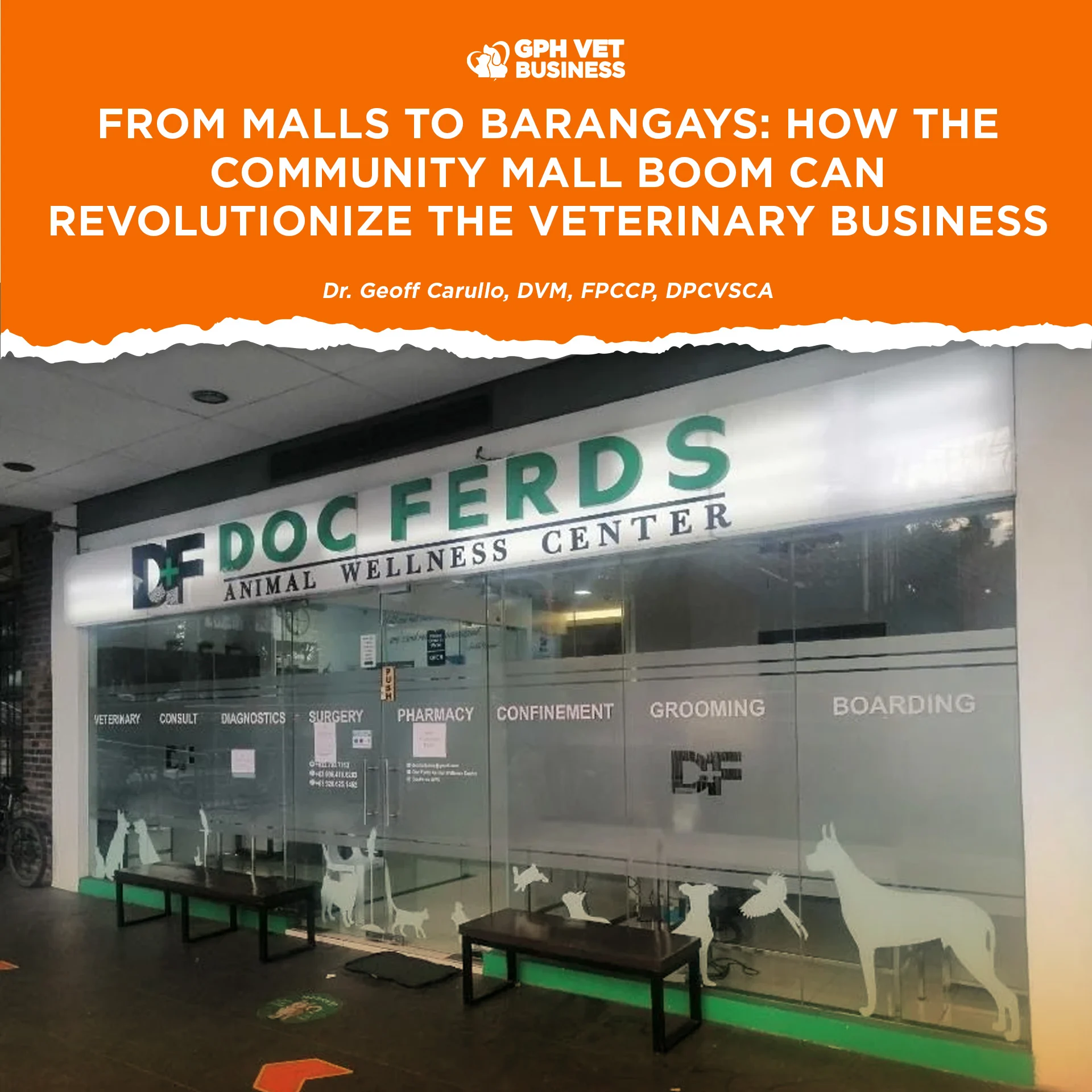
Imagine this layout in a Vista Mall in Bacoor, for example:
- Vet Express by Greenwoods Pet Hospital
- A clean, air-conditioned, 30 sqm unit beside a grocery store
- Staffed by 1 vet, 1 assistant
- Basic services + product retail
- Referral system integrated with your main clinic
- Digital queueing + mobile app appointment booking
- Co-branded promotions with nearby pet stores or coffee shops
In short, you’re building a “Starbucks model for veterinary medicine.” Familiar. Trustworthy. Everywhere.
The Bigger Vision: A Vet in Every Community
What SM, Ayala, and Vista saw in Filipino retail habits, we as veterinarians must also see in Filipino pet ownership trends:
- The number of pets is growing faster in the suburbs than in city centers.
- Companion animals are increasingly treated as family.
- Pet owners want human-style convenience in veterinary care.
Just like there’s a Mercury Drug in every barangay, there should be a trusted vet clinic in every community mall.
We don’t have to wait for the “ideal space” or “perfect timing.” The opportunity is here—and it’s replicable, scalable, and deeply aligned with what our clients now expect.

Final Thoughts
The future of veterinary business in the Philippines is not just in medical excellence—it’s in strategic accessibility. The veterinarians who adapt to proximity-based care, retail-integrated services, and community visibility will be the ones who dominate the next era of pet healthcare.
We no longer have to pull clients into our world. It’s time we step into theirs.
Neighborhood by neighborhood.
Mall by mall.
Pet by pet.
Sharing this helps others understand what it really means to be a vet. Like and follow if you’re with us.
Dr. Geoff Carullo is a Fellow and the current President of the Philippine College of Canine Practitioners.