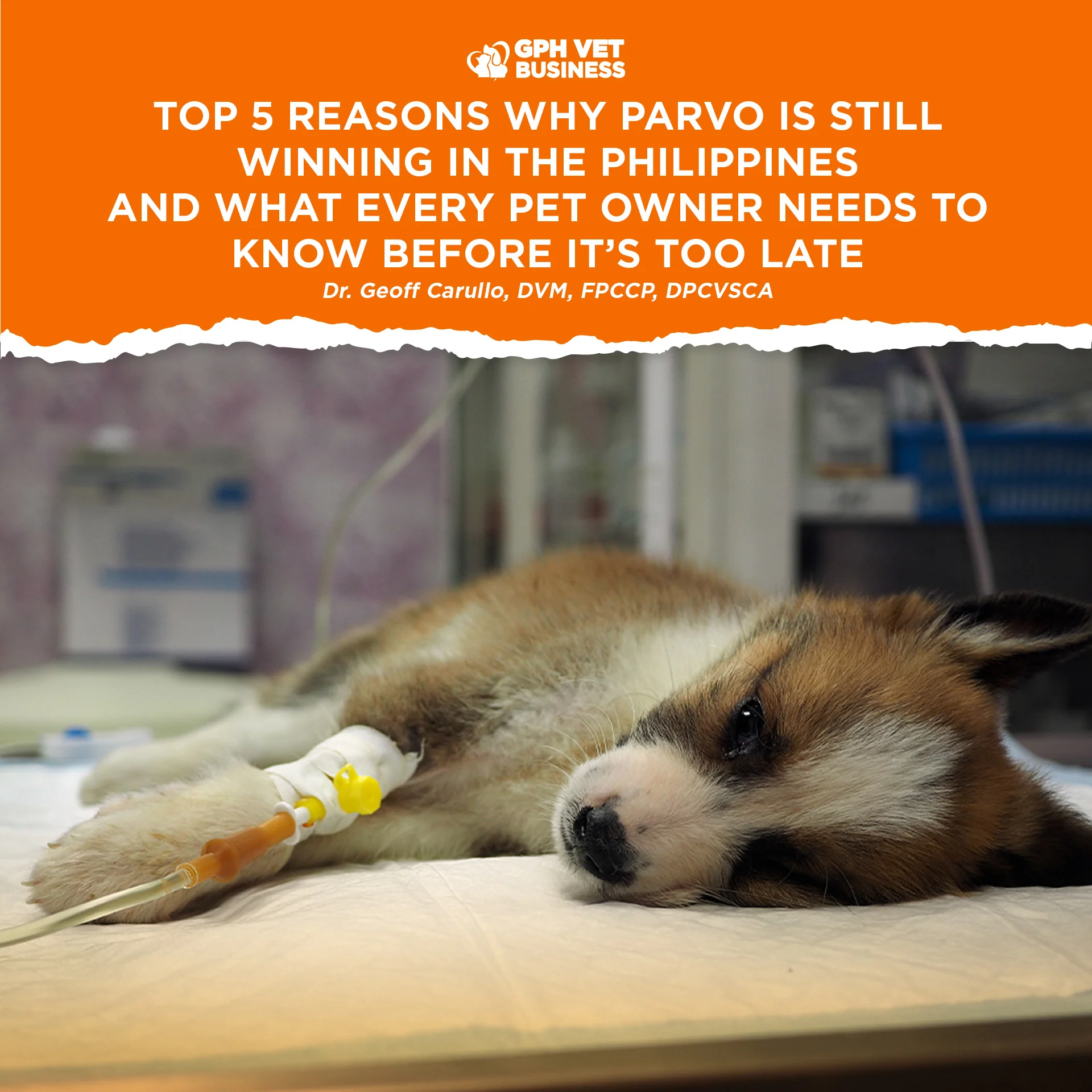
Despite all the medical advances, despite the availability of vaccines, and despite countless awareness campaigns… parvovirus is still winning in the Philippines.
Every week, veterinary clinics all over the country admit puppies—lethargic, vomiting, not eating, bloody stool.
The heartbreaking truth? Many of these deaths are preventable.
Let’s talk about why parvo continues to thrive in our communities—so we can finally stop it.
1. Vaccination Delay or Skip
Many pet owners still believe, “Saka na muna ang bakuna, bata pa.”
But parvo strikes hardest in young puppies—especially between 6 to 16 weeks old. This is exactly the age they need protection the most.
What’s worse? Some skip vaccination entirely, thinking vitamins or “malakas naman siya” is enough.
Truth bomb:
No vaccine = no defense.
Without the full set of core vaccines, your puppy is a target.
2. “Backyard Breeders” and Unregulated Selling
Puppies are being sold online, in markets, or by casual breeders who have zero vet supervision and no vaccine records.
They hand over cute 5-week-old puppies with a ribbon—but no medical history.
By the time the buyer notices something’s wrong, it’s already too late.
Reminder:
Buying from unregistered breeders fuels the cycle.
Adopt responsibly. Ask for legit vet cards with vaccine dates.


3. “Self-Medication” Culture
The minute their pet starts to vomit or lose appetite, some owners run to the botika—not the vet.
They give antibiotics, human meds, or “rescue” solutions passed down from a neighbor.
By the time the dog is brought to the clinic, it’s severely dehydrated, weak, and bleeding.
And now, what could’ve been treated early becomes a life-or-death struggle.
Bottom line:
Parvo is a virus. It doesn’t respond to antibiotics.
Only proper vet care can give your puppy a fighting chance.
4. Poor Sanitation and High Exposure
Parvo thrives in the environment. It can live in soil, tiles, shoes, and kennels for months.
Even if your puppy doesn’t go outside, you can unknowingly bring the virus home—on your shoes, your hands, or the paws of another dog.
Prevention tips:
- Disinfect frequently using bleach-based solutions.
- Don’t allow contact with unvaccinated dogs.
- Isolate new puppies until cleared by a vet.
5. Waiting Too Long Before Going to the Vet
This is the hardest truth.
Some pet owners wait too long—thinking it’s just a mild stomach upset.
Some are afraid of the cost.
Some say, “Observe ko muna, baka lumakas din.”
But in parvo cases, every hour matters.
The earlier the treatment, the higher the survival rate.
Delays cost lives.
What to watch for:
- Lethargy
- No appetite
- Vomiting
- Diarrhea (especially with blood)
- Fever
If you see these signs, don’t wait.

Parvo Is Still Winning—But It Doesn’t Have To
As veterinarians, we are tired of seeing puppies die that could’ve been saved.
Tired of explaining to crying pet owners that the vaccine could’ve changed everything.
Tired of losing innocent lives to a virus we already know how to prevent.
So please, let’s work together:
- Vaccinate on time
- Buy from reputable sources
- Stop self-medicating
- Clean thoroughly
- Seek vet care early
Because parvo doesn’t need to keep winning.
But if we stay silent, careless, or uninformed—it will.
Protect your puppy. Protect your family.
Let’s stop parvo from stealing more lives.
Sharing this helps others understand what it really means to be a vet. Like and follow if you’re with us.
Dr. Geoff Carullo is a Fellow and the current President of the Philippine College of Canine Practitioners.