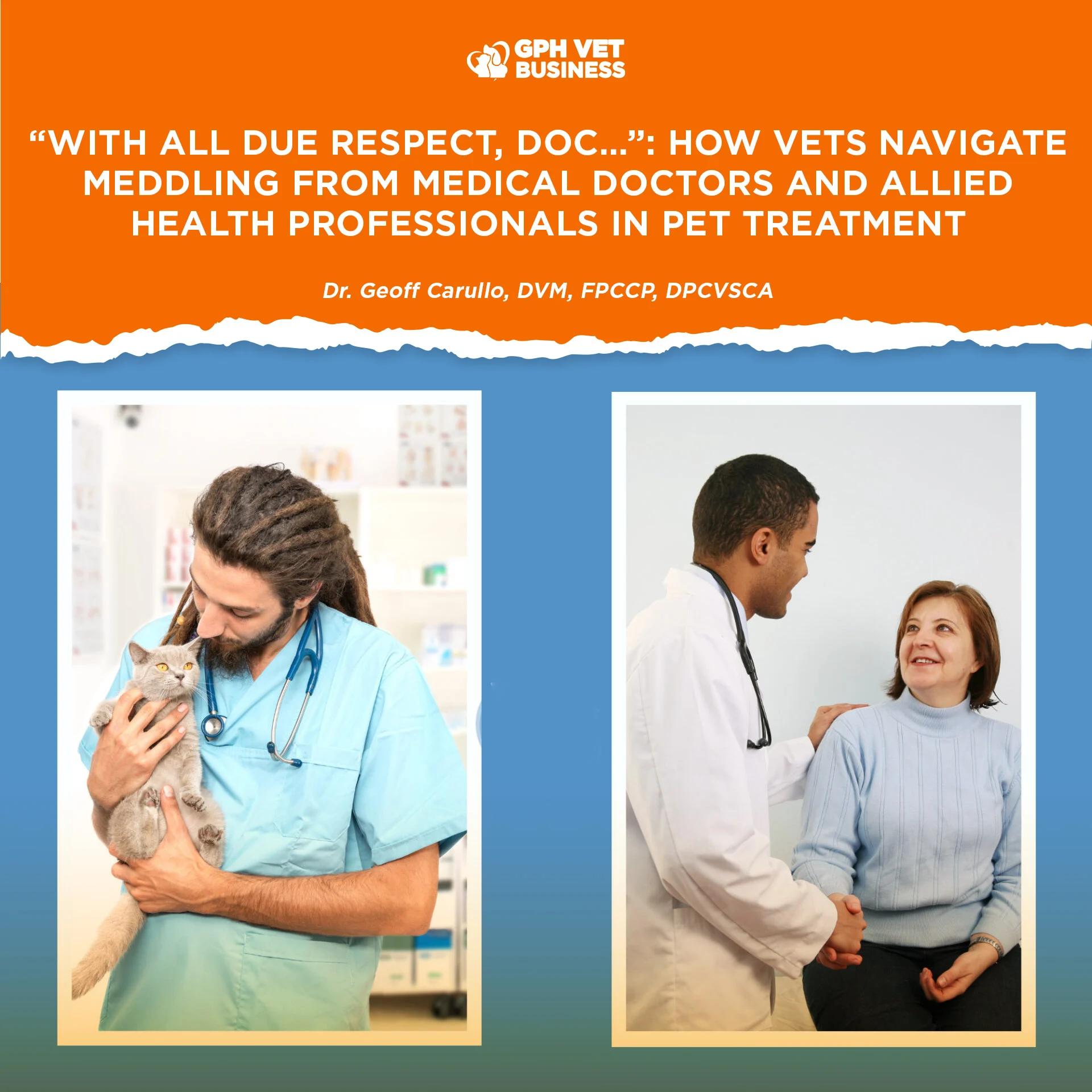
In the Philippines, respect for titles runs deep. The moment someone hears “Doc,” they are automatically granted authority and trust. And rightfully so—whether you’re a medical doctor, dentist, nurse, pharmacist, or veterinarian, years of study and dedication back that title.
But sometimes, that respect becomes a blurred line—especially when medical doctors and other healthcare professionals overstep into veterinary territory.
The Classic Scenario
A pet is brought into a veterinary clinic. The owner is either a medical doctor, nurse, pharmacist, or has a sibling or tita who is one. Suddenly, you, the veterinarian, are expected to explain yourself more than usual. Worse, they sometimes question your diagnosis, suggest human medications, or argue that “this is how we do it in humans.”
At first glance, it seems like genuine concern. But make no mistake—this is a form of professional boundary overstep.
What Makes This Difficult?
- The Owner Wields Power – They might be more articulate, respected in their field, or even influential in the community.
- You Risk Seeming Defensive – If you assert your authority, you could be accused of being “mayabang” or “too sensitive.”
- There’s an Expectation of Cross-Field Knowledge – The irony? If you dared to comment on human healthcare, you’d be told to “stay in your lane.”


What Vets Wish Other Professionals Understood
- Animal Physiology is Not Human Physiology. Giving paracetamol to a dog? Toxic. Using dextrose formulations intended for humans? Sometimes fatal. There are drugs safe for people that can harm or kill animals.
- Veterinary Medicine Is Its Own Discipline. Vets don’t just treat “like a pediatrician for animals.” They are internists, surgeons, radiologists, anesthesiologists, and pharmacists—rolled into one.
- We Didn’t Just Google This. A treatment plan is based on species-specific pharmacology, patient history, diagnostics, and years of training—not a hunch.
How Veterinarians Can Professionally Handle “Paki-alamero” Medical Practitioners
- Acknowledge Their Concern—But Reclaim Authority.“I understand you’re coming from a medical perspective, and I appreciate your care for [pet’s name]. Veterinary medicine works a bit differently though, and I’ve designed this treatment plan specifically for animals.”
- Educate Without Sounding Condescending.“Unlike in human medicine, [explain briefly the difference]. For dogs, this drug isn’t processed the same way—it can actually cause liver damage.”
- Draw Clear Lines—Gently but Firmly.“If this were a human case, your experience would be 100% relevant. But for veterinary patients, our training and clinical experience guide our choices.”
- Use the Golden Line (when necessary):“While I respect your profession, please trust me with this case as a veterinarian. Just as I would never advise a human patient, I hope the same trust applies here.”
When Medical Professionals Do Collaborate Well
To be fair, there are many doctors and allied health professionals who genuinely respect veterinarians—they ask insightful questions, seek to learn, and support our role. These interactions are refreshing and prove that mutual respect is possible when egos are checked at the door.

Final Thought
Respect isn’t just about calling each other “Doc.” It’s about knowing when to speak, and when to step back. Let’s create a culture where professional boundaries are honored, and expertise is respected—across species.
Because at the end of the day, whether you’re treating a person or a pet—you don’t need to be the loudest in the room to make a difference. You just need to know when it’s not your room.
“Sharing this helps others understand what it really means to be a vet. Like and follow if you’re with us.”
Sharing this helps others understand what it really means to be a vet. Like and follow if you’re with us.
Dr. Geoff Carullo is a Fellow and the current President of the Philippine College of Canine Practitioners.